



The A to Z of Apparel: A Comprehensive Guide
What Is Apparel? A Quick, Clear Answer

Apparel refers to clothing of a specific type, especially as sold commercially — think the items you browse in a store or online, grouped by category, style, or use. While "clothing" is the broad, everyday term for what we wear, "apparel" is the word the fashion and retail industry uses when talking about garments as products.
Here's a quick breakdown:
| Term | Meaning |
|---|---|
| Clothing | General word for what people wear |
| Apparel | Industry term for clothing sold commercially, by category or type |
| Garment | A single item of clothing |
| Textile | The fabric or material used to make apparel |
So when a brand says "women's apparel" or "sports apparel," they're referring to a curated category of clothing designed for a specific purpose or buyer.
Whether you're trying to understand what the word means, shopping for comfortable everyday basics, or just curious about the massive industry behind what you wear — this guide covers it all. From the word's medieval roots to today's global retail networks and sustainable fabric innovations, apparel touches nearly every part of modern life.
I'm David Vail, owner of One Love Apparel and a business development professional with over two decades of experience across retail, marketing, and the apparel industry — so I've seen how the right clothing can reflect both quality craftsmanship and personal values. Let's dig in.
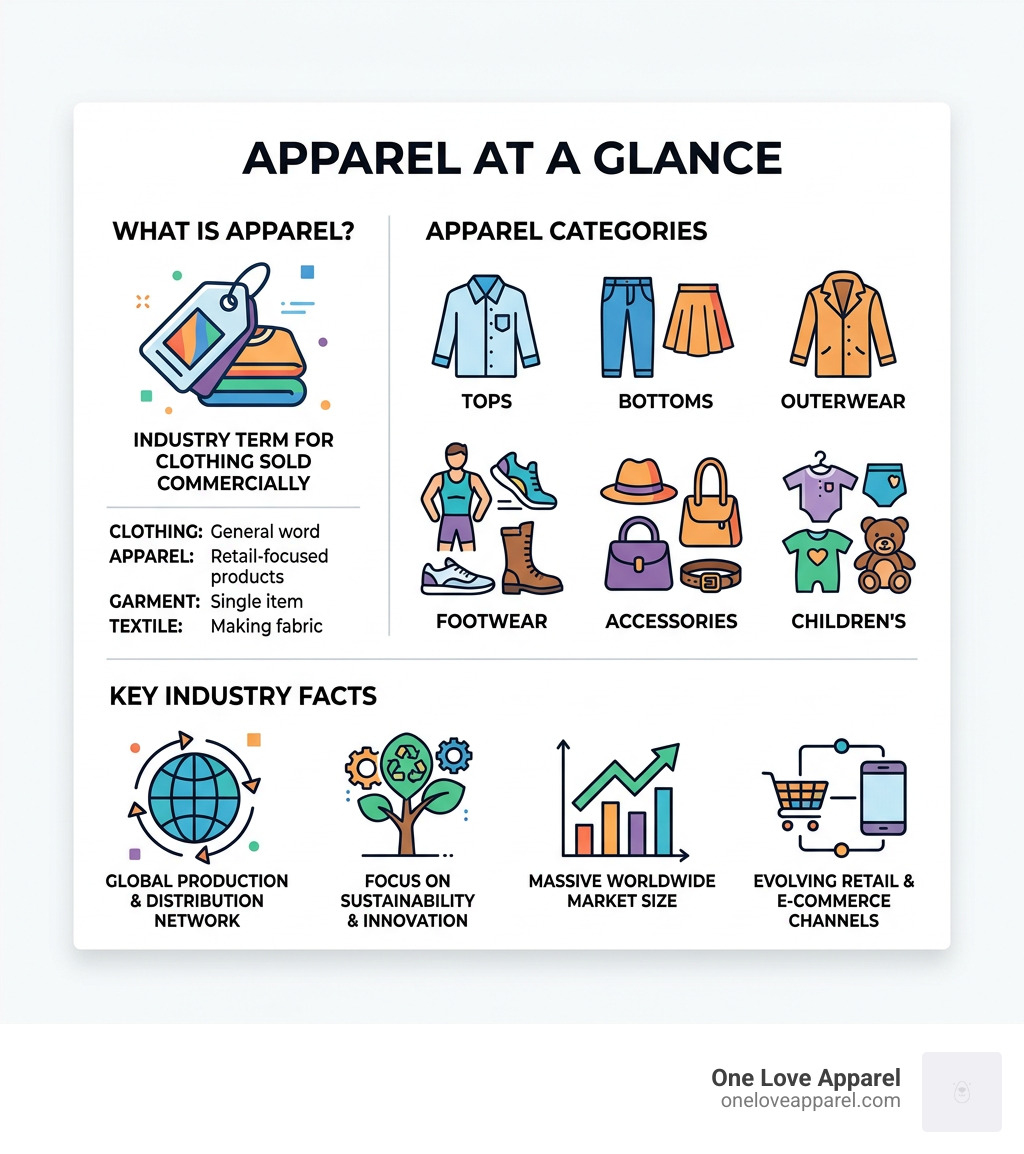
Apparel terms simplified:
Defining Apparel: More Than Just Clothing

When we talk about apparel, we are stepping into a world that goes beyond just covering up for warmth. In a commercial sense, apparel encompasses everything from formal attire used for business to the specific garments designed for high-performance athletics.
According to the Cambridge English Corpus, the term has historically carried a weight of social significance. In the past, the "mutability of apparel" suggested a shift in social rank, which was often a troubling concept for those wanting to maintain the status quo. Essentially, what you wore signaled who you were and where you stood in society. Today, while we are more relaxed about social hierarchies, apparel still serves as a powerful tool for personal expression and professional identity.
The distinction between "clothing" and "apparel" is most visible in how businesses operate. If you walk into a department store, you’ll see signs for "Children’s Apparel" or "Men’s Apparel." This terminology helps retailers organize their inventory and helps us, the shoppers, find exactly what we need.
The Etymology and History of the Word Apparel
The word "apparel" has a fascinating linguistic journey. It didn't just pop up out of nowhere; it evolved through several languages before landing in our modern vocabulary.
The noun form comes from the Middle English apparaile or apparell, which was borrowed from the Anglo-French apparail. This, in turn, was a derivative of apparailler, meaning to prepare, equip, or dress. If we dig even deeper into the roots, we find the Vulgar Latin word appariculāre, a derivative of apparātus.
In its earliest Middle English uses, "apparel" didn't just refer to clothes; it meant "furnishings" or "equipment" in general. Over time, the focus narrowed down to what we put on our bodies. Historically, apparel was a way to maintain the status quo. For example, powerful political and economic interests often sought to control what people wore to ensure that rank and class remained clearly visible.
The Commercial Use of Apparel in Business
In the business world, "apparel" is the standard term used across the retail sector. It covers everything from the labels sewn into your favorite t-shirts to the massive wholesale distribution networks that move millions of garments every day.
When we look at brand identity, the choice of the word "apparel" often signals a professional, high-quality approach. It’s used in:
- Manufacturing Labels: Identifying the origin and care of the garment.
- Wholesale Distribution: Dealing with bulk quantities of clothes for resale.
- Corporate Uniforms: Providing a cohesive look for a workforce.
For us at One Love Apparel, the business of apparel is about more than just moving units; it’s about ensuring that every piece—from our basic white t-shirt for women to our unisex jersey short sleeve tees—meets a standard of comfort and durability that our customers can rely on.
The Global Apparel Industry: Manufacturing and Retail
The apparel industry is a global behemoth. To give you an idea of the scale, some major retail groups operate over 2,500 stores across 14 different countries. This massive network allows brands to bring seasonal collections to people all over the world, from the UAE to the United States.
However, with great scale comes great responsibility. The conversation around worker wages and ethical production has never been more important. For instance, in some parts of the industry, particularly in hubs like Los Angeles, there is a push for fair compensation. Some workers in LA-based production earn between $17.25 and $25 per hour, reflecting a commitment to ethical standards. Los Angeles itself is a melting pot, home to people from over 140 countries speaking 224 languages, and this diversity often fuels the creativity found in the American-made apparel complete guide.
E-commerce and International Expansion
The rise of digital storefronts has changed how we shop for apparel. No longer are we limited to the stores in our local mall. We can now access international brands with a few clicks. However, this expansion comes with logistical challenges.
Some major retailers have to manage complex shipping restrictions. You might try to access a US site only to be redirected to a UK-specific franchise because of local delivery limitations. To keep customers coming back, many brands have launched sophisticated loyalty programs. These programs allow shoppers to earn points (sometimes 1 point = 1 local currency unit) across dozens of different brands. It’s a way to reward loyalty in a very competitive global market.
Manufacturing Standards and Quality Control
How a piece of apparel is made determines how long it will last in your wardrobe. High-quality manufacturing involves several technical steps:
- Fabric Finishing: Ensuring the material feels right against the skin.
- Wet Processing: Crucial for pre-treatment, dyeing, and printing.
- Pre-shrinking: This is a big one for us. We use preshrunk cotton to ensure that your favorite shirt doesn't turn into a crop top after the first wash.
The industry is also seeing a rise in robotics. Robotics and the apparel industry are now cooperating to develop "apparel robots" that can help with precision cutting and sewing, leading to more consistent quality and durability testing.
Categorizing Modern Apparel: From Activewear to Everyday Essentials
Modern apparel is categorized to help us dress for our specific lifestyles. Whether you are hitting the gym, heading to the office, or lounging at home, there is a category for that. This includes sports apparel, children’s wear, and a growing emphasis on plus-size inclusivity.
Understanding these categories helps you build a versatile wardrobe. For women, finding the right basics is key, which is why we created the definitive guide to women's tees.
Essential Types of Everyday Apparel
Everyday apparel forms the core of our wardrobes. These are the pieces we reach for day in and day out.
- Hoodies and Sweatshirts: Once just for the gym, these are now fashion staples. You can find everything from comfortable oversized hoodies to the perfect mens everyday hoodie.
- Graphic Tees: A way to show off your personality, like our 2000s graphic tees or basketball graphic t-shirts.
- Activewear and Swimwear: Designed for movement and durability in the water or at the park.
- Headwear: From mens cotton caps to functional beanies.
Specialized Performance Gear
Performance apparel is all about function. This gear is designed with specific technical features:
- Moisture-wicking: To keep you dry during intense workouts.
- Compression wear: To support muscles and improve circulation.
- Protective layers: Vital for outdoor enthusiasts, such as running beanies for winter warmth.
Whether it’s mens athletic sweatshirts or specialized chemo hats, performance gear is about making sure the wearer is comfortable and protected, regardless of the activity.
Current Trends Shaping the Future of Apparel
The apparel industry is constantly evolving, and right now, the focus is on two things: sustainability and comfort.
We are seeing a massive shift toward "soft staples"—items that feel amazing but are built to last. A big part of this is understanding combed ring-spun cotton. This process removes short fibers and impurities, resulting in a fabric that is softer, stronger, and smoother than standard cotton.
Sustainability and Ethical Sourcing
The future of apparel is green. Consumers are demanding more transparency regarding:
- Organic Fibers: Growing cotton without harmful pesticides.
- Fair Trade: Ensuring everyone in the supply chain is treated and paid fairly.
- Carbon Footprint: Reducing the environmental impact of shipping and manufacturing.
Ethical sourcing isn't just a trend; it's becoming a requirement. Brands are now being judged not just by the style of their apparel, but by the ethics of their production.
Comfort-First Design and Fabric Innovation
If the last few years have taught us anything, it’s that comfort is king. This has led to innovations like "cloud sweats"—fleece so soft it feels like a cloud—and super soft cotton tees.
We focus on creating flattering t-shirts that hide the stomach while remaining incredibly breathable. Whether it's a ladies white cotton long sleeve shirt or a mens premium tank top, the goal is always to provide a fit that feels customized and a fabric that feels premium.
Frequently Asked Questions about Apparel
What is the difference between apparel and clothing?
While often used interchangeably, "clothing" is the general term for garments worn on the body. "Apparel" is a more formal, industry-specific term that usually refers to clothing being sold as a commercial product, often categorized by type (e.g., "athletic apparel").
How do I choose high-quality apparel materials?
Look for terms like "combed and ring-spun cotton" for softness and "pre-shrunk" to ensure the fit lasts. High-quality apparel will also have consistent stitching and a weight that feels substantial but breathable. For more details, check out our guide on finding the finest 100% cotton hoodies.
Why is ethical manufacturing important in the apparel industry?
Ethical manufacturing ensures that workers are paid a living wage and work in safe conditions. It also often correlates with higher quality products, as workers who are treated well tend to take more pride in the craftsmanship of the apparel they produce.
Conclusion
At the end of the day, the apparel you choose is an investment in your daily comfort and your personal brand. Whether you’re looking for best everyday shirts or a premium hoodie worth every penny, quality construction and thoughtful design make all the difference.
We believe that what you wear can be a conversation starter and a reflection of your values. For more on how your wardrobe choices can make an impact, read our article on wearing your heart on your sleeve: how apparel can spark conversations.
Thank you for joining us on this journey through apparel. Stay comfortable, stay stylish, and always choose quality.