



Your Search Ends Here: Discover the Finest 100% Cotton Hoodies
Why a 100% Cotton Zip Up Hoodie Deserves a Place in Your Closet
A 100 cotton zip up hoodie is more than just casual wear—it's a versatile wardrobe essential that combines natural comfort with lasting durability. If you're searching for the perfect hoodie, here's what you need to know:
Top 100% Cotton Zip Up Hoodies at a Glance:
| Feature | What to Look For | Price Range |
|---|---|---|
| Fabric Weight | 8.3-13 oz for durability and warmth | $40-$170+ |
| Construction | Combed ringspun cotton, reinforced stitching, quality zippers | Varies by brand |
| Fit Options | Classic, slim, or athletic-cut with unisex sizing | All price points |
| Eco-Friendly | Organic cotton saves ~128 gallons of water per garment | Premium pricing |
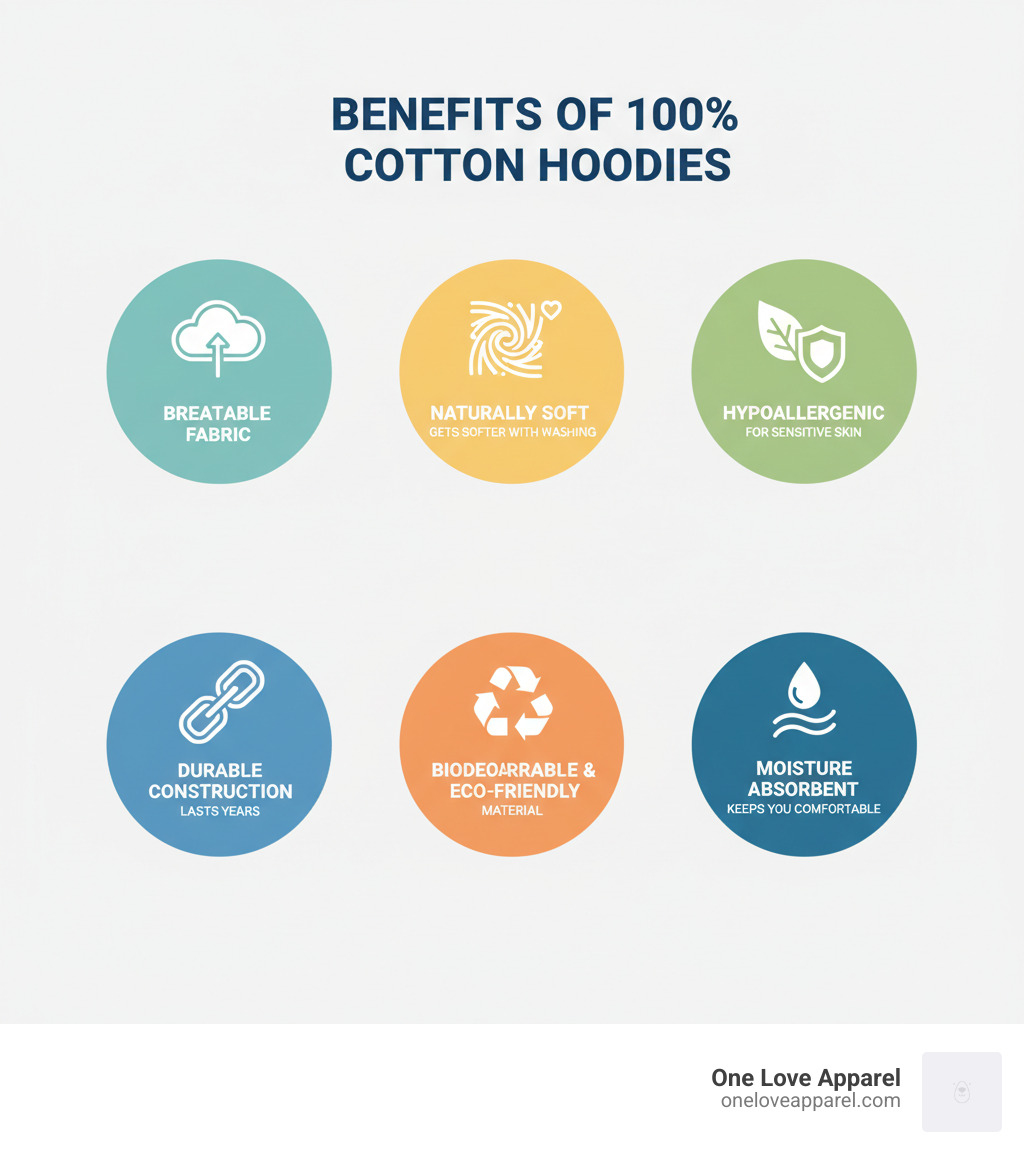
Key Benefits: 100% cotton hoodies offer superior breathability, hypoallergenic properties, and softness that improves with each wash. Unlike synthetic blends, pure cotton is naturally biodegradable and gentle on sensitive skin.
The search for a truly comfortable hoodie can feel endless. As one customer shared after hunting for a year: they finally found a 100% cotton replacement for their beloved five-year-old hoodie that matched perfectly after washing. That's the kind of quality you deserve.
What makes cotton hoodies special? They're lightweight yet warm, breathable for year-round wear, and maintain their softness through countless washes. French Terry options (380 g/m²) provide warmth without bulk, while heavyweight fleece (13 oz) delivers maximum coziness.
I'm David Vail, owner of One Love Apparel, and through years of experience in the apparel industry—from launching my own brand to partnering with businesses nationwide—I've learned what separates a mediocre 100 cotton zip up hoodie from one you'll reach for again and again. Let me help you find that perfect hoodie that becomes your new go-to layer.
Why Choose a 100% Cotton Hoodie?
There's something special about slipping into a 100 cotton zip up hoodie that just feels right. You know that instant sense of comfort when fabric touches your skin and you think, "Yes, this is it"? That's the cotton difference.
Let's talk about why pure cotton matters. As a natural fiber, cotton brings benefits that synthetic materials simply can't match. The softness against your skin is immediate and real—not that slippery, artificial feeling you get from polyester blends. And here's the beautiful part: that softness actually improves with every wash. Your hoodie literally gets better with age, becoming softer and more comfortable as it becomes part of your daily routine.
If you have sensitive skin, you already know the struggle of finding clothes that don't irritate. Cotton's hypoallergenic properties make it a safe choice for just about everyone. No mysterious chemicals, no synthetic fibers that cause reactions—just pure, plant-based comfort.
Now, let's address the breathability factor, because this is where cotton truly shines. Picture yourself on a cool morning walk or curled up on the couch on a crisp evening. A 100 cotton zip up hoodie allows air to circulate naturally around your body, preventing that clammy, overheated feeling you get with synthetic fabrics. You stay comfortable whether you're active or relaxed, warm or cool. That superior breathability makes cotton hoodies perfect for layering and adaptable to different temperatures and activities throughout your day.
You might wonder about durability—doesn't cotton wear out quickly? Actually, the opposite is true when you're dealing with quality construction. Customers consistently tell us their cotton hoodies hold up "very well, no loose stitching," and remain soft even after "several washings." We're talking about years of regular use here, not just a few months. High-quality cotton resists pilling far better than synthetic fabrics, maintaining its smooth texture and shape through countless wear-and-wash cycles.
Finally, there's the environmental angle. When we're all trying to make more conscious choices, cotton's biodegradability matters. Unlike petroleum-based synthetics that sit in landfills for decades, cotton is a plant-based material that naturally returns to the earth. Choosing a 100 cotton zip up hoodie means choosing comfort today and a healthier planet tomorrow.
Decoding the Details: How to Choose the Perfect Hoodie
Let's be honest—shopping for a 100 cotton zip up hoodie can feel overwhelming. You're scrolling through endless options, all claiming to be "the best," and you just want something that feels amazing and lasts more than a few washes. The good news? Once you know what to look for, finding your perfect hoodie becomes much simpler.
Think of this as your friendly buyer's guide. We're going to break down the key factors that separate a mediocre hoodie from one you'll still be wearing years from now. It's all about understanding what makes quality cotton garments special—from the fabric itself to how it's put together to finding that just-right fit.
Understanding Cotton Fabric Types and Weights
Here's something most people don't realize: not all cotton hoodies are built the same. The type of fabric and its weight make a huge difference in how your hoodie feels, how warm it keeps you, and when you'll actually want to wear it.
French Terry is probably my favorite for everyday wear. It has a smooth outside and a looped interior that gives you warmth without making you feel like you're wearing a blanket. Many French Terry hoodies, like the Unisex French Terry Organic Cotton Full-Zip Hoodie, are made from 8.3-ounce organic combed ring-spun cotton. You'll also see options with a 380 g/m² fabric weight—that's a nice substantial feel that works beautifully for spring, fall, and mild winter days. The real magic of French Terry? It breathes. You can wear it for a morning coffee run, keep it on all day at work, and still feel comfortable.
Cotton Fleece is what you reach for when you want that classic cozy hoodie feeling. The interior is brushed to create a soft, fluffy texture that traps warmth close to your body. We're talking about hoodies made from chunky 100% cotton fleece around 8.5 ounces. And if you really want maximum warmth? Look for heavyweight fleece like the custom-developed 13 oz. per square yard combed ringspun cotton fleece found in some premium full-zip styles. These are the hoodies you'll live in during winter.
Some lighter options use lightweight jersey knits, though these are less common for zip-up styles. These are designed for year-round layering, especially if you live somewhere warm or need something breathable for active wear. They give you just enough coverage without any bulk.
Now, let's talk about fabric weight—this is measured in ounces (oz) or grams per square meter (g/m²). This number tells you a lot about what to expect. Lightweight options under 8 oz or 270 g/m² are perfect for spring evenings or as an extra layer during workouts. Mid-weight hoodies between 8-10 oz or 270-340 g/m² hit that sweet spot—warm enough for cool days but not too heavy. French Terry usually falls here. Heavyweight options over 10 oz or 340 g/m² are your serious winter companions, with that 13 oz. per square yard heavyweight fleece being the ultimate in coziness.
Understanding these differences helps you pick the right 100 cotton zip up hoodie for your life. No more buying something online only to find it's way too heavy for what you needed—or disappointingly thin.
Key Construction Features for a Lasting 100% Cotton Zip Up Hoodie
You know what's frustrating? Spending good money on a hoodie only to have the zipper break or the seams start coming apart after a few months. The difference between a hoodie that barely makes it through one season and one that becomes your go-to for years comes down to how it's built.
Let's start with combed ringspun cotton. This isn't marketing fluff—it's actually important. The combing process removes shorter fibers and impurities, leaving only the longest, strongest, softest strands. Then the ringspun process twists these fibers to make them even softer and more durable. You'll find this premium cotton in quality hoodies, from organic French Terry options to those heavyweight fleeces we talked about. The difference in how it feels against your skin is noticeable from day one.
Side-panels might seem like a small detail, but they make a real difference in how a hoodie fits and moves with you. These strategically placed fabric pieces give you better mobility and help the garment drape naturally instead of feeling boxy or restrictive. This is especially nice when you're layering.
A lined hood adds warmth and structure. It keeps the hood from going floppy and feels softer against your head and neck. It's one of those features you don't think about until you try a hoodie without it.
Here's a feature that really shows a manufacturer cares about longevity: reinforced elbow patches. Some premium hoodies, like the Men's Classic Full Zip, include these patches in high-wear areas. They significantly extend the life of your hoodie, especially if you tend to rest your elbows on your desk or wear your hoodie constantly.
Check the cuffs and bottom hem for heavyweight 1x1 ribbing. Quality hoodies feature substantial ribbing—sometimes 2.5 inches of heavyweight rib—that keeps its shape and elasticity over time. Nobody wants saggy, stretched-out cuffs after a few washes.
Your zipper and hardware matter more than you might think. Look for robust metal zippers that glide smoothly and are dyed to match the fabric. Custom metal zippers, grommets, and drawcord tips show attention to detail. And here's a care tip that'll save you headaches: always zip up your hoodie before washing to protect the zipper!
Quality construction also means double-needle stitching at seams and stress points. This reinforces the garment so seams don't split apart. It's often not advertised, but you can check by looking closely at the stitching.
One customer shared their experience with an organic cotton full-zip hoodie: it "shipped quickly! I've had it for about a month and it's held up very well, no loose stitching. Still feel soft after several washings. Would deff buy again!" That's exactly the kind of durability you deserve. A customer's experience with durability
Finding Your Ideal Fit and Style
Once you've got the fabric and construction figured out, it's time to find a 100 cotton zip up hoodie that actually fits your body and style. This is where it gets personal—what works for your best friend might not work for you, and that's perfectly fine.
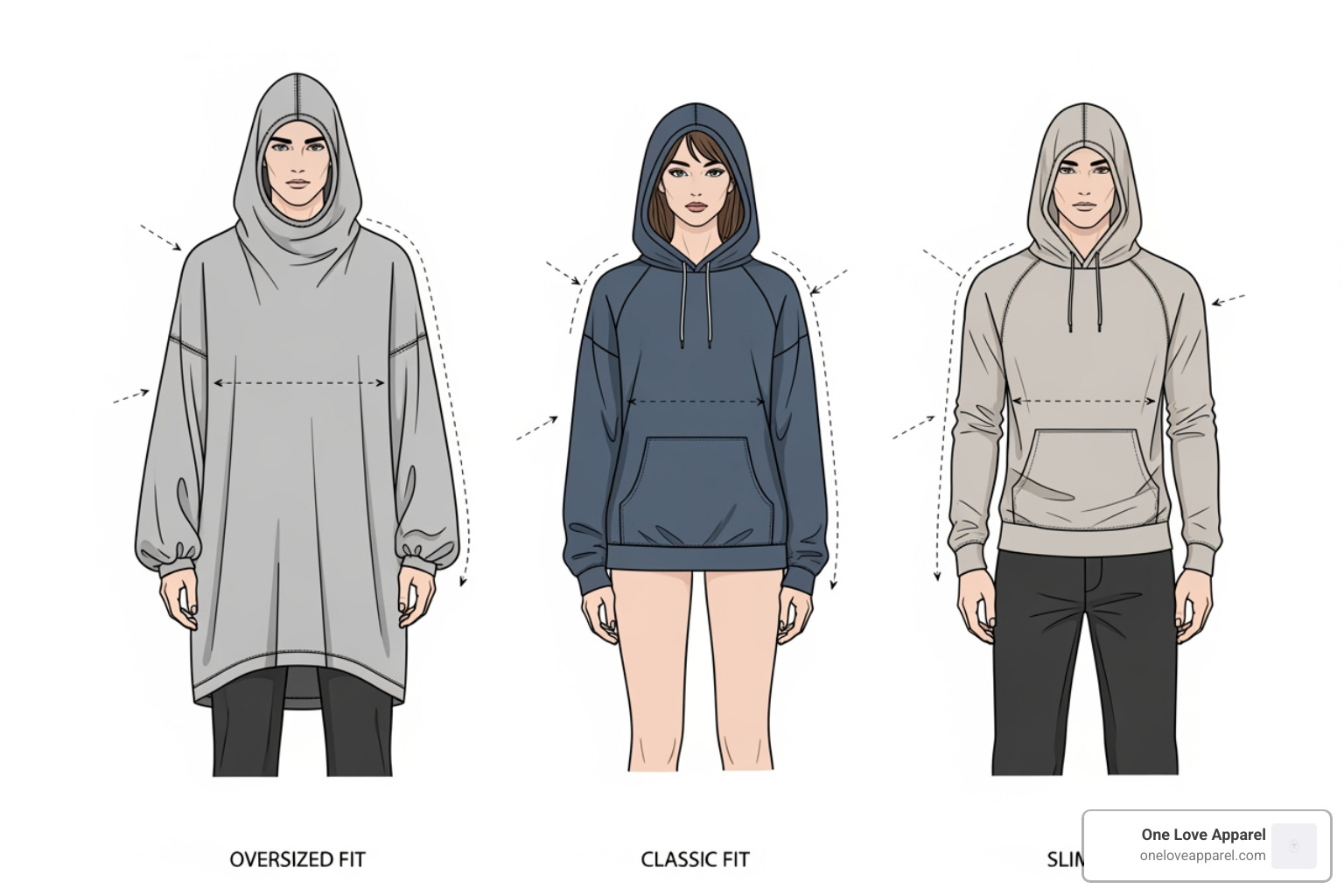
Classic fit hoodies offer a relaxed, comfortable silhouette with plenty of room for movement and layering. It's timeless and never feels too trendy or dated. If you like your clothes a bit roomier or plan to wear thick layers underneath, this is your fit.
For a more modern look, slim fit or body-skimming styles contour closer to your body without being tight. They look sharp and streamlined. Some brands suggest sizing up if you choose this style but prefer a slightly more relaxed feel.
Athletic-cut hoodies are designed with movement in mind. They provide a streamlined look and often include features that improve mobility—great if you're active or just prefer clothes that move with you.
Many quality hoodies come in unisex sizing, which offers a versatile fit for everyone. Just keep in mind that unisex sizing sometimes runs a bit larger than traditional women's sizing, so checking the size chart is always smart.
Look for pre-shrunk garments if you want to avoid surprises. Quality hoodies are pre-washed and shrunk to fit, so they should maintain their size after you wash them. Cotton can still experience minor shrinkage though. Some customers actually accept this—one person shared how they bought a size up knowing their new hoodie would shrink to perfectly match their beloved old one after the first wash!
Style-wise, minimalist designs are having a moment right now. Clean lines, seamless pockets, metal trimmings, and tubular cotton cords create a sophisticated look that works anywhere. The "Zip Cotton Hoodie" exemplifies this approach with its sleek, understated aesthetic.
Color trends shift, but classics like black, gray, and navy never disappoint. Right now, earthy tones are popular—think olive sand, pine sand, cranberry sand, and natural hues. You'll also see vibrant pops of color if that's more your style.
Small details make a difference too. Contrast natural drawcords, lined hoods, and dyed-to-match zippers lift a basic hoodie into something special.
The perfect fit and style are deeply personal. By thinking through these factors, you'll find a 100 cotton zip up hoodie that not only feels incredible but also makes you feel like yourself when you wear it.
The Sustainable Choice: Eco-Friendly and Ethical Cotton
Let's talk about something that matters more than ever: the story behind what we wear. When you choose a 100 cotton zip up hoodie, you're not just picking out a comfortable layer—you're making a choice that ripples outward, touching the environment, communities, and the future we're building together.
I'll be honest: conventional cotton farming has a complicated history. It's traditionally been thirsty for water and reliant on chemicals that aren't great for soil, biodiversity, or the farmers working the fields. But here's where things get exciting—organic cotton is changing the game entirely.
Organic cotton grows without synthetic pesticides, herbicides, or fertilizers. This means healthier soil that can sustain crops for generations, cleaner water sources for communities, and safer working conditions for farmers. The numbers tell a compelling story: a single Unisex French Terry Organic Cotton Full-Zip Hoodie saves approximately 128 gallons of water compared to conventional cotton production. Think about that for a moment—128 gallons saved by one garment. Multiply that across your entire wardrobe, and you're looking at real impact.
But sustainability doesn't stop at the farm. Carbon-conscious production has become a cornerstone of responsible manufacturing. Many ethical brands now offset carbon dioxide emissions from production and shipping by partnering with organizations like Carbonfund.org, which channels support toward renewable energy projects—like wind farms in India or solar installations in developing nations. Your cozy hoodie could literally be helping power cleaner energy somewhere across the globe.
Then there's the human element, which might be the most important part of all. Fair labor practices ensure that every person involved in creating your hoodie—from the cotton pickers to the sewers—receives fair wages and works in safe conditions. Some forward-thinking companies even offer manufacturing traceability, where you can scan a QR code on your garment and see exactly where it was cut and sewn. Suddenly, your hoodie isn't just a piece of clothing; it's a connection to real people and places.
The beautiful thing about natural fibers is that they return to the earth. Unlike synthetic materials that can persist in landfills for centuries, biodegradable cotton completes a natural cycle. When your well-loved hoodie finally reaches the end of its long life, it breaks down naturally, minimizing its environmental footprint.
This broader movement toward sustainable fashion extends beyond cotton, too. Hemp, another remarkable natural fiber, has its own fascinating story of durability and eco-friendliness. Celebrating National Hemp Month: A Journey Through the History of Hemp in Fashion explores how these time-tested materials are making a comeback.
When you invest in an organic, ethically produced 100 cotton zip up hoodie, you're supporting a system that values both people and planet. It's not just about feeling good in what you wear—it's about feeling good about what you wear. And honestly? That comfort runs deeper than any fabric softness ever could.

Frequently Asked Questions about Your 100% Cotton Zip Up Hoodie
We've covered a lot of ground, but I know from experience that some practical questions always come up when you're considering a new 100 cotton zip up hoodie. Let's tackle the most common concerns together, so you can feel confident about your purchase and keep your hoodie looking great for years.
How do I care for my 100% cotton zip up hoodie to prevent shrinking?
Here's the truth: cotton is a wonderful natural fiber, but it does have a tendency to shrink if you're not careful with how you wash it. The good news? A little bit of attention goes a long way toward keeping your hoodie in perfect shape.
Start by washing in cold water. This is your first line of defense against shrinkage. Hot water causes cotton fibers to contract, which is exactly what we want to avoid. Before you toss it in the machine, zip it all the way up. This protects the zipper from snagging and helps your hoodie maintain its shape during the wash cycle.
Choose a gentle detergent rather than harsh chemicals that can break down cotton fibers over time. Skip the bleach entirely—it weakens the fabric and can mess with the color. And here's a simple rule that saves a lot of heartache: wash your hoodie with similar colors to prevent any dye transfer.
Now for the most critical step: drying. High heat is cotton's worst enemy. If you have the space and time, line drying is absolutely your best option. If you need to use a dryer, set it to the lowest heat setting or even air-fluff. Some care labels might suggest a warm dryer, but I've seen too many shrunken hoodies to recommend anything but low heat. A good trick is to remove your hoodie while it's still slightly damp and let it finish air drying.
Follow these simple guidelines, and your 100 cotton zip up hoodie will stay soft, comfortable, and true to size wash after wash.
What is a reasonable price for a high-quality 100% cotton hoodie?
This is a question I hear all the time, and honestly, the answer isn't one-size-fits-all. You'll find 100 cotton zip up hoodie options ranging from around $40 all the way up to $170 or more. That's a pretty big spread, so let's break down what you're actually paying for.
At the lower end, around $40, you might find a solid organic cotton French Terry hoodie made from 8.3-ounce combed ringspun cotton. It's a great entry point for quality natural fiber comfort. As you move into the $60-$100 range, you're typically looking at mid-weight options like 8.5-ounce cotton fleece or 380 g/m² French Terry with better construction details.
When you reach the $100-$170+ range, you're investing in something special. These hoodies often feature heavyweight fabrics—think custom-developed 13 oz./sq. yard combed ringspun cotton fleece that feels incredibly substantial. You'll find premium construction details like reinforced elbow patches, side-panels for better mobility, lined hoods, and heavyweight ribbing that won't stretch out over time.
Price is also influenced by where and how your hoodie is made. Made in USA options, which often come in around $68, reflect higher labor costs but also support domestic manufacturing. Brands committed to ethical production, fair wages, and manufacturing traceability invest more in their supply chains, and that shows up in the price.
Sustainability matters too. Organic cotton farming, water-saving initiatives, and carbon offset programs cost more to implement, but they're investments in our planet. When you see a higher price tag, you're often supporting these important practices.
Think of it this way: a $40 hoodie can be a smart purchase, but a $100-$170 hoodie is often an investment that pays dividends in comfort, durability, and peace of mind about how it was made. The key is finding what matters most to you and choosing accordingly.
What's the difference between French Terry and Fleece in 100% cotton hoodies?
If you're shopping for a 100 cotton zip up hoodie, these two fabric types will come up again and again. They're both wonderful, but they serve different purposes, and understanding the difference helps you choose the right one for your needs.
French Terry is all about versatility. It's a knit fabric with a smooth exterior and loops on the interior—imagine an unbrushed fleece. Those loops create a unique texture that feels comfortable against your skin while providing excellent breathability. You'll typically find French Terry in mid-weight options, like 8.3 ounces or 380 g/m², which gives you warmth without bulk. This makes it perfect for three-season wear. Throw it on during a cool spring morning, wear it on a summer evening, or layer it in early fall. It moves with you, breathes well, and works great for both casual wear and light activity.
Cotton fleece, on the other hand, is your cold-weather companion. The key difference is that brushing process—the interior loops are broken and fluffed up, creating that soft, plush pile we all love. This brushed surface traps more air, which means better insulation and more warmth. Fleece comes in various weights, from mid-weight 8.5-ounce chunky cotton fleece to seriously heavyweight 13 oz./sq. yard options that deliver maximum coziness. When temperatures drop and you want to feel wrapped in warmth, fleece is your answer.
Here's how I think about it: French Terry is breathable and adaptable, perfect when you need a layer that won't make you overheat. Fleece is cozy and insulating, ideal when you want to stay warm and comfortable in colder weather. Both are excellent choices for a 100 cotton zip up hoodie—it just depends on whether you're looking for year-round versatility or winter warmth.
Conclusion: The Ultimate Wardrobe Staple
There's something special about finding that one piece of clothing you reach for again and again. For many of us, that piece is a 100 cotton zip up hoodie—and now you know exactly why.
Throughout this guide, we've explored what makes these hoodies so exceptional. The natural breathability that keeps you comfortable in changing temperatures. The softness that only gets better with time. The durability that comes from quality construction and thoughtful details like reinforced stitching and heavyweight ribbing. These aren't just nice features—they're the reasons your hoodie becomes a trusted companion for years, not just months.
Beyond personal comfort, choosing a 100 cotton zip up hoodie reflects values that matter. When you opt for organic cotton, you're supporting farming practices that save precious water—about 128 gallons per garment. You're choosing biodegradable materials over synthetics that linger in landfills. And when you seek out ethically produced hoodies with manufacturing traceability, you're standing with the real people who craft these garments, ensuring they receive fair wages and work in safe conditions.
At One Love Apparel, we've built our business on a simple belief: quality matters. Just as we provide high-quality, comfortable apparel made from soft, lightweight combed and ring-spun cotton in our t-shirts, we recognize that same commitment to excellence in the perfect hoodie. We understand what it means to create flattering, pre-shrunk garments for both men and women that emphasize comfort and durability—because those are the pieces that become part of your daily life.
Whether you're drawn to the versatile breathability of French Terry for three-season wear or the cozy warmth of heavyweight fleece for chilly mornings, your ideal 100 cotton zip up hoodie is out there waiting. It's an investment that pays dividends in comfort, longevity, and peace of mind. And sometimes, the clothing we choose does more than keep us comfortable—it opens doors to conversations about what we value and the causes we support. Wearing Your Heart on Your Sleeve: How Apparel Can Spark Conversations About Causes That Matter
So go ahead and find that perfect hoodie. The one that fits just right, feels amazing, and stands the test of time. Your wardrobe—and the planet—will thank you.