



Investing in High Quality Basic Wardrobe Staples
Why High Quality Clothing Is Worth Every Dollar You Spend

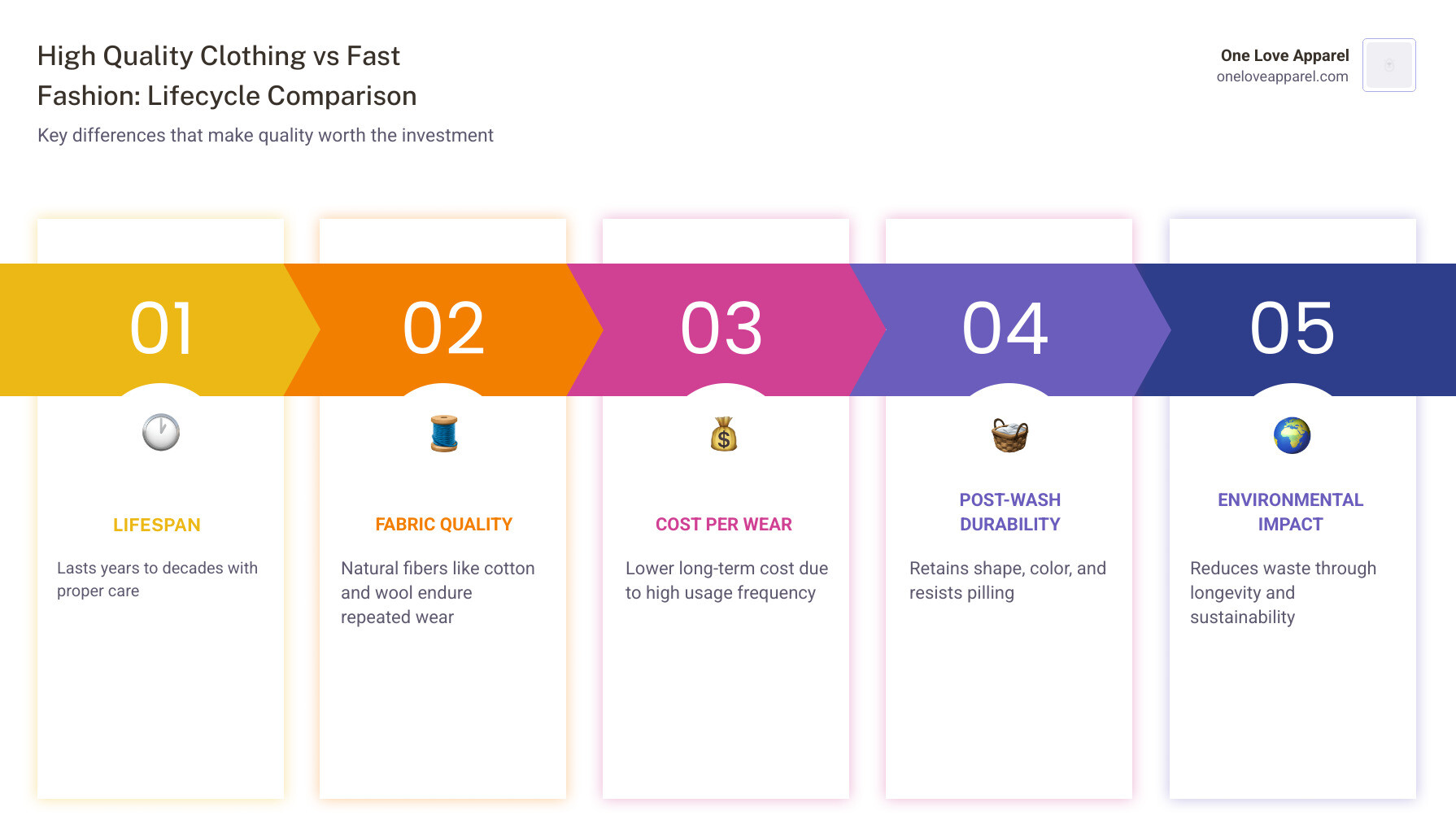
High quality clothing lasts longer, feels better, and costs you less over time than cheap alternatives — here's a quick look at the top reasons to invest:
| Factor | High Quality Clothing | Fast Fashion |
|---|---|---|
| Lifespan | Years to decades | Months |
| Fabric | Natural fibers (cotton, wool, cashmere) | Synthetic blends |
| Cost per wear | Low (spread over many uses) | High (replaced frequently) |
| After washing | Holds shape and color | Fades, shrinks, pills |
| Environmental impact | Lower (less waste) | High (landfill-bound fast) |
Most of us have been there — you buy a cheap t-shirt, wash it three times, and suddenly it's a different size with a faded print. Fast fashion has made this the norm.
But it doesn't have to be.
The clothing industry has shifted heavily toward mass production and cost-cutting. That means thinner fabrics, weaker stitching, and garments that wear out fast. The good news? There's a growing movement of brands — at every price point — that still prioritize craftsmanship, durable materials, and ethical production.
This guide will walk you through exactly how to find them, what to look for, and how to build a wardrobe that actually lasts.
I'm David Vail, owner of One Love Apparel and a longtime professional in the apparel and retail industry, and I've spent years studying what separates truly high quality clothing from everything else. I'll share what I've learned so you can shop smarter, not harder.
What Defines High Quality Clothing in the Modern Era?
In an era where "new arrivals" hit stores every Tuesday, the definition of quality has become a bit blurred. To us, high quality clothing isn't just about a fancy logo or a high price tag. It’s about how a garment is engineered from the fiber up.

Fabric Composition: The Foundation of Quality
The journey of a great garment begins with the raw materials. Natural fibers like wool, silk, linen, and cashmere are the gold standard because they breathe, regulate temperature, and age gracefully. However, cotton remains the undisputed king of the wardrobe staple.
When evaluating cotton, not all plants are created equal. Research shows that organic cotton is known to be a lot stronger than conventional cotton. Because organic cotton is grown without harsh chemicals, the fibers remain intact and robust, leading to a garment that maintains its integrity through hundreds of wash cycles.
We also look for specific processing techniques. For example, combed ring-spun cotton involves spinning the cotton fibers into very fine, strong, and soft ropes of thread. The "combing" process removes short, pricklier fibers and impurities, leaving only the longest, smoothest strands. The result? A shirt that feels like a cloud but wears like iron.
Craftsmanship and Stitch Density
If you want to spot high quality clothing in the wild, turn it inside out. In mass-produced garments, you’ll often find "loose" stitching (fewer stitches per inch) because it’s faster and cheaper to produce. High-quality pieces feature a high stitch density, which prevents seams from puckering or pulling apart under stress.
Another hallmark of quality is pre-shrunk treatment. There is nothing more frustrating than buying a perfectly fitting shirt only to have it turn into a crop top after the first laundry day. Brands committed to quality ensure their fabrics are laundered or treated before the sewing process so the fit you buy is the fit you keep.
The Role of Sustainable Materials and Ethical Production
Quality and sustainability are two sides of the same coin. Sustainable manufacturing processes usually involve better craftsmanship, which naturally reduces wear and tear and prevents clothes from being sent to the landfill prematurely.
When we talk about high quality clothing, we must look for certifications that guarantee both environmental and human standards:
- Global Organic Textile Standard (GOTS): The world's leading processing standard for organic fibers.
- Fairtrade International: Ensures that farmers and workers are paid fairly and work in safe conditions.
- Certified B Corporation: A designation that a business is meeting high standards of verified performance, accountability, and transparency.
The statistics are eye-opening. For instance, leading sustainable brands often use only a third of the water compared to traditional denim companies, and aim to source 100% of their materials from recycled or renewable sources. Other eco-conscious initiatives have planted millions of trees, proving that high-quality production can actually give back to the planet.
Key Factors for Evaluating High Quality Clothing
Before you tap your credit card, run through this mental checklist:
- Fabric Weight: Does it feel substantial? While "heavy" doesn't always mean better, a certain density usually indicates a tighter weave.
- Seam Construction: Are the seams straight? Look for "felled" seams or reinforced stitching in high-stress areas like armpits and necklines. If you're looking for a daily driver, check out this guide to finding the best everyday shirts.
- Pilling Resistance: Rub the fabric against itself. If it immediately starts shedding or forming little balls (pills), it’s likely made of short, low-quality fibers.
- Color Fastness: High-quality dyes penetrate deep into the fiber, meaning your blacks stay black and your whites don't turn a dingy grey after three months.
Essential Elements of a Premium Wardrobe
Building a wardrobe of high quality clothing isn't about owning more clothes; it's about owning the right clothes. A premium wardrobe is built on timeless silhouettes and versatile layers that can be dressed up or down.
Natural vs. Synthetic: The Durability Face-off
| Fiber Type | Durability | Breathability | Environmental Impact |
|---|---|---|---|
| Organic Cotton | High | Excellent | Low |
| Merino Wool | High | Superior | Low |
| Polyester | Moderate | Poor | High (Microplastics) |
| Rayon/Viscose | Low | Moderate | High (Chemical intensive) |
A premium wardrobe relies on foundations. For many, this starts with the perfect hoodie. While fast-fashion hoodies often lose their shape and become "baggy" in all the wrong places, a premium hoodie is worth the investment because it uses higher-weight fabric and reinforced ribbing at the cuffs and hem to maintain its structure for years.
Evaluating Craftsmanship and Manufacturing Origin
The "Made In" label can tell you a lot about the philosophy behind a garment. While great clothing can be made anywhere, certain regions have spent centuries perfecting specific crafts.
- Italy: Renowned for artisanal tailoring and world-class leather.
- Scotland: The historic home of high-quality cashmere and woolens, with heritage workshops crafting garments since the 1700s.
- USA: Known for rugged, "built-to-last" workwear and premium basics. For a deeper dive, see our complete guide to American-made apparel.
Small-batch production is often a key indicator of quality. When a brand produces fewer items, they can maintain a much higher level of oversight. This leads to finished internal seams (no fraying threads!) and a level of attention to detail that mass production simply cannot replicate.
How to Source High Quality Clothing Affordably
We know what you're thinking: "This sounds great, David, but my bank account isn't ready for a £4,500 luxury designer puffer jacket."
We hear you! High quality doesn't always have to mean "luxury" prices.
The Direct-to-Consumer (DTC) Advantage
The rise of DTC brands has changed the game. By cutting out the middleman (the big department stores), brands can offer premium materials like Mulberry silk, cashmere, and organic cotton at a fraction of the traditional retail price. Many transparent DTC brands are famous for this approach, often sharing the exact cost of materials and labor for every item they sell.
The Power of Resale and Secondhand
If you have your heart set on a specific high-end designer but don't want to pay the "new" price, the secondhand market is your best friend. Resale platforms offer high-end brands at up to 90% off estimated retail prices. This is not only a win for your wallet but also for the planet, as it extends the lifecycle of garments that were already built to last.
When shopping for basics like sweats, you can find incredible value by looking for the best 100% cotton hoodies from brands that focus on "blanks" or essentials. These brands put their entire budget into the fabric and construction rather than expensive marketing campaigns.
Building a Timeless Wardrobe with High Quality Clothing Staples
The most affordable way to dress well is to adopt a "capsule wardrobe" mindset. This means choosing pieces that all work together.
- For Women: Start with a high-quality white tee. Check out the definitive guide to women's tees to find a fit that flatters. Add a versatile midi skirt and a well-tailored blazer.
- For Men: Focus on essential layers. A soft, durable tank is a must-have for year-round wear. We recommend this guide to organic and soft tanks to help you choose the right base layer.
- The Golden Rule: Quality over quantity. Buying one $50 shirt that lasts five years is significantly cheaper than buying five $15 shirts that each last six months.
Frequently Asked Questions about High Quality Clothing
How can I tell if a garment is high quality?
The "hand-feel" is a great first indicator. Does it feel soft yet substantial? Check the label for natural fiber percentages—aim for 100% cotton, wool, or silk where possible. Also, look at the hardware; high-quality brands use metal zippers (like YKK) and securely sewn buttons. For a deeper look at what makes a garment durable, read more on ring-spun cotton hoodies.
Is organic cotton really better than conventional cotton?
Yes, and not just for the environment. Organic cotton fibers are generally longer and haven't been weakened by the chemical bleaching and scouring used in conventional farming. This gives them higher tensile strength. Furthermore, choosing brands with Climate Neutral certification ensures that the production process isn't just better for your skin (less chemical residue), but better for the global climate too.
Why is high quality clothing more expensive?
It comes down to three things: fair wages, premium raw materials, and slower production. When workers are paid a living wage and fabrics are sourced ethically, the cost goes up. However, the "cost-per-wear" is much lower. For example, the benefits of soft cotton sweatshirts include the fact that they won't pill or lose their shape, meaning you won't have to replace them every season.
Conclusion: The One Love Apparel Philosophy
At One Love Apparel, we believe that high quality clothing should be accessible, comfortable, and built for real life. We specialize in providing flattering, pre-shrunk t-shirts for both men and women, emphasizing a "buy once, wear forever" mentality.
Our shirts are crafted from soft, lightweight combed and ring-spun cotton. We know that the best clothes are the ones you don't have to think about—they just fit, they stay soft, and they look great wash after wash. By focusing on these durable basics, we help you build a wardrobe that reflects your values.
Whether you're dressing for a casual Saturday or layering for a professional look, your clothing is an investment in yourself and the world around you. We're big believers in wearing your heart on your sleeve and choosing apparel that sparks conversations about the things that truly matter.
Ready to upgrade your basics? Start with pieces that feel as good as they look. Your future self (and your closet) will thank you.