

Beyond the Thread: Discovering the Best Lightweight Cotton Fabrics
What Is Lightweight Cotton Fabric? A Quick Guide to the Best Types
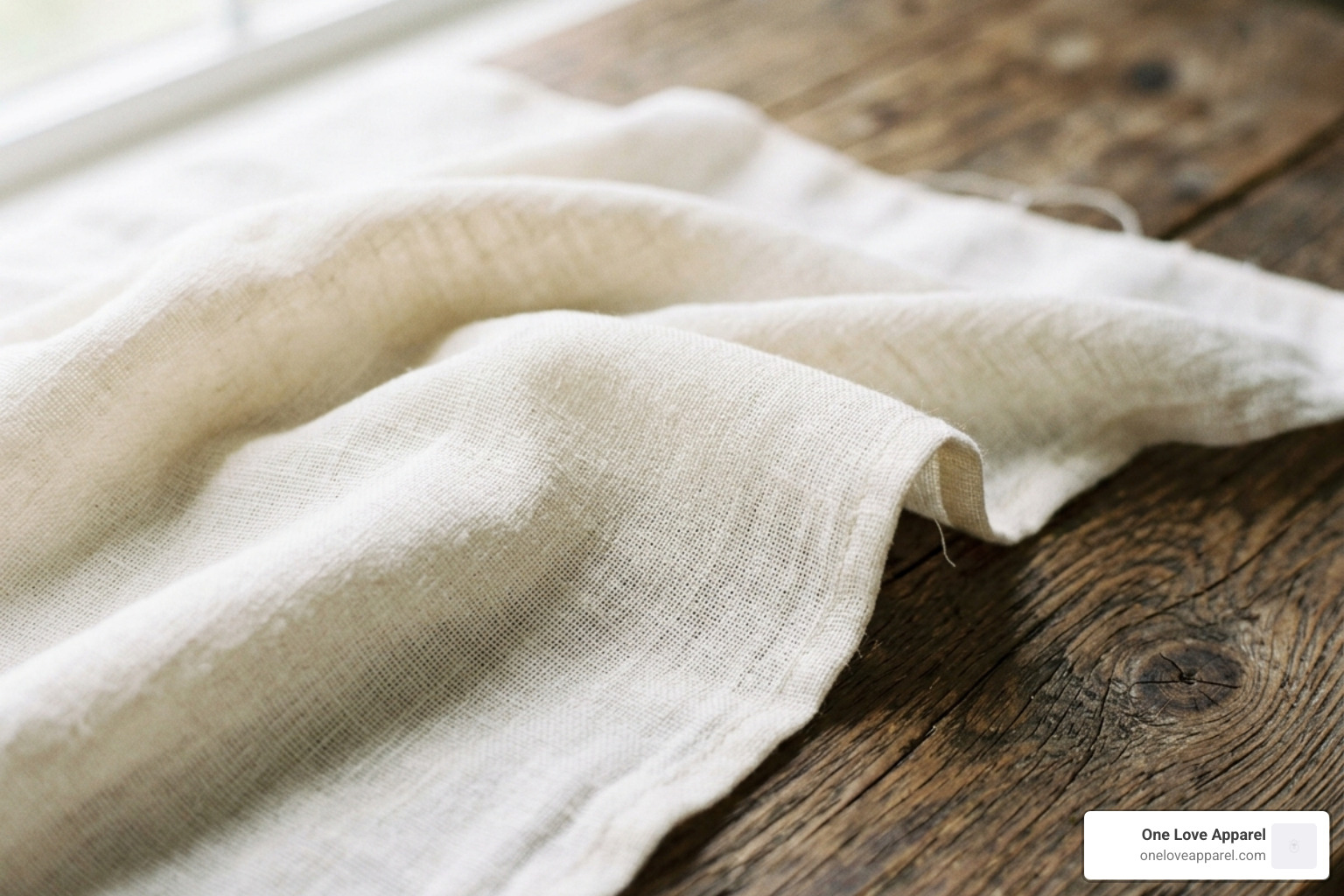
Lightweight cotton fabric is any cotton textile that weighs roughly 60–130 GSM (about 2–4 oz per square yard), offering a soft, breathable feel that's ideal for warm-weather wear, flowing garments, and everyday comfort.
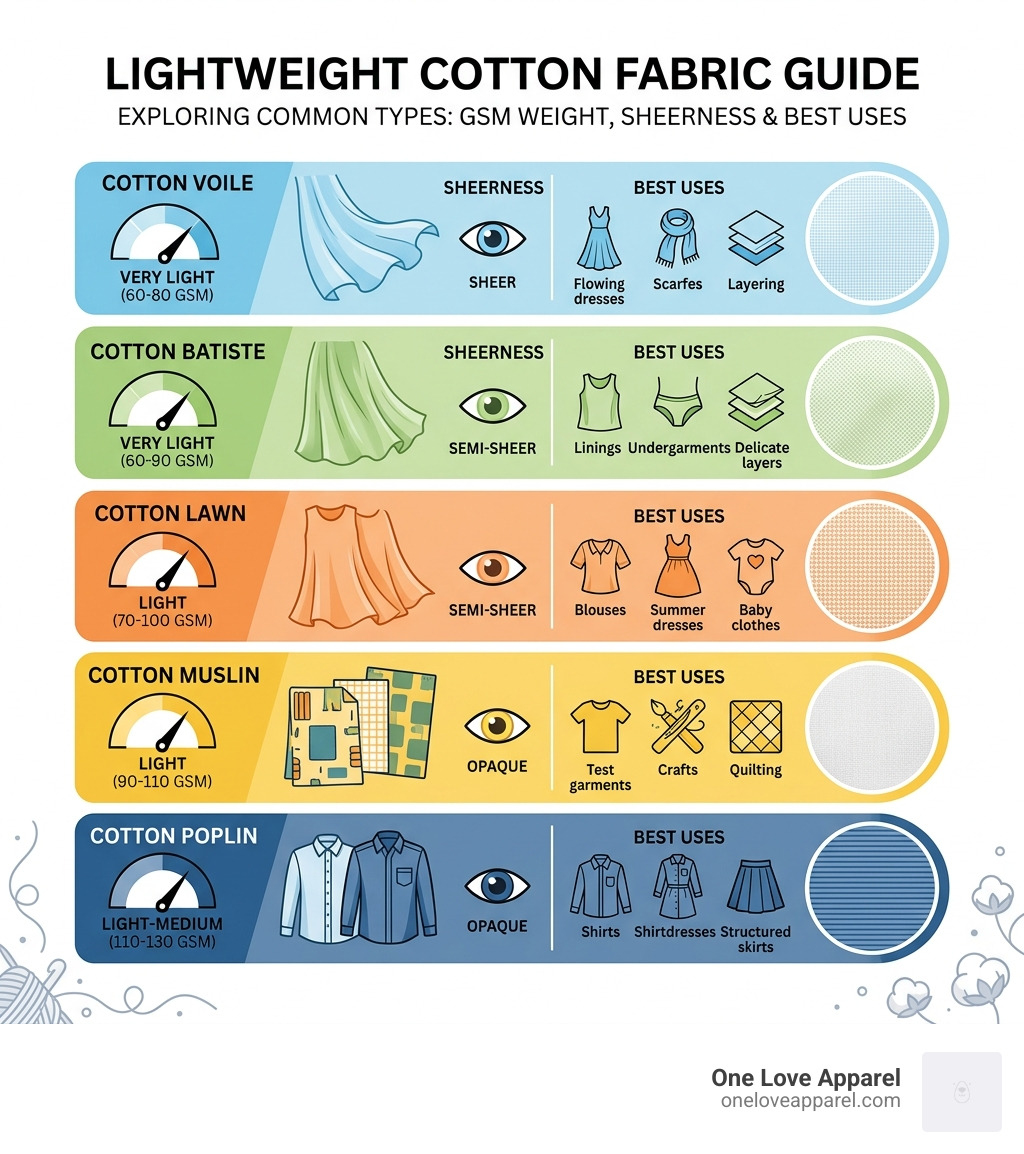
Here are the most common types at a glance:
| Fabric Type | Weight | Best For |
|---|---|---|
| Cotton Voile | Very light, sheer | Flowy dresses, scarves, layering |
| Cotton Lawn | Light, semi-sheer | Blouses, summer dresses, baby clothes |
| Cotton Muslin | Light, opaque | Test garments, crafts, quilting |
| Cotton Poplin | Light-medium, crisp | Shirts, shirtdresses, structured skirts |
| Cotton Batiste | Very light | Linings, undergarments, delicate layers |
Each type has a different feel, drape, and best use — and picking the right one makes a real difference in your finished project.
Choosing the wrong fabric can leave you with a garment that's too stiff, too sheer, or just uncomfortable to wear. That's especially true for people who value soft, true-to-fit casual wear that holds up wash after wash.
This guide breaks down every major lightweight cotton type so you can find exactly what works for your needs — whether you're sewing, crafting, or just shopping smarter.
I'm David Vail, owner of One Love Apparel and a longtime apparel industry professional with hands-on experience across retail, branding, and garment production — including working closely with lightweight cotton fabric in the context of everyday wearable design. That background shapes everything in this guide, so let's get into it.
Lightweight cotton fabric basics:
What Defines a Lightweight Cotton Fabric?
When we talk about lightweight cotton fabric, we are describing a textile that prioritizes breathability and movement. Unlike heavy denim or thick canvas, which are designed for rugged durability and stiffness, lightweight cottons are characterized by an airy weave. These fabrics are the champions of moisture-wicking and heat regulation, making them a staple for anyone living in warmer climates or looking for that "barely there" feeling in their clothing.

The primary difference between a lightweight cotton fabric and its heavier counterparts lies in the construction of the yarns and the density of the weave. Heavier fabrics use thicker, coarser yarns packed tightly together. Lightweight options use finer threads, often treated through processes like mercerization to increase strength and luster without adding bulk. This results in a fabric that has a beautiful drape—the way the fabric hangs and flows over a form—rather than standing away from the body.
Understanding GSM and Thread Count
To truly master fabric selection, we need to look at the numbers. The two most important metrics are GSM (Grams per Square Meter) and thread count.
- GSM (Weight): For a lightweight cotton fabric, you are typically looking at a range of 60 to 130 GSM. In imperial measurements, this translates to roughly 2 to 3.8 oz per square yard. For example, a very fine cotton lawn might sit at 65 GSM, while a sturdier poplin might reach 130 GSM.
- Thread Count (Density): This refers to the number of horizontal and vertical threads per square inch. A higher thread count in a lightweight fabric usually indicates a smoother, silkier hand feel. For instance, high-quality cotton lawn often features a thread count around 90x88, creating a tight but incredibly fine surface.
Understanding these specs helps you predict how a fabric will behave. A lower GSM usually means more sheerness and more "float," while a higher GSM within the lightweight category offers more opacity and structure. If you are worried about your clothes losing their shape after the first wash, it is also vital to understand what is preshrunk cotton to ensure your lightweight garments stay true to size.
Bleached vs. Unbleached Lightweight Cotton Fabric
When browsing for lightweight cotton fabric, especially varieties like muslin, you’ll often face the choice between bleached and unbleached (natural) options.
- Natural/Unbleached Muslin: This fabric retains the natural creamy, off-white color of the cotton fiber. It often contains small flecks of cotton hull. It is generally chemical-free and is the go-to choice for eco-conscious crafters or those creating a rustic, "peasant" aesthetic.
- Bleached White Cotton: This has been treated to achieve a crisp, bright white finish. It is the standard for White Lightweight Cotton Lawn used in summer blouses and professional shirting.
- Dyeability: Both options are highly receptive to dye. However, unbleached cotton may result in more muted, earthy tones, while bleached cotton allows for vibrant, true-to-color results when using fiber-reactive dyes.
Top Varieties of Lightweight Cotton for Sewing and Crafts
Choosing the right variety of lightweight cotton fabric is like choosing the right tool for a job. Each has a unique personality.
| Feature | Cotton Lawn | Cotton Voile | Cotton Poplin | Muslin |
|---|---|---|---|---|
| Hand Feel | Silky, smooth | Soft, slightly crisp | Smooth, polished | Textured, soft |
| Opacity | Semi-sheer | Sheer | Opaque | Opaque to Semi-sheer |
| Structure | Moderate body | Very flowy | Crisp/Stable | Flexible |
| Best Use | Blouses, Linings | Scarves, Gowns | Button-downs | Test patterns |
Cotton Lawn and Voile
If you are looking for elegance and a "silky hand," these are your top contenders.
Cotton Lawn Fabric is a plain-weave textile made from fine, high-count yarns. It is famous for its "crisp" but soft finish. It isn't quite as floppy as voile, which gives it enough body to hold the shape of a pleated blouse or a gathered skirt. It is also a fantastic choice for garment linings because it feels wonderful against the skin. You can find high-quality 100% Cotton Lawn Fabric | Lightweight Cotton Fabric | 60" Wide – My Textile Fabric that works perfectly for these applications.
Cotton Voile is even lighter and more sheer. It is the ultimate "breezy" fabric. Because it is so thin, it is often layered to create ethereal, flowing dresses that catch the wind. It is exceptionally breathable, making it a favorite for scarves and baby clothing where softness is the highest priority.
Cotton Poplin and Muslin
For projects that require a bit more "backbone," poplin and muslin are the industry standards.
Lightweight Silky Cotton Poplin (also known as broadcloth) features a fine horizontal ribbing. It is tightly woven, which makes it incredibly durable despite its light weight. This is the fabric of choice for high-end button-up shirts and shirtdresses. It holds a press beautifully, giving you those sharp collars and crisp hems. We often look for premium combed cotton in these weaves because the combing process removes shorter fibers, resulting in a stronger, smoother yarn that elevates the poplin's finish.
Cotton Muslin Fabric is the ultimate utility player. In the fashion world, designers use it to create "toiles" or test garments. Because it is affordable and stable, it allows you to perfect the fit of a dress before cutting into expensive silk. However, don't dismiss it as just a "drafting" fabric; high-quality, 100 % Cotton Muslin 45" is widely used for quilting, backing, and even "peasant-style" apparel.
Performance and Best Projects for Lightweight Cotton Fabric
How a lightweight cotton fabric performs depends on your project goals. Because cotton is a natural fiber, it is generally easy to handle under a sewing machine, making it a "forgiving" choice for beginners and pros alike.
Draping and Apparel Construction
When we design apparel, we think about how the fabric moves with the wearer. Lightweight cottons are prized for creating "flowy silhouettes."
- Flattering Fit: Because these fabrics aren't bulky, they drape closer to the body without clinging. This is why super soft cotton tees are so popular—they offer a clean look that feels effortless.
- The "Secret" to Quality: Much of the performance comes down to the yarn. At One Love Apparel, we advocate for beyond basic unraveling combed ringspun cotton. This process twists the cotton fibers together to create a much stronger, smoother strand than "open-end" cotton. The result? A lightweight shirt that doesn't pill, doesn't feel scratchy, and lasts through hundreds of washes.
- Layering: Lightweight cottons like lawn and voile are perfect for "underlining." This is a technique where you sew a layer of lightweight cotton to the back of your main fashion fabric to give it more body or to make a sheer fabric more opaque.
For those cooler evenings, a soft cotton hoodie for men made from a slightly heavier but still breathable cotton knit provides the perfect balance of warmth and airflow.
Quilting and Embroidery Applications
In crafts, lightweight cotton fabric is indispensable.
- Embroidery: A tight, fine weave like Cotton Lawn 56/57" provides a stable surface for intricate needlework. The needle can pass through easily without leaving large holes, and the fabric is strong enough to support the weight of the thread.
- Quilting: While standard quilting cotton is medium-weight, many quilters use lightweight poplin or lawn for "finer" quilts. These fabrics result in a quilt that is less heavy and more "drapey," perfect for summer throws.
- Comfort Items: For items that sit close to the skin, like soft cotton sweatshirts or pajamas, the breathability of lightweight cotton prevents overheating during sleep.
Buyer’s Guide: Quality Factors and Care Tips
Buying lightweight cotton fabric by the yard requires a little bit of strategy. Here is what we recommend looking for:
- Width Options: Most apparel fabrics come in 45-inch or 60-inch widths. A 60-inch width (like many Lightweight Cotton options) gives you more "bang for your buck," allowing you to cut larger pattern pieces with less waste.
- Yardage Deals: If you are making a full dress or a set of curtains, look for "bolt" pricing. Buying 10+ yards often triggers a significant discount.
- Customer Ratings: When shopping online (especially on platforms with Prime shipping), pay attention to the reviews regarding "hand feel" and "transparency." A fabric might look opaque in a photo but arrive very sheer.
- Certifications: Look for Oeko-Tex Standard 100 or BCI (Better Cotton Initiative) labels. These ensure the fabric was produced sustainably and is free from harmful chemicals—essential for baby clothes or sensitive skin.
Care and Maintenance
To keep your lightweight cotton fabric looking new, follow these expert tips:
- Pre-treating is Non-Negotiable: Cotton shrinks. Always wash and dry your fabric before you cut your pattern. Use the same temperature settings you plan to use for the finished garment.
- The Vinegar Trick: For vibrant colors (like a Lightweight Silky Cotton Poplin - Light Pink | Core Fabrics ), add a half-cup of white vinegar to the final rinse cycle. This helps set the dye and prevents bleeding.
- Machine Wash Cold: Heat is the enemy of fine cotton fibers. Washing in cold water preserves the integrity of the spinning comfort your guide to ring spun cotton hoodies and prevents premature wear.
- Hang Dry: Whenever possible, air-dry your lightweight cottons. If you must use a dryer, use a low-heat, tumble-dry setting.
- Ironing: Use a hot iron with plenty of steam to get rid of the wrinkles that are natural to 100% cotton.
Frequently Asked Questions
Is lightweight cotton fabric see-through?
It depends on the weave. Voile and batiste are intentionally sheer and usually require a lining or layering. Cotton lawn is "semi-sheer," meaning you might see a silhouette through it in bright light. Poplin and high-quality muslin are generally opaque enough to wear on their own, though white versions of any lightweight fabric may still require a nude-colored undergarment.
Does lightweight cotton shrink?
Yes. 100% cotton is a natural fiber that can shrink anywhere from 1% to 6% depending on the weave. Muslin tends to shrink more (up to 6% in width), while lawn and poplin shrink less. This is why we always emphasize the importance of knowing what is preshrunk cotton when buying ready-to-wear apparel.
What is the best lightweight cotton for summer?
For maximum airflow, Cotton Voile is the winner. However, for a balance of durability, style, and breathability, Cotton Lawn is the most versatile "all-rounder" for summer dresses and blouses.
Conclusion
At One Love Apparel, we believe that the best clothing starts with the best raw materials. Whether you are a DIY sewist or someone looking for the perfect everyday tee, understanding lightweight cotton fabric allows you to make choices that prioritize your comfort.
We specialize in using combed and ring-spun cotton because it provides the durability of a heavier fabric with the soft, airy feel of a premium lightweight textile. From the way our shirts fit to the way they survive the laundry, every detail matters. If you're looking for that perfect blend of comfort and longevity, check out our guide on spinning comfort your guide to ring spun cotton hoodies to see how we apply these fabric principles to everything we make.
Choose your fabric wisely, treat it with care, and enjoy the unmatched comfort that only high-quality cotton can provide!