



Stop the Cycle and Build a Kinder School Community
Bullying Is More Common Than You Think — Here's What You Can Do About It

How to stop bullying starts with understanding it, recognizing it, and taking clear action. Here's a quick overview:
- Learn what bullying is — repeated, intentional harm with a power imbalance
- Spot the warning signs — mood changes, school avoidance, unexplained injuries
- Talk openly — daily check-ins with kids build trust before problems start
- Respond quickly — consistent adult responses are proven to reduce bullying over time
- Empower bystanders — peer intervention is one of the most effective deterrents
- Address cyberbullying separately — it follows kids home and requires different strategies
- Escalate when needed — involve school staff, counselors, or law enforcement for serious cases
Bullying isn't just a schoolyard problem. According to national data, bullying occurs on a daily or weekly basis in roughly 23% of public schools across the United States. That means millions of children are showing up to school in environments where they don't feel safe.
What makes bullying different from a regular conflict? Three things: intent, repetition, and a power imbalance. One kid having a bad day and saying something unkind is not bullying. A pattern of targeted, harmful behavior — physical, verbal, or social — absolutely is. That distinction matters, because the right response depends on understanding exactly what you're dealing with.
The effects go far beyond hurt feelings. Children who are bullied can experience lasting problems that interfere with their social and emotional development and school performance. And the harm doesn't stop at the victim — it touches bullies, bystanders, and entire school communities.
I'm David Vail, owner of One Love Apparel and a longtime advocate for kindness and community — values that sit at the heart of everything we do. My work building brands and relationships across industries has reinforced one truth: culture starts with people choosing to treat each other better, and knowing how to stop bullying is a critical part of that. This guide walks you through practical, research-backed steps to do exactly that.
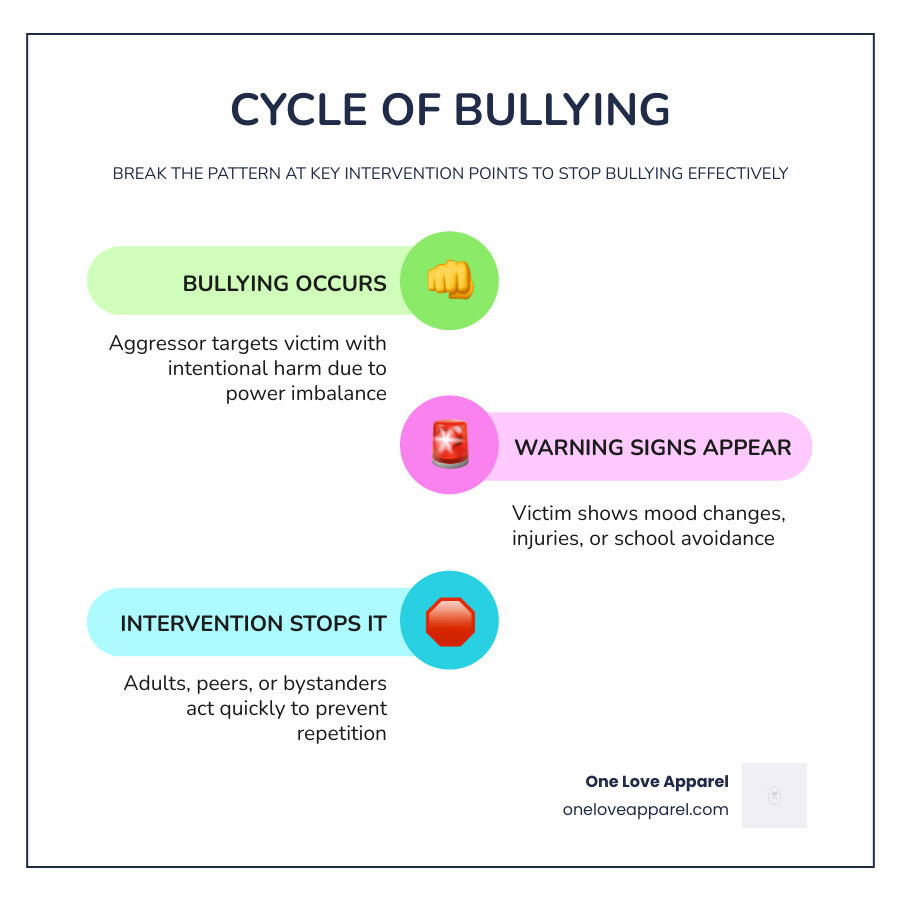
How to stop bullying terms to learn:
Understanding the Dynamics: What is Bullying?
To effectively address the issue, we must first define it. Bullying is not just "kids being kids" or a normal rite of passage. It is a specific form of aggressive behavior characterized by an imbalance of power. This power can be physical strength, access to embarrassing information, or popularity.
There are several primary forms of bullying:
- Physical aggression: Hitting, kicking, tripping, or damaging property.
- Verbal abuse: Name-calling, insults, teasing, and intimidation.
- Relational bullying: Also known as social bullying, this involves hurting someone’s reputation or relationships through exclusion, spreading rumors, or embarrassing someone in public.
The core of the issue lies in intentionality. The person bullying intends to cause pain or distress. Furthermore, it is usually a repeated behavior—it happens more than once or has the potential to happen again. Understanding these nuances is vital because misdirections in anti-bullying strategies often occur when adults treat a one-time peer conflict the same way they treat a systemic bullying situation.
Recognizing the Warning Signs
Children often feel ashamed or afraid to speak up when they are being targeted. As adults, we have to be detectives. Some signs are obvious, like unexplained injuries or "lost" or damaged belongings (clothing, books, electronics). Others are internal.
Watch for sudden changes in behavior, such as:
- School avoidance: Faking illness to stay home or a sudden drop in grades.
- Physical symptoms: Frequent headaches or stomachaches, which are often linked to serotonin levels and stress.
- Mood changes: Appearing sad, anxious, or irritable after school or spending time online.
If you notice these shifts, it's time to dig deeper. You can find more details in these 10 fast facts about school bullying.
The Long-Term Impact on Mental Health
The "sticks and stones" adage is dangerously wrong. The emotional damage from bullying can last a lifetime. Victims are at a significantly higher risk for depression and anxiety, which can manifest as social withdrawal or even suicidal ideation.
The impact isn't limited to the victim. Bullies themselves are at a higher risk for substance abuse and criminal behavior later in life. Even bystanders—the "silent majority"—experience increased anxiety and guilt from witnessing the mistreatment of their peers. We believe in strength beyond silence, recognizing that addressing mental health is a cornerstone of prevention.
How to Stop Bullying: Strategies for Parents and Educators
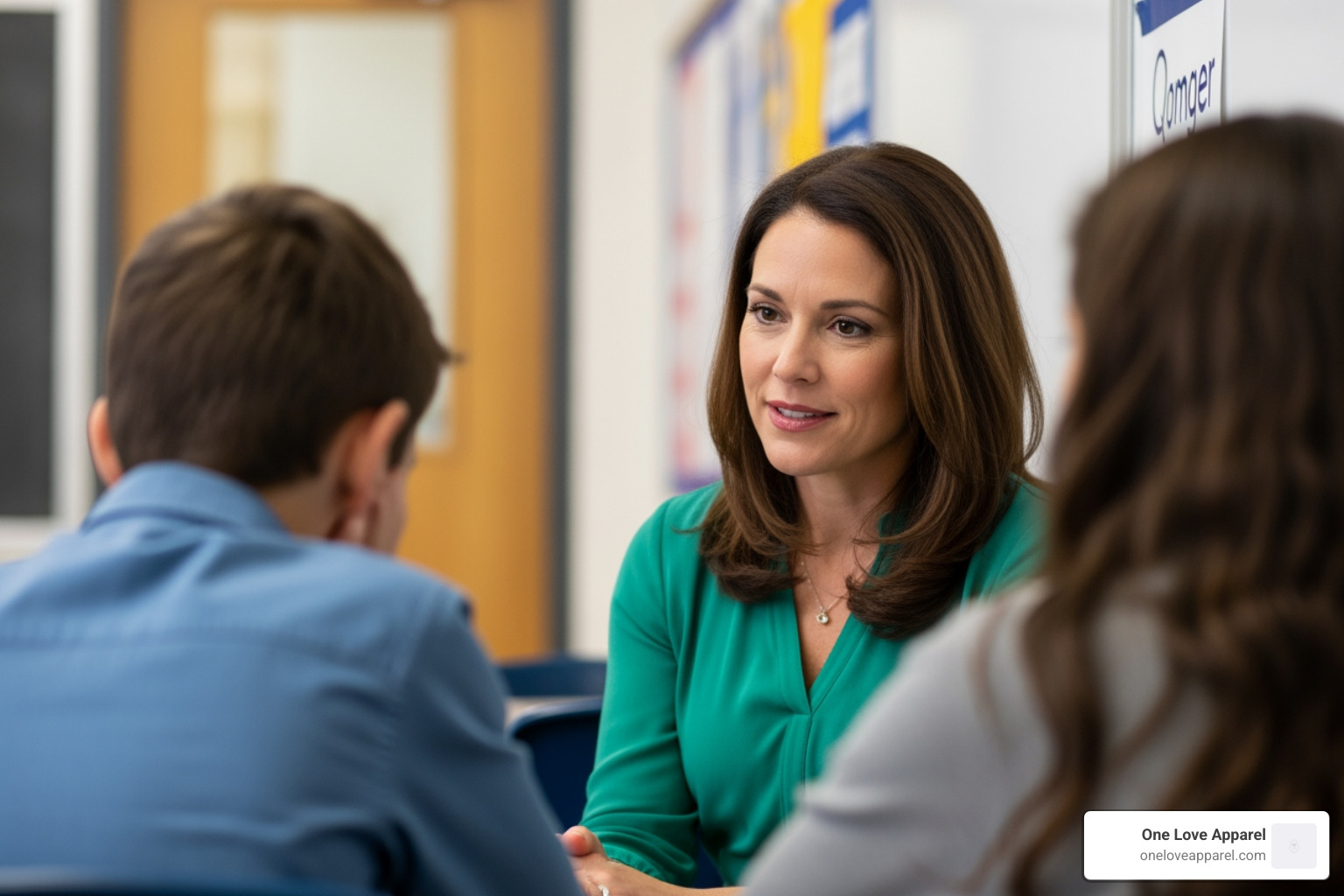
Stopping the cycle requires a united front between home and school. The most powerful tool we have is open communication. Research suggests that spending just 15 minutes a day in a focused conversation with your child can build the trust necessary for them to come to you when things go wrong.
For Parents:
- Listen without judgment: If your child opens up, stay calm. Validate their feelings instead of jumping straight to "fixing" it.
- Be a role model: Children watch how we handle conflict. If we use aggression or sarcasm to get our way, they will likely model that behavior.
- Encourage interests: Helping a child find hobbies or sports builds a social circle outside of the "pinch points" where bullying occurs.
For Educators: Creating a safe school climate is a full-time job. It involves more than just posters on the wall; it requires specific classroom teacher training to identify subtle bullying. Schools should establish clear, written policies that are enforced consistently. When adults respond quickly and consistently, they send a message that the behavior is unacceptable. For more on this, read about building safe school environments.
Empowering the Upstander: How to Stop Bullying Through Peer Intervention
The most effective deterrent to bullying isn't a teacher or a principal—it’s another student. Peer intervention is the number one way to stop a bullying incident in its tracks. However, we often see the "bystander effect," where students stay silent because they are afraid of becoming the next target or think someone else will step in.
We need to teach kids how to be upstanders. This doesn't mean they have to physically fight. An upstander can:
- Redirect: "Hey, let's go play soccer instead."
- Support: Sit with the victim so they aren't alone.
- Report: Tell a trusted adult (reminding them that reporting is for protection, while "tattling" is to get someone in trouble).
Empowering students to speak up is a core part of how you can help prevent bullying.
Addressing the Root Causes of Aggressive Behavior
To stop the cycle, we have to ask why the bullying is happening. Often, children who bully have been victims themselves or are experiencing trauma at home. They may lack empathy or have poor impulse control.
Addressing these root causes involves:
- Trauma-informed care: Understanding that aggressive behavior is often a symptom of a deeper struggle.
- Empathy building: Using role-playing or literature to help children understand how their actions affect others.
- Mentoring: Connecting at-risk youth with positive role models. You can learn more about the power of mentoring in prevention.
Addressing the Digital Frontier: Cyberbullying Prevention
Cyberbullying is a different beast. Unlike in-person bullying, it doesn't stop when the school bell rings. It follows a child into their bedroom, 24/7.
| Feature | In-Person Bullying | Cyberbullying |
|---|---|---|
| Location | School, playground, bus | Anywhere with internet access |
| Audience | Limited to those present | Potentially millions (viral) |
| Visibility | Easier for adults to spot | Often hidden on private apps |
| Permanence | Memories fade | Digital footprints are permanent |
| Anonymity | Bully is usually known | Bully can be anonymous |
Because of the unique nature of cyberbullying, prevention requires a high level of digital literacy. We must teach children that what they post online stays there forever. For parents, staying updated with anti-bullying resources is essential as technology evolves.
Protecting Your Child Online
We don't want to hover, but we do need to protect. This starts with:
- Privacy settings: Regularly checking that accounts are private and location sharing is off.
- Password security: Teaching kids never to share passwords, even with "best friends."
- Open dialogue: Knowing which apps your child is using. If they are afraid you'll take their phone away, they won't tell you when someone is being mean online.
Maintaining safety is a year-round commitment, including during summer breaks when unsupervised screen time often increases.
Practical Tips for Kids and Teens
If you are being bullied, remember: it is not your fault. While you can't control the bully's actions, you can control your reaction.
- Use Assertiveness: Stand tall, make eye contact, and say "Stop it" or "I don't like that" in a calm, firm voice.
- Walk Away: Don't give the bully the reaction they want. Walking toward a group of people or a teacher is a position of strength, not weakness.
- Use the Buddy System: Bullies usually target people who are alone. Stick with your friends in the hallways or on the bus.
- Humor: Sometimes a quick, funny remark can catch a bully off guard and diffuse the tension.
At One Love Apparel, we believe kindness is cool. Standing up for yourself with confidence is a great way to put that into practice.
When to Seek Professional Help to Stop Bullying
Sometimes, the situation is too big for a child or parent to handle alone. You should seek immediate help if:
- There are threats of serious physical harm or weapons involved.
- The bullying involves criminal acts like sexual abuse or extortion.
- The harassment is based on protected characteristics like race, religion, or disability (this may trigger federal civil rights laws).
- The child is expressing thoughts of self-harm.
The National Suicide Prevention Lifeline is available 24/7 for those in crisis. Additionally, mental health professionals can provide the tools needed to heal from trauma.
Frequently Asked Questions about Bullying
Why do kids bully others?
It’s rarely about the victim. Most kids bully because they are looking for a sense of power or control. It might be a learned behavior from their home environment, or they might be struggling with their own unaddressed trauma. Sometimes, it's simply a misguided attempt to climb the social ladder.
What should I do if my child is the bully?
First, stay calm. Your child needs to know this behavior is unacceptable, but they also need your help to change. Listen to their side to understand the "why," then implement meaningful consequences (like losing electronics or making amends to the victim). Examine your own behavior at home—are you modeling kindness? If the behavior persists, professional counseling can help build empathy and social skills.
Are zero-tolerance policies effective?
Research shows that strict zero-tolerance policies (like automatic suspension for any conflict) often backfire. They can discourage victims from reporting (for fear of getting the other kid in "too much" trouble) and often punish the victim if they tried to defend themselves. The most effective schools use a combination of consistent enforcement and restorative justice, which focuses on repairing the harm caused.
Conclusion
Stopping the cycle of bullying isn't the responsibility of a single person; it requires the entire community. From the bus driver and the teacher to the parent and the student, we all have a role to play in building a culture of kindness.
At One Love Apparel, we are proud to provide high-quality, comfortable t-shirts that make people feel good, but our mission goes deeper. We want to see a world where every child feels as comfortable in their school as they do in our soft, ring-spun cotton tees. By choosing empathy over aggression and standing up for those around us, we can build a safer, kinder world.
If you're ready to take the next step, learn more about how you can help prevent bullying and start a conversation in your community today.