



High Performance Tanks That Won't Leave You Hanging
What Makes a High Performance Tank — and Why It Matters
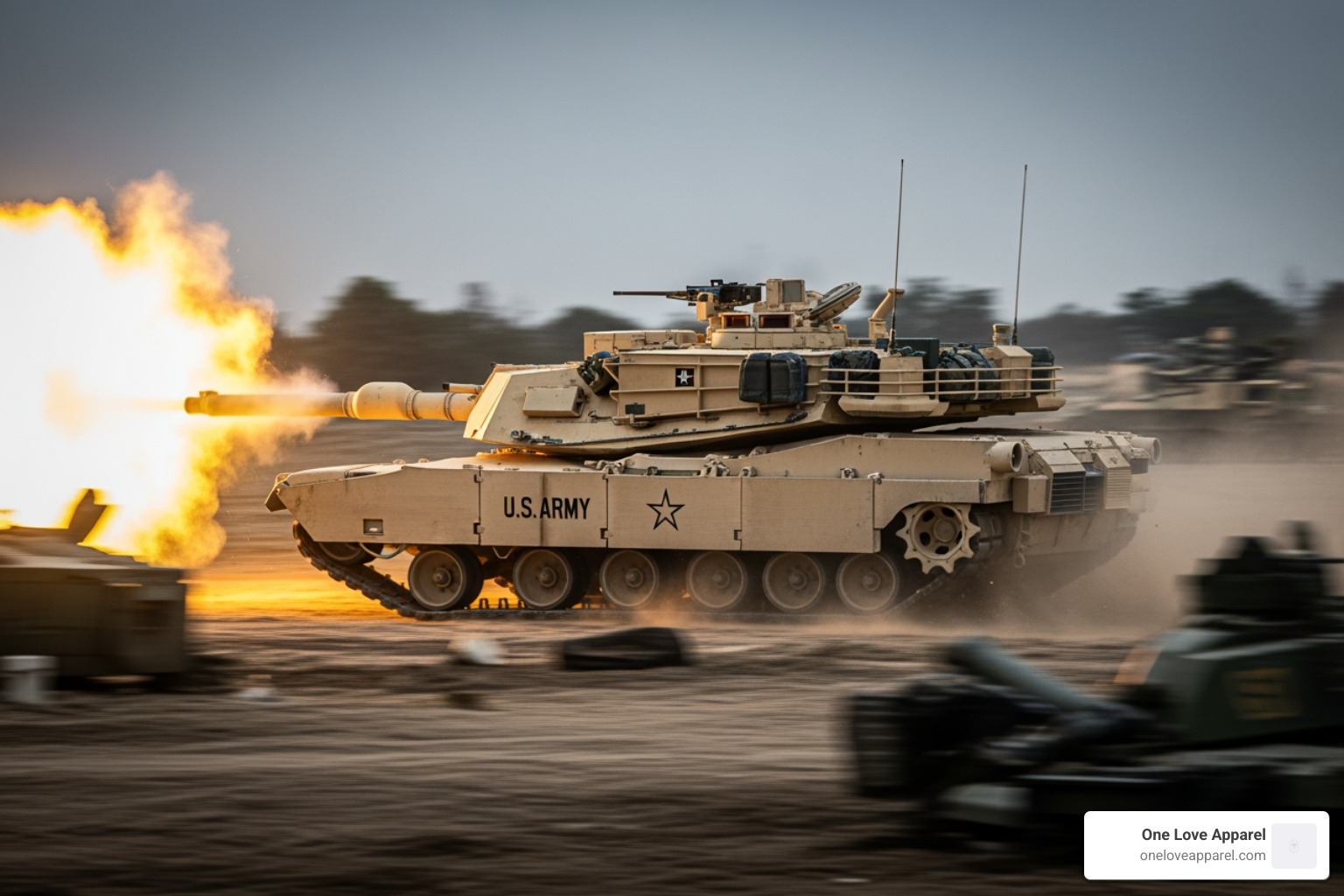
A high performance tank represents the peak of modern military engineering — built to dominate the battlefield through speed, firepower, and near-impenetrable protection. Here's a quick look at what defines one:
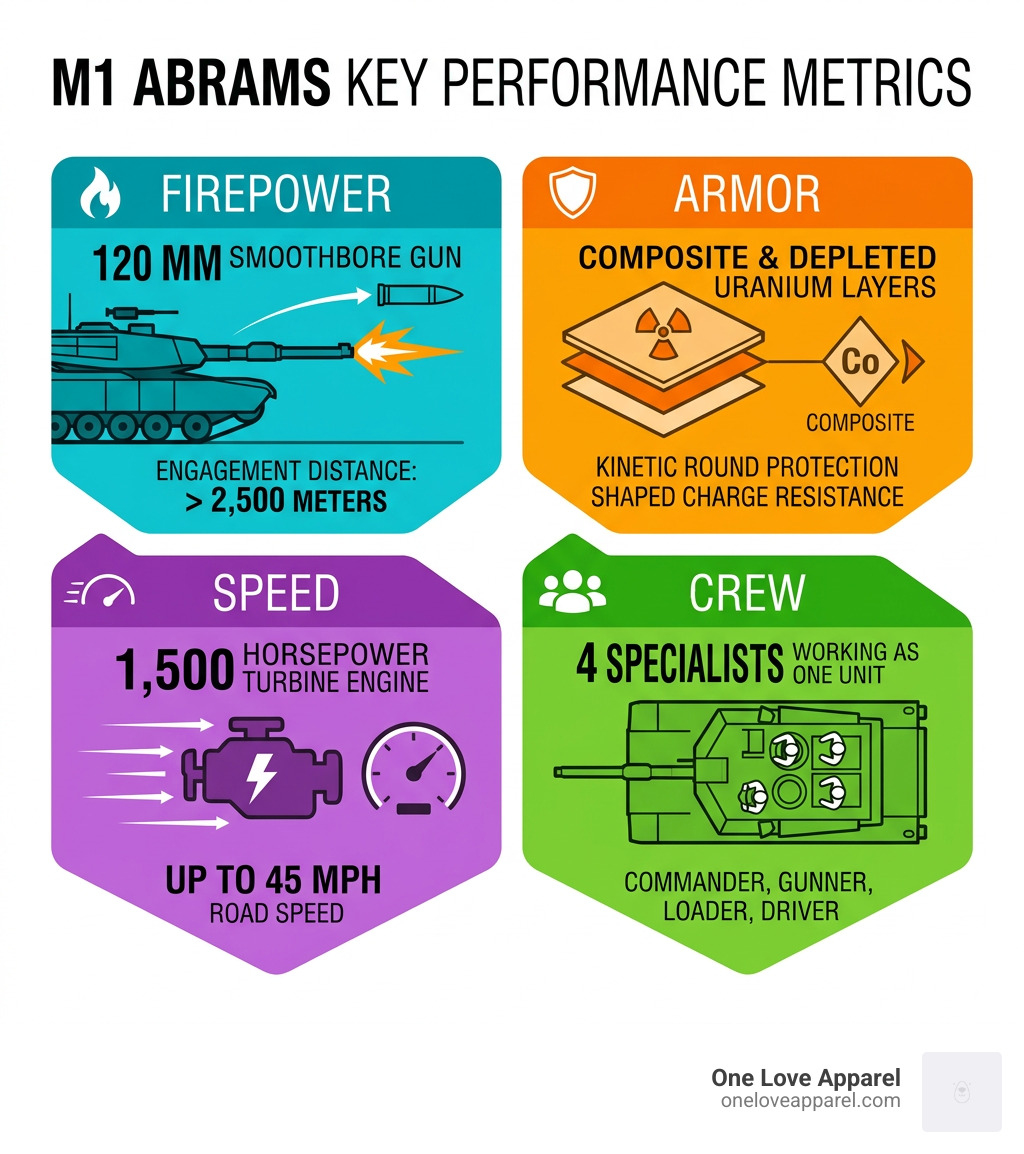
- Firepower - A 120 mm smoothbore gun capable of destroying targets at over 2,500 meters
- Armor - Composite and depleted uranium layers rated to stop both kinetic rounds and shaped charges
- Speed - Up to 45 mph on road, powered by a 1,500 horsepower turbine engine
- Survivability - Blowout panels, active protection systems, and NBC overpressure systems
- Crew - 4 specialists: commander, gunner, loader, and driver working as one unit
The M1 Abrams is the gold standard example. Over 10,300 have been built. In the Gulf War alone, nearly 2,000 were deployed — and not a single one was lost to enemy tank fire.
That's not luck. That's engineering.
Whether you're a military enthusiast, a curious reader, or someone who just appreciates things built to last and perform, understanding what goes into a high performance tank reveals something universal: the best gear is the kind that never lets you down when it counts.
I'm David Vail, owner of One Love Apparel, and my years in the apparel and marketing industries have taught me that the same principles behind a high performance tank — durability, reliable construction, and a design that holds up under real-world conditions — apply just as much to the clothes we wear every day. That shared philosophy is exactly what this guide is built on.
The M1 Abrams: Defining the High Performance Tank
When we talk about a high performance tank, the conversation begins and ends with the M1 Abrams. Since its introduction in the early 1980s, it has served as the backbone of the U.S. Army’s armored forces. Its primary role is to provide mobile, protected firepower that can dominate any environment, from the open deserts of the Middle East to the rugged plains of Europe.
The journey to create this legend wasn't a straight line. It started after the cancellation of the joint U.S.-German MBT-70 project. The U.S. Army needed a fresh start, leading to the XM1 prototype program. Two major players stepped up: Chrysler Defense (which was later bought by General Dynamics Land Systems) and General Motors. Chrysler’s design was chosen, primarily because of its innovative use of a regenerative gas turbine engine instead of a traditional diesel.
Since production began, approximately 10,300 M1 Abrams tanks have been built as of 2017. This massive fleet has undergone constant evolution to maintain its status as a high performance tank. From the original M1 with its 105 mm gun to the massive, tech-heavy M1A2 SEPv3 of today, the Abrams has consistently hit major milestones in lethality and protection. For more technical background on its lineage, you can explore the M1 Abrams history.
Key Specifications of a High Performance Tank
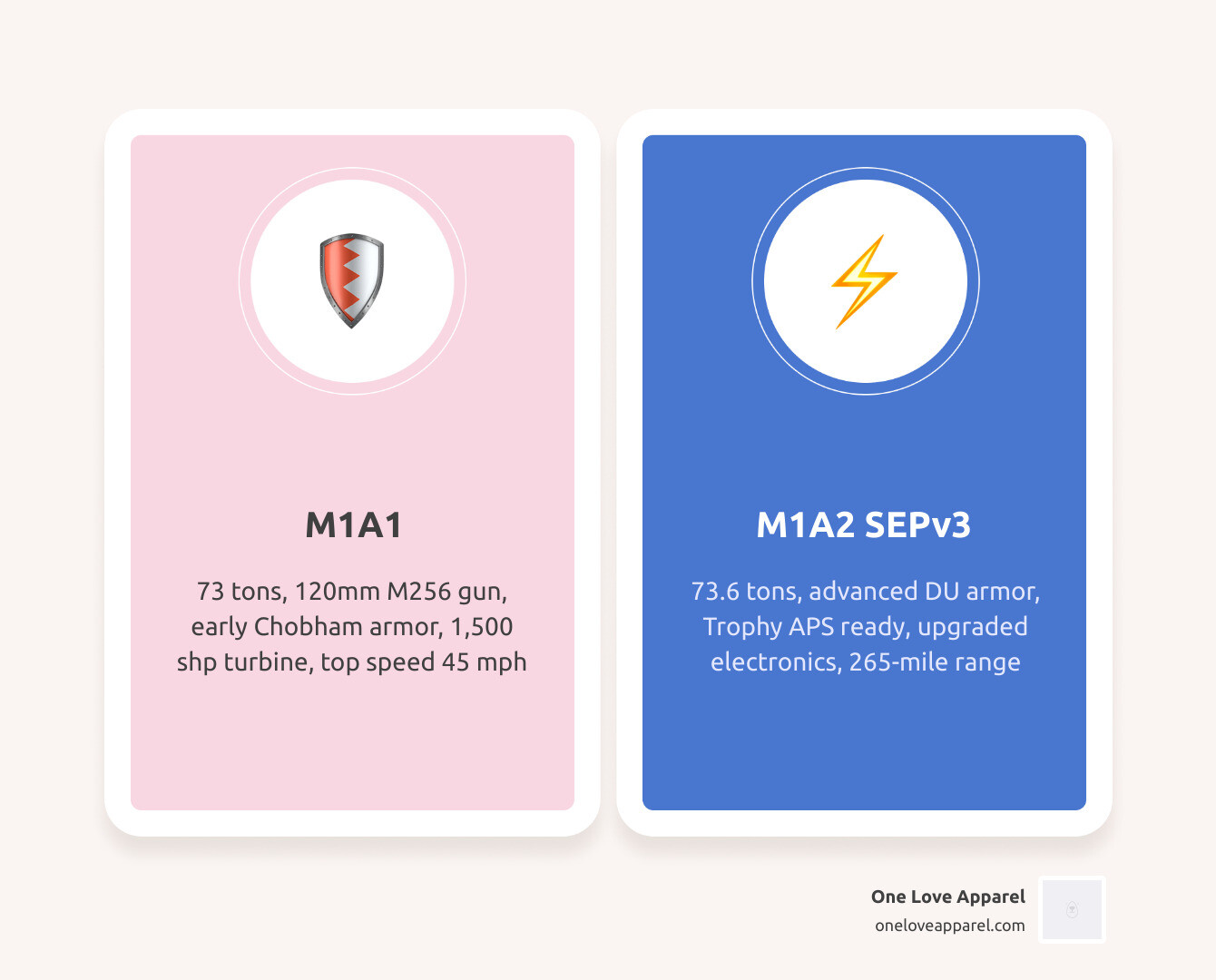
To understand why the Abrams is considered "high performance," we have to look at the raw data. This isn't just a vehicle; it's a 70-ton mobile fortress. The latest version, the M1A2 SEPv3, is a beast of a machine that weighs in at 73.6 short tons (66.8 metric tons).
Despite this incredible weight, it moves with surprising agility. It is powered by the Honeywell AGT1500 gas turbine engine, which produces a staggering 1,500 shaft horsepower (shp). This allows the tank to reach governed road speeds of 45 mph (72 km/h). While it’s a fuel-hungry machine, it maintains an operational range of about 265 miles (426 km) on the road.
The crew consists of four specialists: the commander, gunner, loader, and driver. Unlike some foreign tanks that use mechanical autoloader systems, the U.S. maintains a human loader for better reliability and faster sustained fire in certain conditions.
Advanced Armor and Lethality Systems
The "performance" in high performance tank isn't just about speed; it’s about staying in the fight. The Abrams was the first to widely implement Chobham-style composite armor—a secret blend of ceramics, steel, and other materials that breaks up incoming projectiles.
In later versions, the protection was bolstered with depleted uranium (DU) mesh. This incredibly dense material is placed within the armor "cheeks" of the turret, providing unparalleled defense against both kinetic energy penetrators (sabot rounds) and high-explosive anti-tank (HEAT) charges. Estimates suggest the frontal armor of an M1A2 SEP turret is equivalent to 960 mm of steel against kinetic rounds and over 1,600 mm against HEAT.
However, modern warfare is always changing. To keep the Abrams relevant, the Army introduced the Tank Urban Survivability Kit (TUSK). This includes explosive reactive armor (ERA) tiles on the sides to defeat RPGs and a remote-controlled weapon station so the commander doesn't have to expose themselves to sniper fire. More recently, the Trophy Active Protection System (APS) has been added, which uses radar to detect incoming missiles and fires a "shotgun" blast of projectiles to intercept them before they hit the hull. For an interesting look at the early development hurdles, check out The Army's M1 Tank: Has It Lived Up To Expectations?.
Main Armament and Fire Control
A tank that can't hit its target isn't much of a tank. The original M1 carried the 105 mm M68A1 rifled gun, but the M1A1 and later variants upgraded to the 120 mm M256 smoothbore gun. This German-designed, American-built cannon is a masterpiece of lethality. It carries 40 rounds of ammunition, stored in a rear turret compartment with blowout panels. If the ammo is hit, the blast goes out and up, rather than into the crew cabin—a life-saving feature that distinguishes high-performance design from cheaper alternatives.
The fire control system is where the "high performance" really shines. It features a digital ballistic computer, laser rangefinders, and advanced thermal sights (FLIR). This allows the gunner to "lase" a target, and the computer automatically adjusts for wind, temperature, and even the "droop" of the gun barrel. The result? A "hunter-killer" capability where the commander can find the next target while the gunner is destroying the first.
Secondary weapons include a .50 caliber M2HB machine gun and two 7.62mm M240 machine guns, ensuring the tank can handle infantry threats as easily as it handles other armored vehicles.
Combat History and Future Evolution
The true test of a high performance tank is combat, and the Abrams has a resume that few can match. In the 1991 Gulf War, 1,956 M1A1s were deployed. They absolutely dominated Soviet-era T-72s, often engaging and destroying them from distances where the Iraqi tanks couldn't even see the Abrams. Out of nearly 2,000 tanks, only 23 were damaged or destroyed—and many of those were due to friendly fire or intentional destruction to prevent capture.
The Abrams has since served in the Iraq War, Afghanistan, and the 2015 Yemen Civil War. Most recently, the world has watched its deployment in Ukraine. While it remains a formidable force, these modern conflicts have highlighted new vulnerabilities, particularly from low-cost suicide drones and loitering munitions.
Urban warfare, such as the fighting in Sadr City, required the Abrams to adapt quickly. It’s no longer just about tank-on-tank duels; it’s about surviving an RPG from a third-story window or a drone dropping a shaped charge on the thin top armor.
Future Upgrades for the High Performance Tank
The U.S. Army isn't resting on its laurels. While the SEPv3 is the current peak, plans are already in motion for the M1E3. This future variant aims to be lighter and more sustainable. The goal is to reduce the overall weight to make it easier to transport via the M1070 Heavy Equipment Transporter (HET) and to improve its "stealth" through advanced coatings that reduce thermal and radar signatures.
Production remains "hot" at the Lima Army Tank Plant in Ohio. Beyond the U.S. military, international demand for this high performance tank is surging. Poland Just Bought America's M1 Abrams Tank. That's Ironic because they are replacing older Soviet equipment with the very machine designed to defeat it. Taiwan and Romania are also among the nations looking to secure the Abrams to bolster their defenses.
Performance Benefits: From Battlefield to Daily Wear
What makes a tank "high performance" is the same thing that makes a piece of clothing high performance: the ability to do its job under pressure without failing.
In the Abrams, this comes down to mobility and thermal management. The AGT1500 turbine engine is a marvel of power-to-weight ratio. It’s significantly smaller and lighter than a comparable diesel engine, and it’s surprisingly quiet—earning the nickname "Whispering Death" during REFORGER exercises in Europe. However, it requires a massive air filtration system to keep dust out of the turbine blades, a logistical challenge that requires constant maintenance.
At One Love Apparel, we look at performance through a different lens, but the goal is identical. A high performance tank (the wearable kind!) needs to handle moisture, provide a mens-premium-tank-top fit that doesn't restrict movement, and stay durable wash after wash. Just as the Abrams uses Chobham armor for protection, we use high-quality combed and ring-spun cotton to ensure our shirts are beyond-basic-your-guide-to-organic-soft-and-wrinkle-free-tanks.
Whether it’s a tank on the battlefield or the unisex-jersey-short-sleeve-tee you wear to the gym, performance is about reliability. You want gear that is super-soft-cotton-tees comfortable but tough enough to last. Our the-definitive-guide-to-womens-tees shows that women’s apparel also benefits from this "built-to-last" philosophy.
Frequently Asked Questions about High Performance Tanks
What makes the M1 Abrams a high performance tank?
It’s the combination of three things: a 1,500 hp turbine engine for incredible mobility, Chobham/depleted uranium armor for world-class protection, and a 120 mm smoothbore gun paired with a digital fire control system that rarely misses. It is a system where the parts work together seamlessly.
How does the M1 Abrams perform in drone-heavy environments?
This is the new frontier. While the Abrams has thick frontal armor, drones often attack the thinner top armor. The U.S. is responding by adding "cope cages," electronic warfare jammers to disrupt drone signals, and Active Protection Systems like Trophy to shoot down threats before they impact.
What is the future of the M1 Abrams program?
The Army has shifted from the SEPv4 upgrade path to the M1E3. This new program focuses on making the tank lighter, more fuel-efficient, and better protected against modern threats like loitering munitions, ensuring the Abrams remains the world's premier high performance tank for decades to come.
Conclusion
The M1 Abrams is a testament to what happens when engineering excellence meets a refusal to compromise. It is durable, powerful, and designed to protect the people inside it at all costs. From its 73-ton frame to its 1,500 horsepower heart, every inch of this high performance tank is built for a purpose.
At One Love Apparel, we might not be building main battle tanks, but we share that same obsession with quality. We believe your everyday "tanks" and tees should be just as reliable. That’s why we use soft, lightweight combed and ring-spun cotton to create a flattering fit that’s pre-shrunk and long-lasting.
Just like a high-performance military vehicle, our clothes are designed to handle whatever the day throws at you without leaving you hanging. If you value comfort that doesn't quit, we invite you to join our journey.