

The Ball Cap Bible: Everything You Need to Know About Men's Favorite Headwear
Why Ball Caps Are America's Most Versatile Headwear
Ball caps are one of the most popular accessories in men's fashion, combining practical sun protection with effortless style. Whether you're looking for a classic fitted cap, a breathable trucker hat, or a casual dad cap, understanding the different types and features will help you choose the perfect cap for your needs.
Quick Guide to Choosing Ball Caps:
- Snapback - Adjustable plastic closure, works with most head sizes
- Fitted - No adjustment mechanism, requires exact sizing (54-65cm range)
- Strapback - Fabric or Velcro strap for adjustment, premium look
- Trucker Cap - Mesh back panels for breathability, great for outdoor activities
- Dad Hat - Unstructured crown, slightly oversized, relaxed vintage style
- Premium Cap - High-quality materials, minimalist design, semi-formal ready
The ball cap market tells a compelling story. Originally introduced by the Brooklyn Excelsiors in 1860 as a practical solution for baseball players blocking the sun, these simple hats have evolved into a $2.1 billion global industry projected to reach $3.1 billion by 2030. That's a 4.9% annual growth rate driven by the rise of athleisure wear, sports merchandise demand, and the increasing popularity of customization.
What started as functional sportswear has become a cornerstone of modern casual fashion. From sports stadiums to city streets, ball caps now represent personal style, team loyalty, and cultural identity. The best part? With so many styles, materials, and closure types available, there's a perfect cap for every activity, outfit, and personal preference.
I'm David Vail, owner of One Love Apparel, where we've spent years understanding what makes quality casual wear—including ball caps—stand the test of time in both durability and style. Through my experience in apparel and brand building, I've learned that the right cap combines comfort, fit, and versatility to become a true wardrobe staple.
From the Diamond to the Streets: A Brief History of the Ball Cap
It's hard to imagine a world without ball caps, isn't it? These ubiquitous pieces of headwear feel like they've always been a part of our lives, gracing the heads of athletes, fashion icons, and everyday folks alike. But like all good things, the ball cap has a fascinating origin story that begins, as you might guess, on the baseball diamond.
The year was 1860, and a Brooklyn-based team known as the Excelsiors stepped onto the field, not just to play ball, but to make history with their headwear. Before this, baseball players often wore straw hats or jockey caps, which weren't exactly ideal for a game under the sun. The Excelsiors' innovation? A cap designed specifically to shield players' eyes from the glaring sun, allowing them to track fly balls more effectively. This simple, practical solution marked the birth of the modern ball cap.
For decades, the ball cap remained primarily a piece of athletic gear, a uniform component for baseball players. However, as baseball grew into America's favorite pastime, something magical began to happen. Fans, eager to show their allegiance and feel a connection to their heroes, started adopting the caps themselves. The advent of televised baseball games further fueled this trend, turning the humble cap into a powerful symbol of fan representation and team loyalty. Wearing a cap became a declaration: "This is my team, and I stand with them!" You can still see this strong connection to sports through official league merchandise, a tradition that continues to thrive today. For a deeper dive into America's favorite pastime, you can always visit Major League Baseball's official site: MLB.com.
As the 20th century progressed, the ball cap began its slow but steady migration beyond the stadium. By the latter half of the century, it had firmly entrenched itself in casual wear, becoming a go-to accessory for comfort and understated cool. The 1970s saw the rise of the trucker cap, initially a promotional item given away by feed and farm supply companies, which later surged in popularity thanks to celebrities embracing its laid-back vibe.
The turn of the millennium truly propelled the ball cap into the fashion stratosphere. It became a cornerstone of streetwear culture, a canvas for self-expression through logos, colors, and unique designs. Simultaneously, the booming athleisure trend—where athletic wear seamlessly blends into everyday fashion—cemented the ball cap's place as a versatile wardrobe staple. Today, these caps are not just about shielding your eyes; they're about completing an outfit, making a statement, and showcasing a piece of your identity, whether that's through a sports team logo, a brand emblem, or a minimalist design. It's a remarkable journey from a functional piece of sportswear to a global fashion phenomenon, and we're thrilled to see where its evolution takes us next.
Know Your Lid: A Guide to Ball Cap Styles and Types

When we talk about ball caps, it's easy to think they're all the same. But just like our favorite graphic t-shirts come in endless designs, ball caps offer a surprisingly diverse world of styles, each with its own unique charm and purpose. Understanding these differences is key to choosing the perfect cap that not only fits your head but also complements your personal expression. Let's break down the most popular types and their defining characteristics.
A Guide to Different Types of Ball Caps
Choosing the right ball cap is like choosing the right pair of shoes—it depends on the occasion, your outfit, and your comfort preferences. Here’s a closer look at the most common types you’ll encounter:
-
Snapback:
- Key Characteristics: Features a flat brim and a structured crown, meaning the front panels stand upright and maintain their shape. The defining feature is the adjustable plastic snap closure at the back, allowing for a one-size-fits-most approach.
- Why We Love It: Snapbacks are incredibly versatile. They can be dressed down for a casual look, integrated into streetwear ensembles, or even paired with more fashion-forward outfits. Their adjustability makes them a popular choice for gifts or for those who like to share their hats.
- Styling Tip: Often seen with bold logos or designs, making them a statement piece.
-
Fitted Cap:
- Key Characteristics: These ball caps have a structured crown and can come with either a flat or pre-curved brim. What sets them apart is their lack of an adjustable closure. They are sized precisely, often in centimeters (e.g., 57cm, 59cm), requiring you to know your exact head measurement.
- Why We Love It: A fitted cap offers the cleanest, most streamlined look. It's often considered the more "premium" option in sportswear headwear, providing a snug, custom feel. This style is so iconic that it's widely recognized as the official on-field cap for Major League Baseball.
- Styling Tip: Perfect for authentic fan gear or a polished, athletic-inspired look.
-
Strapback:
- Key Characteristics: Similar to snapbacks in adjustability, but instead of plastic snaps, strapbacks feature a fabric or leather strap with a buckle or clasp, or sometimes a Velcro closure. They typically have a relaxed, unstructured crown and a pre-curved brim.
- Why We Love It: Strapbacks often convey a more refined or vintage aesthetic due to their material closure. They tend to be made with softer, more luxurious fabrics, making them a favorite for high-end cap brands. A classic example is the kind of comfortable, relaxed strapback often seen in vintage-inspired collections.
- Styling Tip: Excellent for casual, everyday wear when you want a comfortable fit and a touch of understated style.
-
Trucker Cap:
- Key Characteristics: Instantly recognizable by its mesh back panels and a structured, often tall, front crown. They usually feature a slightly curved brim and an adjustable snap closure.
- Why We Love It: The mesh back offers superior breathability, making trucker caps ideal for outdoor activities or warm weather. They were popularized in the 1970s and have made numerous comebacks, accepted by everyone from outdoor enthusiasts to fashion trendsetters.
- Styling Tip: Best for extremely casual outfits, outdoor adventures, or adding a rugged, retro touch to your look.
-
Dad Hat:
- Key Characteristics: Defined by its unstructured, low-profile crown and a gently pre-curved brim. They often have a relaxed fit and can sometimes appear slightly oversized or faded, contributing to their vintage appeal. The closure is typically a strapback (fabric or buckle).
- Why We Love It: Dad hats are the epitome of effortless cool. Their relaxed nature makes them incredibly comfortable and easy to wear with almost any casual outfit. They've surged in popularity thanks to a resurgence of vintage styles and a general appreciation for understated fashion. Many brands offer their own version of this timeless, comfortable style.
- Styling Tip: Pair it with a simple t-shirt, jeans, or any relaxed ensemble for an instant touch of laid-back charm.
-
Premium Cap:
- Key Characteristics: While not a distinct "type" in the same way as the others, a premium cap refers to ball caps that blend sportswear aesthetics with high fashion. They are characterized by quality materials (like fine wools, leather accents, or unique fabrics), minimalist designs, and often a focus on subtle branding. They can come in fitted, strapback, or even snapback styles.
- Why We Love It: These caps lift the ball cap from purely casual to something that can complement a more sophisticated outfit. They focus on craftsmanship and material quality over flashy logos.
- Styling Tip: Can be worn with smart casual outfits, or even with a blazer and fitted trousers for a modern, fashion-forward statement.
Structured vs. Unstructured Crowns
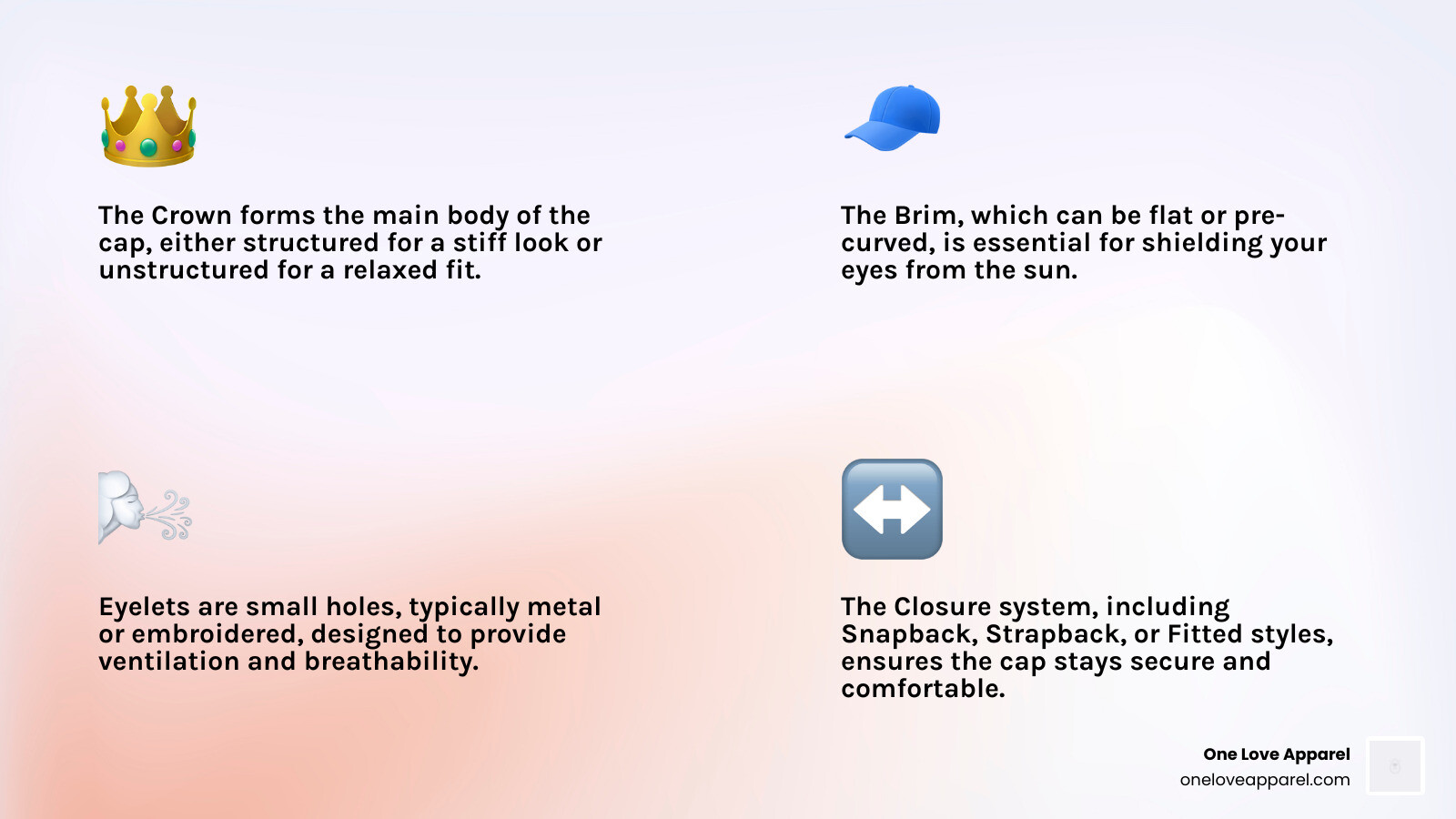
The crown of a ball cap refers to the main body of the cap that covers your head. Its construction plays a significant role in both the cap's appearance and how it feels on your head.
Structured Crowns: These caps have stiff internal support, usually buckram, in the front panels. This gives them a rigid, predefined shape that doesn't collapse when taken off. They often feature a higher profile, creating more space above the head. Fitted caps and many snapbacks commonly have structured crowns. They offer a crisp, sharp look.
Unstructured Crowns: In contrast, unstructured caps lack that internal reinforcement. Their front panels are soft and flexible, allowing the cap to conform more closely to the shape of your head. These caps typically have a lower profile and a more relaxed, "worn-in" feel from day one. Dad hats and many strapbacks are prime examples of unstructured caps. They're all about comfort and a laid-back vibe.
Flat vs. Curved Brims
The brim, or visor, of a ball cap is another key feature that impacts both its function and its style. You'll generally find two main styles:
Flat Brim: This style features a perfectly flat visor, giving the cap a modern, often streetwear-inspired aesthetic. Many structured caps, particularly snapbacks and some fitted styles, come with flat brims. While some enthusiasts keep the brim flat, others choose to gently curve it over time to personalize their look. The flat brim offers a wide field of vision but might not provide as much direct sun protection to the sides of the eyes as a curved brim.
Pre-Curved Brim: As the name suggests, these brims come already curved, offering a classic, traditional ball cap look. They are common on dad hats, strapbacks, and many athletic-focused caps. The pre-curved brim is excellent for sun protection, effectively shielding the eyes and face from glare. It also contributes to a softer, more relaxed silhouette for the cap.
The choice between a flat or curved brim often comes down to personal preference and the overall aesthetic you're aiming for. We believe there's no right or wrong answer—just what feels best and looks best on you!
Anatomy of a Classic: Key Features of Ball Caps
Beyond just picking a style, truly understanding ball caps means delving into their key features. These elements—from how they fit to what they're made of—are what lift a good cap to a great one. When you're considering adding a new lid to your collection, paying attention to these details will ensure you choose a cap that's not just stylish but also perfectly suited to your needs.
Finding Your Perfect Fit: Sizing and Closures
The perfect ball cap starts with the perfect fit. A cap that's too tight can be uncomfortable and leave marks, while one that's too loose might fly off with a gust of wind or slide over your eyes. This is especially crucial for fitted caps, which offer no room for adjustment.
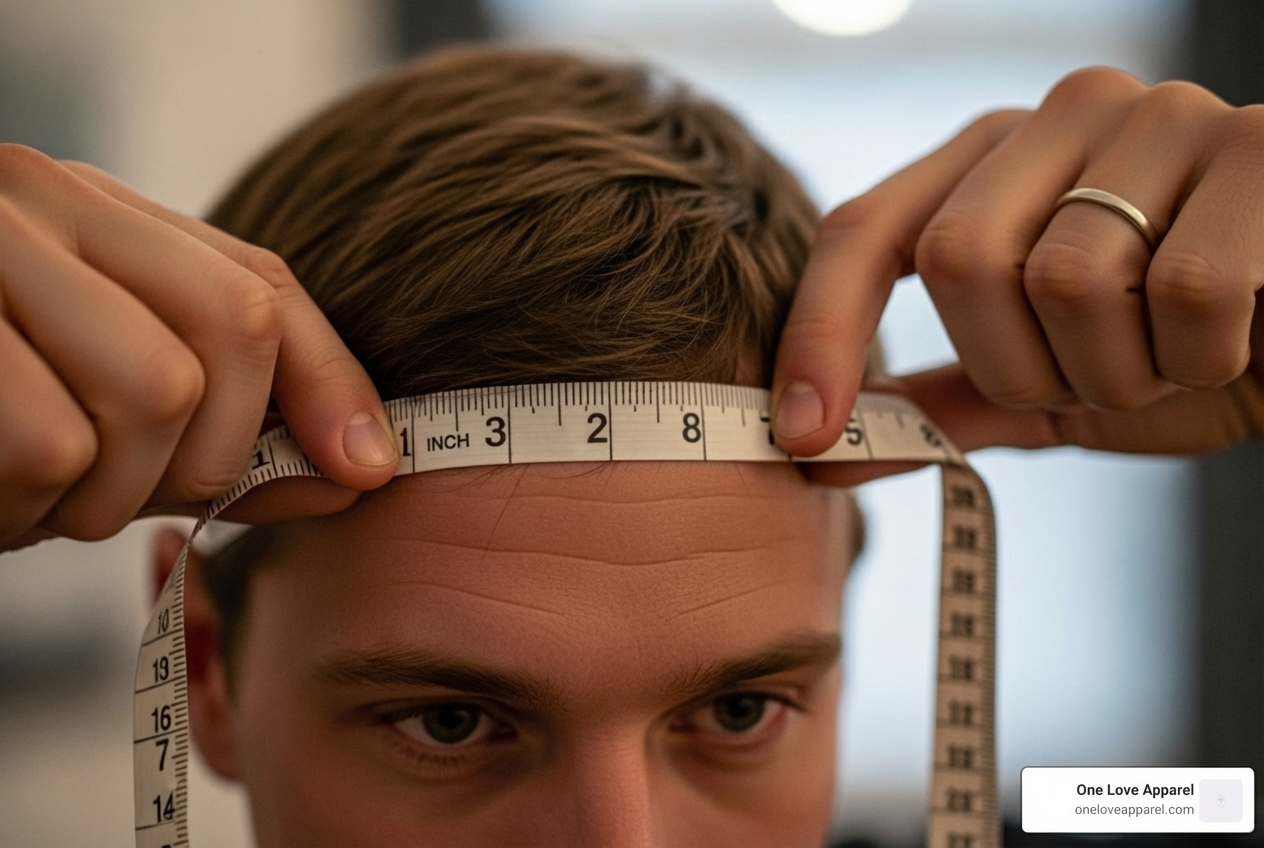
How to Measure Your Head for a Fitted Cap: For fitted caps, knowing your head circumference is essential. We recommend following these simple steps for accuracy:
- Grab Your Tools: You'll need a fabric tape measure. If you don't have one, a non-stretching string or ribbon and a ruler will do the trick.
- Position the Measure: Wrap the tape measure around your forehead, just above your ears, where the widest part of the hat will sit. Make sure it's snug but not uncomfortably tight.
- Record the Measurement: Note the circumference in centimeters.
- Repeat for Accuracy: Repeat the measurement two more times, and then take the average of the three readings. This helps account for any slight variations.
- Check a Sizing Chart: Once you have your accurate measurement in centimeters, consult a sizing chart (many cap retailers provide these) to find the corresponding hat size. Typical hat sizes range from 54 centimeters to 65 centimeters.
For other cap types, the closure mechanism dictates adjustability:
| Closure Type | Description | Comfort & Adjustability |
|---|---|---|
| Snapback | Features adjustable plastic snaps at the back. | Highly adjustable, offering a "one-size-fits-most" solution. |
| Strapback | Uses a fabric or leather strap with a metal or plastic buckle for adjustment. | Offers a wide range of adjustability with a more premium feel. |
| Fitted | Has no adjustment mechanism and is sized to the wearer's head. | Provides a clean, seamless look but requires precise sizing for a comfortable fit. |
| Stretch-Fit | Incorporates an elastic band within the sweatband for a snug fit. | Offers a snug, comfortable fit that conforms to the head without needing manual adjustment. |
Conclusion
From their humble beginnings on the baseball field to their current status as a global fashion staple, ball caps have proven themselves to be far more than just practical headwear. They are a canvas for self-expression, a symbol of allegiance, and an indispensable accessory that combines function with undeniable style.
We at One Love Apparel believe in the power of well-made, comfortable clothing to help you express your unique self. Just as our soft, lightweight combed and ring-spun cotton t-shirts provide comfort and durability, the right ball cap offers that perfect finishing touch to any outfit. Whether you're chasing dreams, hitting the trails, or simply enjoying a casual day out, there's a ball cap designed to meet your needs and lift your look.
We hope this "Ball Cap Bible" has illuminated the vast and exciting world of men's favorite headwear, empowering you to choose your next cap with confidence and flair. The future belongs to those who believe in the beauty of their dreams, and sometimes, the perfect cap is just the accessory you need to chase them.
Ready to complete your look? Find more style guides and tips on our blog to keep you inspired: Explore more style guides on our blog.