



Comfort is Key: Tips to Transform Your Hard Hat Experience
Why Hard Hat Comfort Directly Impacts Your Safety

How to make a hard hat more comfortable starts with understanding a critical truth: uncomfortable PPE doesn't get worn consistently. According to the U.S. Bureau of Labor Statistics, non-fatal occupational head injuries requiring at least one day away from work totaled 84,750 in 2014—up 4.7 percent from just two years prior. Yet despite these sobering numbers, safety professionals report that 4 in 5 still observe workers failing to wear protective equipment when required.
Quick Ways to Make Your Hard Hat More Comfortable:
- Adjust the suspension system - Tighten or loosen the ratchet wheel until the hat sits securely without causing pressure or headaches
- Choose ventilated designs - Select hard hats with airflow vents if you're not working around electrical hazards (Class C only)
- Add sweatbands or cooling accessories - Use moisture-wicking materials or cooling inserts that can be soaked in water
- Install comfort padding - Add aftermarket leather bands like ChukBands or foam padding to pressure points
- Ensure proper clearance - Maintain at least 1 inch of space between your head and the shell for impact absorption
- Replace worn components - Swap out degraded suspensions every 12 months and shells every 2-5 years depending on exposure
- Use appropriate liners - Add fleece liners for cold weather or cooling gel pads for heat
The average safety hard hat weighs just 14 ounces—one ounce of protection for every pound your head weighs. Yet when a hard hat is poorly designed, improperly sized, or lacks proper balance, it feels bulky, wobbly, and top-heavy, causing pinch points, headaches, and neck strain. Workers then overtighten the suspension to keep it in place, creating painful pressure that makes an eight-hour shift feel unbearable.
As David Vail, I've spent over two decades helping businesses and individuals find solutions that blend functionality with comfort—principles that apply whether you're selecting branded apparel or optimizing how to make a hard hat more comfortable for daily wear. The strategies in this guide combine industry research with practical accessories and adjustments that transform your PPE from a burden into protection you'll actually want to wear.
Understanding Why Hard Hats Feel Uncomfortable
Let's be honest, hard hats often get a bad rap for being uncomfortable. But why is that? We've all heard the complaints: they're too heavy, too hot, they cause headaches, or they just won't stay put. Understanding these common pain points is the first step in figuring out how to make a hard hat more comfortable.
One of the primary culprits is a poor fit, leading to pressure points. When a hard hat isn't properly sized or balanced, it can feel bulky or wobbly. This often leads workers to overtighten the suspension system, creating painful pressure that can result in headaches and discomfort. An ill-fitting hat can also cause ergonomic strain as we instinctively tense our muscles or adopt unnatural movements to keep it in place, leading to neck and shoulder fatigue. It's a bit like trying to wear a shoe that's two sizes too big – you'll be constantly adjusting, and it will never feel right. For more on comfortable headwear in general, you might find our insights on All about comfortable hats interesting.
Heat retention and sweat buildup are also major comfort killers. While some studies suggest the temperature under a hard hat can actually be cooler than the outside air in hot conditions, the feeling of sweat trickling down your face or a perpetually damp brow pad can be incredibly distracting and irritating. This can make the plastic band slip, become itchy, and generally reduce focus.
The weight distribution of the hard hat also plays a role. While the average safety hard hat only weighs about 14 ounces, if that weight isn't distributed evenly or if the hat constantly shifts, it can feel much heavier and contribute to fatigue.
An uncomfortable hard hat isn't just an annoyance; it's a safety hazard. As the Occupational Health & Safety article "How to Select a Hard Hat to Fit Everyone's Comfort Zone" points out, if a hard hat is uncomfortable, workers are less likely to wear it consistently, putting them at increased risk of injury. We believe that safety should never come at the expense of comfort, and vice versa.
How to Make a Hard Hat More Comfortable Through Proper Adjustment
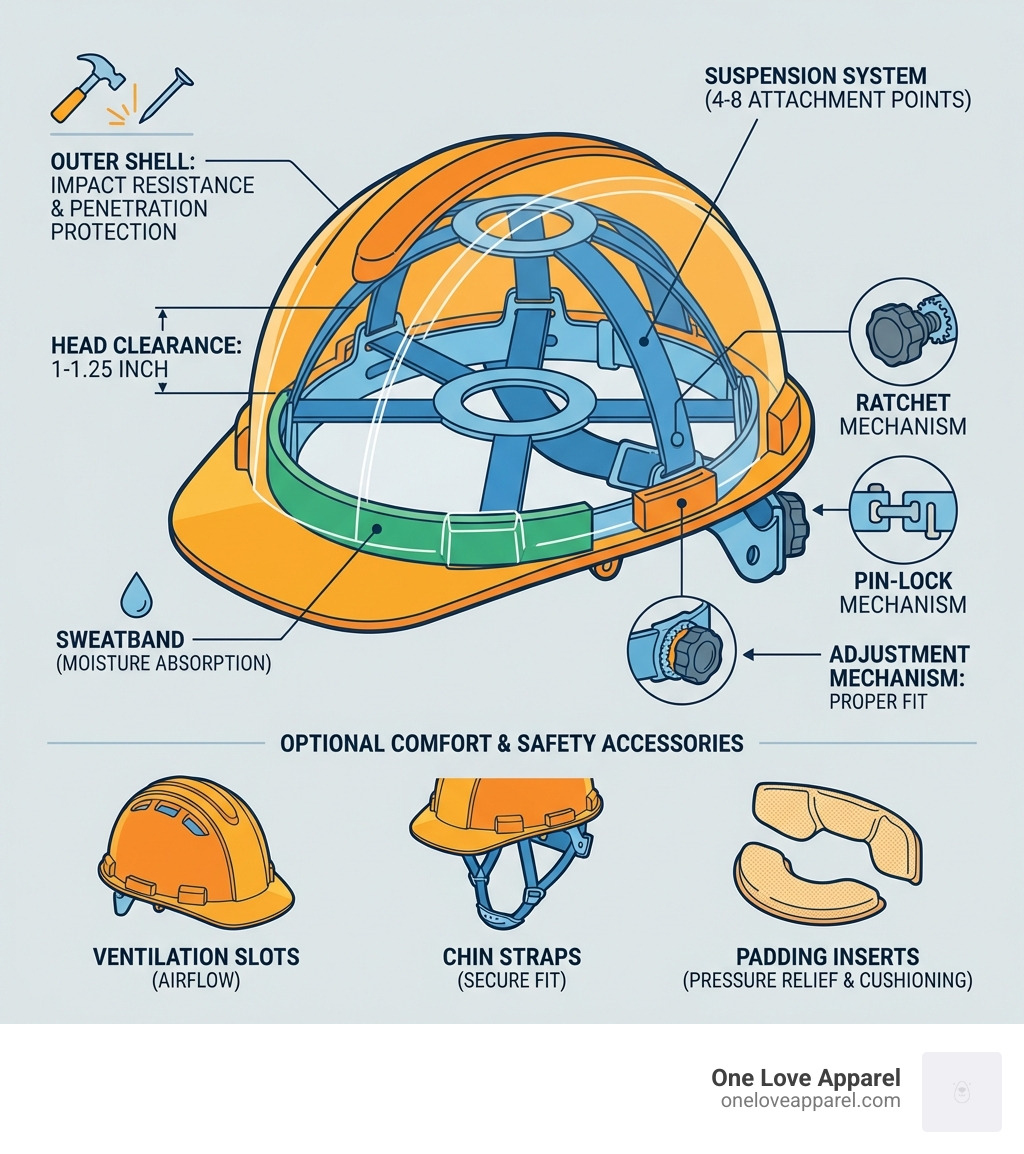
The internal suspension system is the unsung hero of hard hat comfort. It’s what keeps the rigid outer shell from resting directly on your head, providing a crucial buffer that absorbs impact. Learning how to make a hard hat more comfortable often begins with mastering these adjustments.
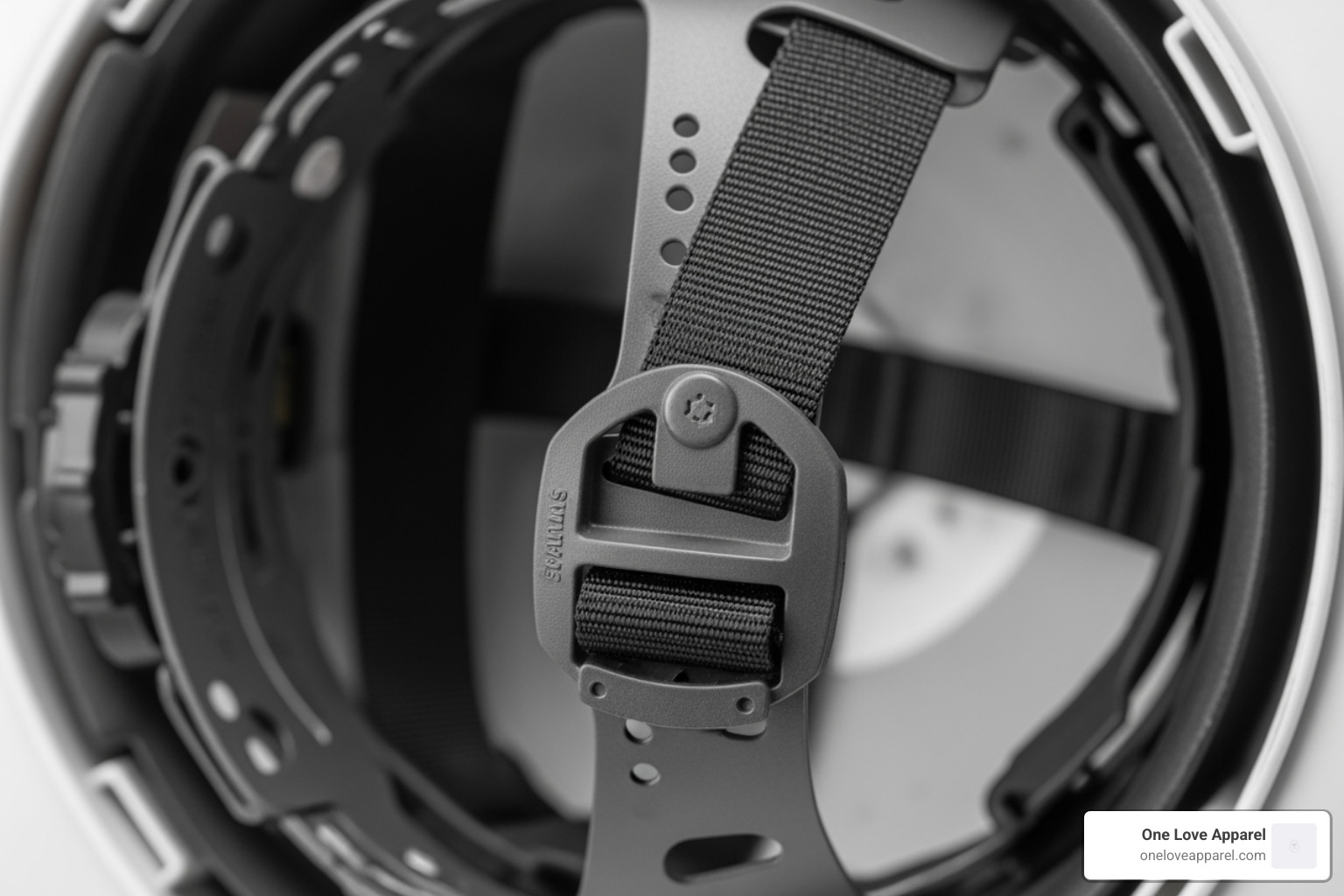
The suspension system typically consists of several elements: the headband, the crown straps, and the adjustment mechanism. This system is designed to raise the hard hat at least 1 to 1.25 inches off the top of your head, creating a vital air gap and impact absorption zone.
Most modern hard hats feature either a ratchet mechanism or a pin-lock system for adjusting the fit. A ratchet system usually involves a small wheel at the back of the headband that you can turn to tighten or loosen the fit. A pin-lock system uses a series of holes and pins to secure the headband. Both are designed to provide a snug fit that keeps the hard hat secure without causing undue pressure.
When installing or adjusting, ensure all suspension keys (the small tabs that connect the suspension to the shell) fit tightly and securely into their slots. For many models, like the 3M H-700 and H-800 series, you'll press down at the center cross of the suspension to ensure all clips are properly secured. Proper assembly is paramount for both comfort and safety, as detailed in user instructions like the 3M Hard Hat User Instructions.
Vertical adjustment is another key feature. Many suspensions allow you to change the height at which the hard hat sits on your head. This is usually done by adjusting the position of the height keys or straps into different slots. It's crucial to ensure both sides are set to the same height for balance and consistent protection.
A word of caution: never alter, puncture, modify, or engrave the shell or suspension of your hard hat. These actions can compromise the hat's structural integrity and its ability to protect you. We might be tempted to drill holes for ventilation, but this can severely weaken the shell and negate its safety certification.
Fine-Tuning the Suspension for a Better Fit
Achieving a comfortable fit is a delicate balance. We want our hard hat to be secure enough that it won't fall off with movement, but not so tight that it feels like a vice grip. This fine-tuning is crucial for headache prevention. There's no medical reason a properly adjusted hard hat should cause a headache, so if you're experiencing one, it's a clear sign your fit needs attention.
The goal is to have the hard hat sit securely on your head without applying excessive pressure to your skull. For hard hats with a ratchet mechanism, the rear wheel is your best friend. Turn it clockwise to tighten until the hat feels snug but not constricting. If you can shake your head without the hard hat wobbling excessively, you're likely in the comfort zone. If it feels too tight, simply turn the wheel counter-clockwise to loosen.
A common issue is a "wobbly hat," which often leads workers to overtighten. Instead of tightening it to an uncomfortable degree, focus on proper vertical adjustment and ensuring the suspension components are correctly installed. A well-balanced hard hat will stay put even when you're stooping or bending, eliminating the need for constant adjustment and reducing neck strain. Just like finding the perfect fit for your favorite cap, as discussed in our Hats for Men guide, the right adjustment makes all the difference for your hard hat.
Choosing the Right Design to Make a Hard Hat More Comfortable
Beyond adjustment, the very design of your hard hat can significantly impact comfort. Modern hard hat technology has evolved to address many common discomforts, offering specialized features that improve the wearing experience.
One of the most requested features for comfort, especially in warm environments, is ventilation. Ventilated hard hats incorporate slits or openings in the shell to allow for airflow, which helps dissipate heat and evaporate sweat. This can make a world of difference in keeping us cool and comfortable. However, there's a crucial trade-off: ventilated hard hats are typically rated as Class C (conductive) and do not offer electrical protection. If your work involves potential contact with electrical hazards, you'll need an un-ventilated hard hat, which comes in Class G (general, up to 2,200 volts) or Class E (electrical, up to 20,000 volts) ratings. Always prioritize safety first; choose a ventilated shell only if your job site allows for it.
Another design aspect is the material and weight. Manufacturers are increasingly using lightweight materials, such as specific types of HDPE (High-Density Polyethylene) or even carbon fiber in some advanced models, to reduce the overall weight of the hard hat without compromising protection. A lighter hard hat can significantly reduce neck strain and fatigue over an entire workday.
Some hard hats are also designed with a lower profile or a more balanced center of gravity, which can make them feel less bulky and more stable on the head. This balance is critical in preventing that top-heavy, wobbly sensation that often leads to discomfort.
When considering how to make a hard hat more comfortable through design, features like ventilation and lightweight construction contribute to comfort, but they must align with the safety requirements of your specific work environment. Always ensure your chosen hard hat meets the necessary ANSI standards (e.g., Z89.1) for impact and electrical protection. For tips on maintaining your hard hat's integrity, check out Taking Care of Your Hard Hat.
Essential Accessories to Improve Your Daily Wear
Sometimes, even with the best hard hat and perfect adjustments, we need a little extra help to boost comfort. That's where smart accessories come in. These additions can tackle specific issues like sweat, heat, cold, and even minor annoyances that add up over a long shift.
From specialized sweatbands to innovative liners, aftermarket accessories are designed to personalize your hard hat experience. While we must always ensure any accessory doesn't compromise the hard hat's safety integrity or interfere with its suspension, many options are approved and widely used.
Think about the little things that make a big difference. A chin strap, for instance, might seem minor, but if you're working in high winds or constantly bending over, it can prevent your hard hat from flying off or shifting, saving you frustration and ensuring continuous protection. Other practical accessories like pencil clips can keep your tools handy, reducing the need to constantly remove your hat or search your pockets. We often look for ways to make our everyday headwear more functional, as we explore in The Ball Cap Bible: Everything You Need to Know About Men's Favorite Headwear.
Here's a comparison of two popular comfort accessories:
| Feature | Winter Liners | Cooling Pads/Sweatbands |
|---|---|---|
| Primary Goal | Provide warmth in cold environments | Reduce heat and absorb sweat in warm environments |
| Materials | Fleece, wool, Thinsulate, cotton blends | Moisture-wicking fabrics, gel inserts, PVA material |
| Mechanism | Insulates head, covers ears/neck | Evaporative cooling (when soaked), wicks moisture |
| Benefits | Prevents heat loss, protects from wind/cold | Keeps head cool and dry, prevents sweat irritation |
| Care | Machine washable, air dry | Rinse, soak in water, air dry |
| Considerations | Must fit smoothly, no metal parts, check for bulk | May require re-soaking, ensure proper fit under hat |
Using Liners and Sweatbands to Make a Hard Hat More Comfortable
Liners and sweatbands are perhaps the most direct way to improve comfort, addressing issues of temperature regulation and moisture management. If you're wondering how to make a hard hat more comfortable in extreme weather, these are your go-to solutions.
For cold conditions, winter liners are invaluable. Made from materials like fleece, wool, or Thinsulate, they fit snugly under your hard hat, providing an insulating layer that keeps your head warm, covers your ears, and often extends to protect your neck. It’s important that these liners fit smoothly and don't contain any metal parts that could interfere with the hard hat's protective capabilities. Just as we explore different headwear for winter warmth in Beyond the Basic Beanie: A Roundup of Men's Running Headwear, choosing the right hard hat liner is about staying cozy and safe.
In hot weather, managing sweat and heat is paramount. Integrated sweatbands, often found in modern hard hat suspensions, do a great job of absorbing moisture. But for improved cooling, specialized sweatbands and cooling pads are available. Many of these can be soaked in cool water, and as the water evaporates, it provides a cooling sensation to your forehead. These evaporative cooling accessories can significantly reduce discomfort on sweltering days.
One unique aftermarket solution that has garnered a lot of attention is the ChukBand. These padded bands, often made from elk leather, wrap around the suspension elements of your hard hat. The choice of elk leather is quite specific: unlike other hides, it's known for not stiffening or getting crusty over time, maintaining its comfort and pliability. Users rave about how these pieces can make even basic plastic suspension systems feel much more comfortable. You can explore these innovative comfort bands at ChukBand leather comfort bands. Whether it's a simple moisture-wicking band or a specialized leather wrap, these accessories prove that a little padding and thoughtful material choice can go a long way in making your hard hat a more pleasant experience.
Maintenance and Care for Long-Term Comfort
Just like any other piece of essential gear, your hard hat requires proper care and maintenance to ensure it remains both safe and comfortable. Neglecting these steps can lead to a hard hat that not only feels worse but also fails to provide the protection you need. This is a crucial part of understanding how to make a hard hat more comfortable over its lifespan.
Regular inspection is the cornerstone of hard hat care. Before and after each use, we should inspect both the shell and the suspension system. For the shell, look for any cracks, nicks, dents, gouges, or signs of impact damage. Pay close attention to thermoplastic shells for signs of degradation like stiffness, brittleness, fading, dullness of color, or a chalky appearance—these are often indicators of UV exposure damage. A simple field test involves compressing the shell inwards; it should quickly return to its original shape, demonstrating elasticity. If it's stiff or cracks, it's time for a replacement.
The suspension system also needs careful scrutiny. Check for any cracks, tears, frayed straps, or loss of pliability. Ensure all suspension keys fit tightly and securely into their slots. A worn or damaged suspension won't absorb impact effectively and can lead to an unstable, uncomfortable fit.
Cleaning your hard hat is straightforward but important for hygiene and comfort. We recommend using mild soap and warm water to clean both the shell and the suspension. Rinse thoroughly and wipe dry. Avoid harsh chemicals, solvents, paints, or permanent markers, as these can weaken the plastic material, compromising its integrity. For more detailed guidance, the article HOW TO CARE FOR HARD HATS offers excellent advice.
Proper storage is another critical factor. UV exposure is a hard hat's enemy. Storing your hard hat in direct sunlight, such as on a vehicle dashboard or rear window, will accelerate the degradation of the plastic, making it brittle and less protective. Always store your hard hat out of direct sunlight and extreme heat. Hard hat storage racks are an excellent way to keep your hat safe, accessible, and away from damaging elements.
Finally, adhere to replacement schedules. Manufacturers generally recommend replacing the hard hat shell within five years of the manufacture date, or sooner (often every two years) if exposed to harsh environments like temperature extremes, sunlight, or chemicals. The suspension system should be replaced at least every twelve months, as sweat and daily wear can degrade the materials. Crucially, if your hard hat sustains any impact, even if no visible damage is apparent, it should be replaced immediately. The cost of maintaining and replacing your hard hat is a small price to pay for your safety and comfort.
Frequently Asked Questions about Hard Hat Comfort
We understand that you might have specific questions about hard hat comfort. Here, we address some of the most common inquiries, providing clear, research-backed answers to help you stay safe and comfortable on the job.
Can I wear a baseball cap under my hard hat?
This is a common question, and the answer is generally no. While it might seem like a comfortable way to absorb sweat or keep your head warm, wearing a baseball cap or any other bulky headwear under your hard hat can interfere with the proper functioning of the suspension system.
The suspension system is designed to maintain a critical clearance—typically 1 to 1.25 inches—between your head and the hard hat shell. This space is essential for impact absorption. If you wear a baseball cap, it can reduce or eliminate this clearance, meaning that in the event of an impact, the energy might be transferred directly to your head rather than being absorbed by the suspension.
Manufacturers and safety guidelines, like those from OSHA, explicitly state that nothing should be worn between the hard hat shell and the suspension, except for approved winter liners or sweatbands that do not interfere with the fit or function. A baseball cap can also cause the hard hat to sit improperly, making it wobbly or unstable, further compromising your safety. Always prioritize maintaining the intended safety clearance.
Why does my hard hat give me a headache?
If your hard hat is causing headaches, you're not alone, but it's a problem that can usually be fixed! The good news is that there's generally no medical reason a properly adjusted hard hat should cause a headache. The most common culprits are:
- Overtightening: This is the number one reason. When you cinch down the suspension too tightly to prevent wobbling, it applies excessive pressure to your skull, leading to painful pressure points and headaches. Ease up on that ratchet wheel!
- Poor Fit and Balance: If the hard hat is poorly designed, improperly sized, or not well-balanced, it can feel bulky or top-heavy. This can cause you to unconsciously tense your neck and shoulder muscles to keep it in place, leading to strain and headaches.
- Improper Suspension Adjustment: The suspension height might be set incorrectly, or the suspension keys might not be securely in place, causing uneven pressure.
- Worn-Out Suspension: An old, brittle, or degraded suspension system won't distribute weight evenly or absorb minor shocks, leading to discomfort.
The solution usually lies in fine-tuning your suspension. Ensure it's snug enough to stay on but loose enough to avoid pressure. Adjust the vertical height for optimal balance, and if your hard hat is old, consider replacing the suspension or the entire unit.
How often should I replace my hard hat suspension?
The suspension system is often the first component of your hard hat to degrade due to constant contact with sweat, hair oils, and daily wear and tear. For optimal comfort and safety, we recommend replacing your hard hat suspension at least every twelve months.
This recommendation comes from manufacturers like 3M, who understand the impact that environmental factors and use have on the materials. Even if there are no visible signs of wear, sweat and UV exposure can cause the plastic to become brittle or the fabric straps to lose their elasticity and integrity over time.
Beyond the twelve-month guideline, always inspect your suspension before each use. Look for:
- Cracks or tears in the plastic components.
- Frayed or stretched straps.
- Loss of pliability or stiffness in the material.
- Any signs that the adjustment mechanism (ratchet or pin-lock) is not functioning smoothly or securely.
If you notice any of these issues, replace the suspension immediately, regardless of how recently you last replaced it. A functional suspension is vital for both impact absorption and maintaining a comfortable, secure fit.
Conclusion
Making your hard hat more comfortable isn't just about personal preference; it's a critical component of workplace safety. As we've explored, an uncomfortable hard hat is an unworn hard hat, and an unworn hard hat offers no protection against the very real risks of head injuries. By understanding the common causes of discomfort and implementing the practical tips we've shared, you can transform your hard hat experience from a burden into a reliable, comfortable piece of essential PPE.
From carefully adjusting your suspension system to embracing innovative accessories like elk leather comfort bands or cooling sweatbands, every step you take towards a more comfortable fit is a step towards greater safety and compliance. Modern hard hat designs, with their focus on ventilation and lightweight materials, further improve the possibilities for a comfortable workday. And let's not forget the importance of regular maintenance and timely replacement—a clean, well-maintained hard hat is always a more comfortable one.
At One Love Apparel, we believe that comfort and quality go hand-in-hand, whether it's in our soft, pre-shrunk cotton t-shirts or the essential gear you wear on the job. We understand that feeling good in what you wear can empower you to perform your best. By applying these principles to your hard hat, you're not just improving your comfort; you're investing in your well-being and productivity.
So, take the time to adjust, accessorize, and maintain your hard hat. Your head will thank you, and you'll be setting a great example for a safety-conscious workplace. After all, when we prioritize comfort, we prioritize care—a value we champion in everything we do. Learn more about how apparel can spark important conversations at Wearing your heart on your sleeve: How apparel can spark conversations about causes that matter.