



Comfortable Plain T-Shirts: A Guide to Not Feeling Like Sandpaper
Why Comfortable Plain T-Shirts Belong in Every Wardrobe

Comfortable plain t-shirts are the foundation of a great wardrobe — and finding the right one makes a real difference in how you feel every day.
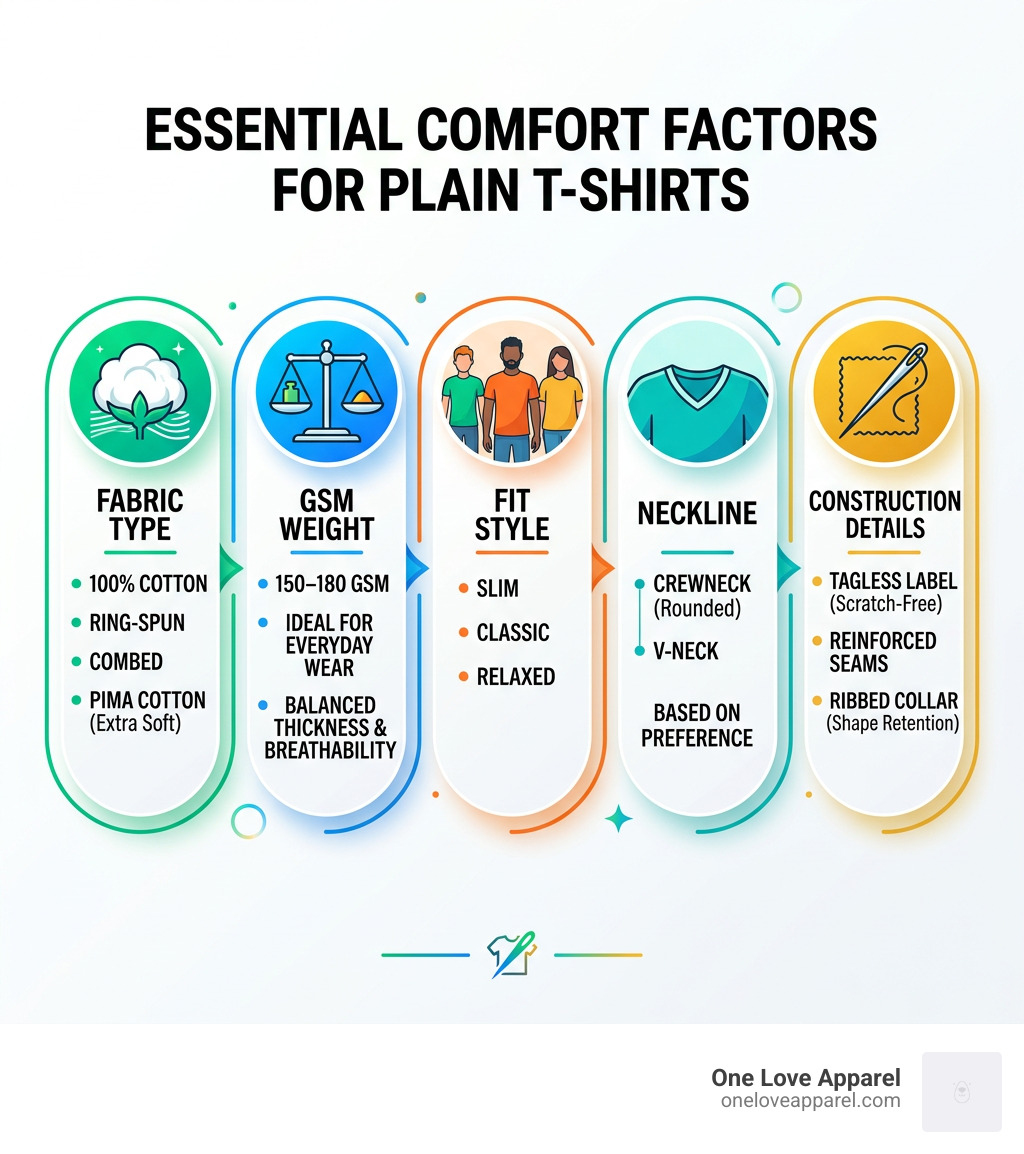
Quick answer: What makes a plain t-shirt comfortable?
| Factor | What to Look For |
|---|---|
| Fabric | 100% cotton, ring-spun, combed, or Pima cotton |
| Weight (GSM) | 150–180 GSM for everyday wear |
| Fit | Slim, classic, relaxed, or athletic |
| Neckline | Crewneck or V-neck based on preference |
| Construction | Tagless label, reinforced seams, ribbed collar |
The best plain tee feels soft against your skin, holds its shape after washing, and works for almost any occasion — from a backyard hangout to layering under a jacket.
But not all plain tees are created equal. Fabric weight, material type, and construction details all determine whether a t-shirt feels like a second skin or, well, sandpaper.
I'm David Vail, owner of One Love Apparel and a longtime apparel industry professional with hands-on experience sourcing and building quality comfortable plain t-shirts that people actually want to wear every day. In this guide, I'll walk you through everything you need to know to find your perfect tee.
The Science of Comfortable Plain T-Shirts: Fabric, Weight, and Weave
When we talk about comfortable plain t-shirts, we are really talking about science. It’s not just "a shirt"; it’s a combination of fiber length, spinning techniques, and knitting density. Most people walk into a store, touch a sleeve, and think, "Yeah, that's soft." But three washes later, that "soft" shirt feels like a piece of cardboard.
To avoid this, we have to look at the ingredients. The gold standard for everyday wear is 100% cotton. However, not all cotton is created equal. You’ve likely seen terms like "open-end," "ring-spun," and "combed."
Open-end cotton is the budget choice—it’s scratchy and prone to breaking. Ring-spun cotton, on the other hand, is made by continuously twisting and thinning the cotton strands, resulting in a much softer and stronger feel. If you want to go a step further, look for super soft cotton tees made from combed cotton. This process literally "combs" out the short, prickly fibers and impurities, leaving only the long, smooth strands. This is why some shirts feel silky while others feel like a loofah.
Why Material Choice Defines Comfortable Plain T-Shirts
The material is the soul of the shirt. While 100% cotton is the "alpha and omega" of the wardrobe for its breathability and natural feel, there are variations that cater to different needs:
- Pima and Supima Cotton: These use extra-long staple fibers. Think of it as the luxury sedan of fabrics—unbelievably soft, durable, and resistant to pilling.
- Organic Cotton: For those who want softness with a conscience. Organic cotton often feels even gentler on the skin because it hasn't been treated with harsh chemical pesticides.
- Performance Blends: While pure cotton is great for daily life, it can struggle in high-intensity situations. Blending cotton with materials like polyester or elastane adds moisture-wicking properties and stretch. This is essential for active use where you don't want a heavy, wet sponge hanging off your shoulders.
At One Love Apparel, we prioritize these premium cotton options because we believe a shirt should get better with age, not worse.
How GSM Impacts the Feel of Comfortable Plain T-Shirts
GSM stands for "Grams per Square Meter." It’s a fancy way of measuring how heavy the fabric is. Understanding this helps you choose the right shirt for the right season.
| GSM Range | Weight Category | Best Use Case |
|---|---|---|
| 120–150 GSM | Lightweight | Hot summer days, layering under heavy sweaters, or gym sessions. |
| 150–180 GSM | Midweight | The "sweet spot" for everyday wear. Durable enough to last, light enough to breathe. |
| 180–220+ GSM | Heavyweight | Premium, structured look. These feel substantial and can last a decade if cared for. |
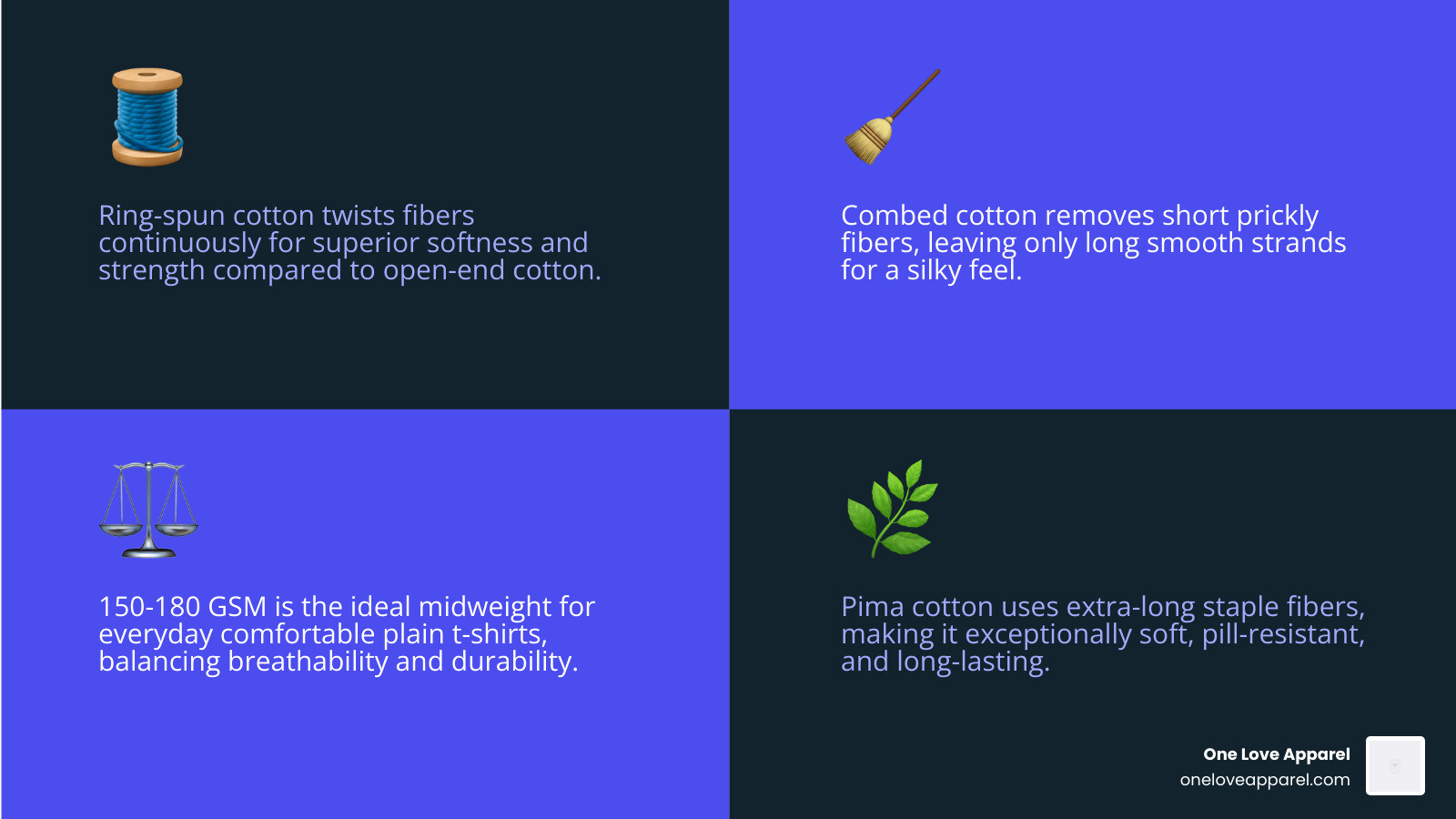
A lightweight tee offers a breezy drape but might be slightly sheer in lighter colors. A heavyweight tee, like a 310 GSM "field-spec" style, provides a "Marlon Brando" level of coolness and structure, though it might be too warm for a tropical climate. Most of our comfortable plain t-shirts fall into that midweight range, providing the perfect balance of durability and "forget-you're-wearing-it" comfort.
Finding Your Perfect Fit: From Slim to Relaxed Silhouettes
Fit is subjective, but it’s the biggest factor in whether a shirt looks like a style choice or an afterthought. We’ve seen style experts test over 60 different options on every body type imaginable—from slim to buff—and the consensus is that the "perfect" fit depends on your goals.
- Slim Fit: This follows the lines of the body without being tight. It’s great for showing off a physique or wearing under a slim-cut blazer.
- Classic Fit: The traditional cut. It fits straight down from the armpit to the hem. It’s the most versatile and comfortable for most body types.
- Relaxed/Boxy Fit: Very popular in modern streetwear. It offers maximum airflow and a laid-back vibe. For women, a "swingy" or boxy silhouette can be incredibly flattering and comfortable around the tummy.
- Athletic Fit: Specifically engineered for those with broader shoulders and narrower waists. It prevents that annoying "tent" effect where the shirt bags out at the stomach.
For women looking for that perfect balance of style and ease, checking out a basic white t-shirt womens guide can help navigate the nuances of necklines and hemlines. We also offer a definitive guide to womens tees to help you find a silhouette that feels custom-made for you.
Construction Details That Elevate Daily Comfort
It’s the little things that keep you from wanting to rip your shirt off at 3:00 PM. High-quality comfortable plain t-shirts are defined by details you might not notice at first glance but will definitely feel over time.
- Necklines: The Crewneck is the universal standard—it’s classic and works for everyone. The V-neck can have a slimming effect and is often preferred as a base layer because it stays hidden under an unbuttoned shirt.
- Tagless Labels: There is nothing more distracting than a scratchy nylon tag poking your neck. We prioritize tag-free designs or soft-printed labels for total neck comfort.
- Reinforced Seams: Look for double-needle stitching on the hems and sleeves. This prevents the shirt from unravelling or losing its shape. A "tube-knit" construction (where the shirt has no side seams) is another hallmark of premium quality, as it eliminates friction points against your skin.
- Hems: A straight hem is great for tucking in, while a curved or "scoop" hem is designed to be worn untucked, providing a more modern, polished look.
Whether you are looking for a unisex jersey short sleeve tee or a mens premium tank top, these construction standards are what separate a "disposable" shirt from a wardrobe staple.
Longevity and Care: Keeping Your Tees Soft for a Decade
You’ve found the perfect comfortable plain t-shirts. Now, how do you keep them that way? Even the best 100% cotton shirt can be ruined by a high-heat dryer and aggressive chemicals.
1. Prevent Shrinkage: Cotton is a natural fiber that likes to return to its original state when heated. To prevent your "Large" from becoming a "Small," always wash in cold water. At One Love Apparel, our shirts are pre-shrunk, meaning they’ve already gone through a controlled shrinking process so the fit you buy is the fit you keep.
2. Drying Tips: The dryer is the enemy of longevity. If you must use it, go for the "Low Heat" or "Air Dry" setting. Ideally, lay your tees flat to dry. This prevents the "hanger bumps" that happen when you dry heavy, wet shirts on a thin plastic hanger.
3. Pilling and Color Retention: To keep colors vibrant (especially those deep navies and blacks), wash your shirts inside out. This protects the outer fibers from rubbing against other clothes in the wash, which causes pilling) (those tiny little fuzz balls).
Investing in best everyday shirts means you are opting for quality over quantity. Some premium tees have been known to last nearly a decade with proper care, whereas budget multi-packs often lose their shape and softness within six months.
Frequently Asked Questions about Comfortable Plain T-Shirts
What is the best material for hot climates?
For hot and humid weather, 100% lightweight cotton (120-140 GSM) or linen-cotton blends are best. They allow for maximum airflow and natural moisture absorption. If you are prone to heavy sweating, a performance blend with moisture-wicking properties might be more comfortable to prevent the shirt from feeling heavy and wet.
How do I prevent my t-shirts from shrinking?
The most effective way is to buy pre-shrunk t-shirts and wash them in cold water. Avoid high-heat drying at all costs. If you are between sizes, always size up, as a tiny bit of natural shrinkage (usually 1-3%) is common even in high-quality cotton.
Is 100% cotton better than a performance blend?
It depends on the "why." For daily comfort, lounging, and casual style, 100% combed cotton is the gold standard because of its softness and breathability. For the gym, hiking, or high-activity days, a performance blend is often superior because it dries faster and moves with your body more effectively.
Conclusion
Finding comfortable plain t-shirts shouldn't feel like a chore. By focusing on the "big three"—fabric quality (combed/ring-spun cotton), appropriate weight (GSM), and a fit that matches your body type—you can build a wardrobe that makes you look and feel great.
At One Love Apparel, we believe that what you wear should be an extension of your comfort and your values. A plain t-shirt is a blank canvas, a timeless investment that never goes out of style. Whether you're layering for a winter morning or keeping it simple in the summer sun, the right tee is the one you forget you're even wearing.
Ready to upgrade your daily rotation? Click here to learn how apparel can spark conversations about causes that matter and see how our commitment to comfort goes beyond just the fabric.