



Hard Hats That Feel Like a Cloud: Our Top Recommendations
The Real Cost of an Uncomfortable Hard Hat (And How to Fix It)

Comfortable hard hats are not just a luxury — they're a productivity tool. If your head is pounding by noon, you're not focused on the job.
Here are the top-rated comfortable hard hats based on customer reviews:
| Hard Hat | Rating | Reviews | Best For |
|---|---|---|---|
| Pyramex Ridgeline Full Brim | 4.7 / 5 | 4,313 | All-day outdoor wear |
| Klein Tools 60347 | 4.7 / 5 | 3,294 | General construction |
| LIFT Safety DAX Fifty/50 Carbon Fiber | 4.6 / 5 | 2,312 | Lightweight comfort |
| LIFT Safety HDF-15NG DAX | 4.5 / 5 | 4,525 | Budget-friendly comfort |
| DAX Carbon Fiber Full Brim (Black Camo) | 4.5 / 5 | 1,087 | Style + lightweight wear |
Most hard hat discomfort comes down to three things: poor suspension, bad fit, and lack of ventilation. The good news? All three are fixable when you choose the right hat.
Hard hats are required on most job sites — but that doesn't mean they have to hurt. Whether you're on a construction site all day or working in high heat, the right hard hat should feel like it disappears on your head, not like a vice grip.
I'm David Vail, VP of Business Development at Latitude Park, and I've spent years helping brands connect the right products with the right people — including in the workwear and apparel space. Finding a comfortable hard hat that balances safety, fit, and all-day wearability is exactly the kind of practical challenge I love breaking down. Let's get into it.
Comfortable hard hat vocab to learn:
What Makes a Hard Hat Comfortable and Headache-Free?
We’ve all been there: four hours into a shift, and it feels like a metal band is tightening around your skull. That "hard hat headache" isn't just an annoyance; it’s often a sign of poor weight distribution or localized pressure points. A truly comfortable hard hat works by spreading the weight of the shell evenly across the strongest parts of your head rather than letting it sit on a single sensitive spot.
The secret often lies in the shell's interior. High-quality models use a combination of a lightweight outer shell (like polyethylene or carbon fiber) and an internal suspension that creates a "buffer zone." This gap isn't just for impact protection; it allows for airflow and ensures the hard shell never actually touches your scalp.
Beyond the mechanics, we need to look at the contact points. A nape-low design is a game-changer for comfort. By extending the suspension further down the back of the head (the occipital bone), the hat stays secure without needing to be cranked down dangerously tight. If you’re struggling with your current gear, check out our guide on how-to-make-a-hard-hat-more-comfortable for quick DIY fixes like adding aftermarket padding or upgrading your sweatband.
The Role of Suspension Systems in a Comfortable Hard Hat
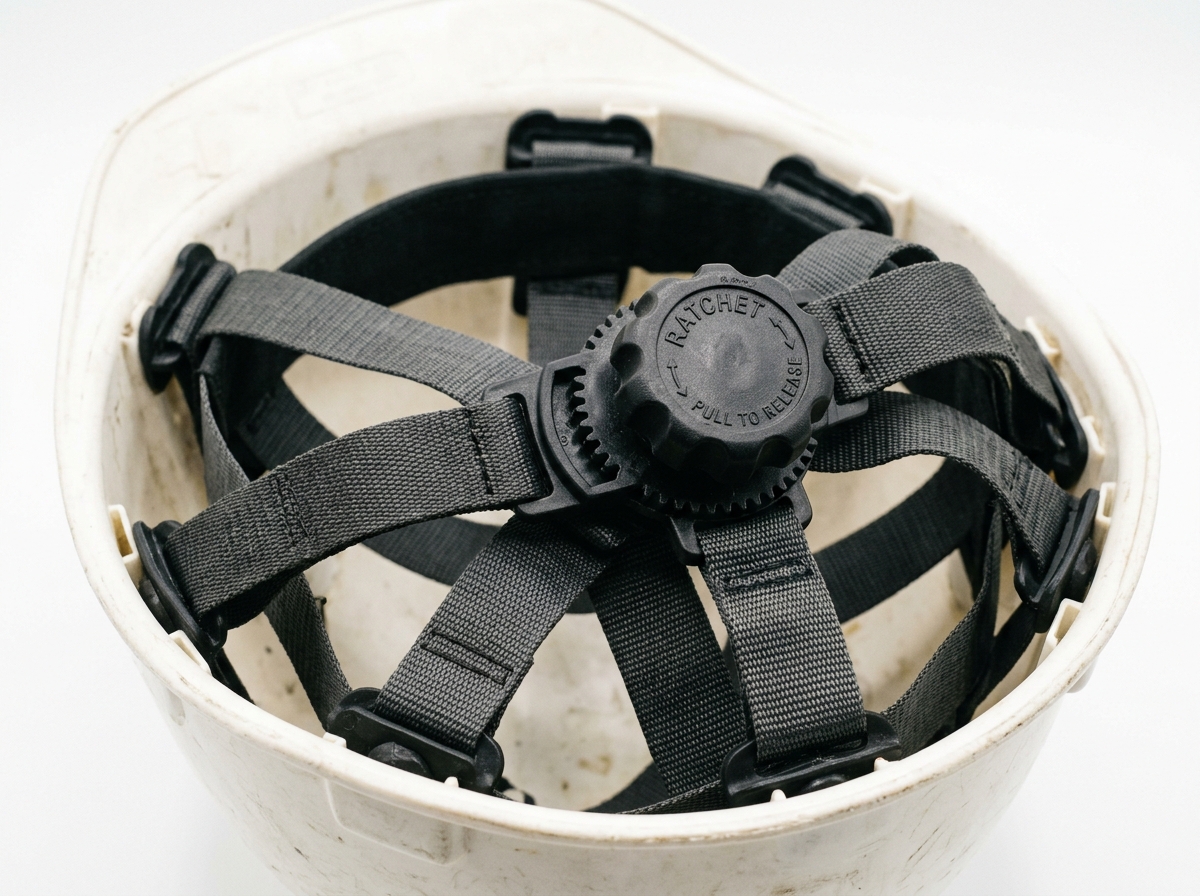
Think of the suspension system as the "shocks" of your headgear. Most entry-level hats use a 4-point suspension, which is fine for short bursts but can lead to "hot spots" during an eight-hour shift. For maximum comfort, we recommend a 6-point suspension system. These extra two points of contact distribute the weight 33% more effectively, making a 20-ounce hat feel significantly lighter.
Adjustment is the next pillar of comfort. The old "pin-lock" style is mostly a thing of the past; today, a high-quality ratchet adjustment is the gold standard. It allows you to tighten or loosen the fit with a simple twist of a knob, even while wearing gloves.
Some brands have taken this even further. For instance, 3M™ SecureFit™ Hard Hat H-700 Series incorporates patented Pressure Diffusion Technology. This system uses self-adjusting paddles that flex to the shape of your forehead, reducing pressure by up to 30% compared to traditional flat bands. It’s these small engineering feats that turn a standard piece of PPE into a comfortable hard hat you actually forget you’re wearing.
Preventing Headaches with Proper Sizing and Fit
Size matters. Most professional-grade hard hats are designed to fit hat sizes 6.5 to 8 (roughly 21 to 25 inches in circumference). If your hat is too small, the suspension will sit too high, making it feel unstable. If it’s too large, you’ll have to over-tighten the ratchet to keep it from sliding, which is a one-way ticket to a tension headache.
Vertical adjustment is another feature to look for. Many modern suspensions offer three levels of height adjustment. This allows you to control how low the hat sits on your head. Lowering the center of gravity makes the hat feel more secure during movement, such as when you’re leaning over or looking up at a crane.
A word of caution: while it’s tempting to drill holes for extra "ventilation" or use heavy-duty adhesives to stick on custom padding, OSHA has these standards regarding modifications. Drilling holes can compromise the structural integrity, and certain adhesives can actually melt the plastic shell over time. Always use manufacturer-approved accessories to stay safe and compliant.
Choosing the Right Comfortable Hard Hat for Your Environment
Not all jobsites are created equal, and neither are the hard hats designed for them. A comfortable hard hat in a refrigerated warehouse is going to feel like a plastic oven in the Arizona sun. To choose correctly, you need to understand the three main classes:
- Class C (Conductive): These are often vented. They provide great airflow but offer zero protection against electrical hazards.
- Class G (General): Rated for up to 2,200 volts. These are the "middle ground" for general construction.
- Class E (Electrical): Rated for up to 20,000 volts. These are non-vented to prevent electrical arcing through the holes.
You also need to choose between Type I and Type II protection. Type I is designed only for impacts to the very top of the head. Type II, which is becoming more common on high-safety sites, includes a foam liner (similar to a bike helmet) to protect against lateral (side) impacts. While Type II hats are slightly heavier, the added padding often makes them feel more "snug" and comfortable for some users.
Best Options for Hot Climates and High-Heat Sites
If you work outdoors or in a high-heat industrial environment, ventilation is your best friend. A 3M™ Vented Pro Ratchet Hard Hat is specifically designed to address the leading complaint of workers: heat. By allowing hot air to escape through the top ports and cooler air to enter, these hats can significantly reduce your core temperature.
For those in high-heat areas who still need electrical protection (Class E), ventilation isn't an option. In these cases, look for hats with breathable, moisture-wicking brow pads. Some pros even use evaporative cooling liners that you soak in water before the shift. Full-brim models are also highly recommended for outdoor work; the extra wide brim provides 360-degree sun protection for your neck and ears, reducing the "glare" that leads to eye strain and headaches.
Budget-Friendly Options for a Comfortable Hard Hat Under $50
You don't need to spend $200 on a carbon fiber lid to get a comfortable hard hat. Many of the highest-rated models on the market are surprisingly affordable. High-Density Polyethylene (HDPE) is the most common material for a reason: it's incredibly lightweight, durable, and cheap to produce.
The Pyramex Ridgeline is a fan favorite in the sub-$50 category, often praised for its "low profile" look and surprisingly soft 4-point suspension. Another great value is the 3M™ SecureFit™ Hard Hat Non-Vented Cap Style, which brings high-end pressure-diffusion technology to a price point that won't break the bank. When shopping on a budget, prioritize the suspension quality over the "cool factor" of the shell's paint job.
Top-Rated Materials and Features for All-Day Wear
When we talk about all-day wear, we are really talking about "ounce-counting." If you're wearing a hard hat for 10 hours a day, the difference between 20 ounces and 15 ounces is massive. Over a week, that's thousands of pounds of cumulative strain on your neck muscles.
Material choice is the biggest factor in weight.
- HDPE: Standard, reliable, and lightweight.
- Fiberglass: Great for high-heat environments (like foundries) because it doesn't melt, but it can be heavier.
- Carbon Fiber: The "luxury" choice. It’s incredibly strong and can be made very thin, leading to some of the lightest hats on the market.
Accessory compatibility is another comfort factor often overlooked. If you have to "rig" a headlamp onto your hat with rubber bands, it’s going to be unbalanced and uncomfortable. Look for models with integrated accessory slots for earmuffs, face shields, and headlamps to keep the weight centered.
Lightweight Materials: Carbon Fiber vs. HDPE
Carbon fiber is the darling of the modern jobsite. Models like the LIFT Safety DAX Carbon Fiber are iconic for their race-inspired look and lightweight feel. However, there are trade-offs. Carbon fiber is a conductor, meaning it’s generally not suitable for high-voltage electrical work. It can also be more brittle than plastic; while it handles a single large impact well, it might show "cracking" or "chipping" from daily bumps more easily than HDPE.
On the other hand, HDPE is flexible. It can take a lot of daily abuse and still maintain its structural integrity. For most workers, a high-quality HDPE hat like the 3M™ SecureFit™ Hard Hat Non-Vented Full Brim offers the best balance of weight, safety, and price.
Advanced Padding and Sweat Management
Even the lightest hat will feel miserable if it's soaking in sweat. Modern comfortable hard hats have moved away from simple plastic brow bands to advanced, multi-layer padding. We’re seeing more synthetic leather "comfort domes" and antimicrobial fabrics that prevent that "funky" smell after a week of use.
Replacement is key here. Brow pads and sweatbands are designed to be replaceable. If yours is flattened out or no longer absorbing moisture, it’s time for a swap. A fresh, thick sweatband can actually act as a custom-fit cushion, filling in the gaps between your head and the suspension for a more stable feel.
Maintenance and Sizing for Long-Term Comfort
A hard hat is a piece of safety equipment, but it’s also a garment. Just like you wouldn't wear the same t-shirt for five years without washing it, you shouldn't ignore your hard hat. Dirt, oils from your skin, and UV rays from the sun all break down the materials over time.
To keep your hat comfortable and safe, follow these maintenance tips:
- The Daily Squeeze: Give your shell a small squeeze from the sides. It should be firm but have a slight "give." If it makes a "crunching" or "cracking" sound, the plastic is brittle and needs to be replaced immediately.
- Clean with Care: Use only mild soap and warm water. Harsh chemicals can weaken the shell.
- Check the Date: Look at the "date of manufacture" stamped inside the brim. Most manufacturers recommend replacing the shell every 5 years and the suspension every 12 months, regardless of how they look.
- Store it Right: Don't leave your hard hat on the dashboard of your truck. The "greenhouse effect" can bake the plastic, making it brittle and uncomfortable in weeks.
Frequently Asked Questions about Comfortable Hard Hats
What is the lightest hard hat for neck pain?
The Milwaukee Type 1 is one of the lightest on the market at just 15 ounces. For those looking for premium materials, carbon fiber models from LIFT Safety are also top contenders for reducing neck strain.
Can I add my own padding to a hard hat?
Only if it's manufacturer-approved. Using unapproved padding can change the way the hat sits on your head, potentially reducing the "buffer zone" needed to absorb an impact. Check your specific brand for "comfort kits" or upgraded suspension liners.
Why does my hard hat give me a headache after four hours?
This is usually due to "hot spots"—areas where the suspension is pressing too hard against your skull. Try switching to a 6-point suspension or a model with Pressure Diffusion Technology to more evenly distribute the weight.
Are full-brim or cap-style hard hats more comfortable?
It depends on your environment. Full-brim hats are better for sun and rain protection, which increases overall comfort outdoors. Cap-style hats are lighter and better for tight spaces or where you need to wear earmuffs and accessories frequently.
Can I wear a baseball cap under my hard hat?
Generally, no. ANSI Bump caps are not approved as hard hats, and wearing a standard baseball cap under your suspension can prevent the hat from sitting correctly, making it unstable and less safe.
Conclusion
At the end of a long shift, the best compliment you can give your gear is that you didn't think about it once. A truly comfortable hard hat is an investment in your health, your focus, and your longevity in the trades. By prioritizing a high-quality suspension, proper ventilation, and lightweight materials, you can turn a mandatory piece of safety equipment into a tool that supports your best work.
At One Love Apparel, we believe that comfort is the foundation of confidence. Whether it's the gear you wear on your head or the soft, ring-spun cotton t-shirt you pull on when the shift is over, you deserve apparel that works as hard as you do. For more insights on how the right gear can change your workday, check out our post on wearing-your-heart-on-your-sleeve-how-apparel-can-spark-conversations-about-causes-that-matter.
Stay safe, stay comfortable, and we'll see you on the next job.