



The Secret to Snug: Unveiling the Most Comfortable Wig Caps
Why a Comfortable Wig Cap is Your Wig's Best Friend
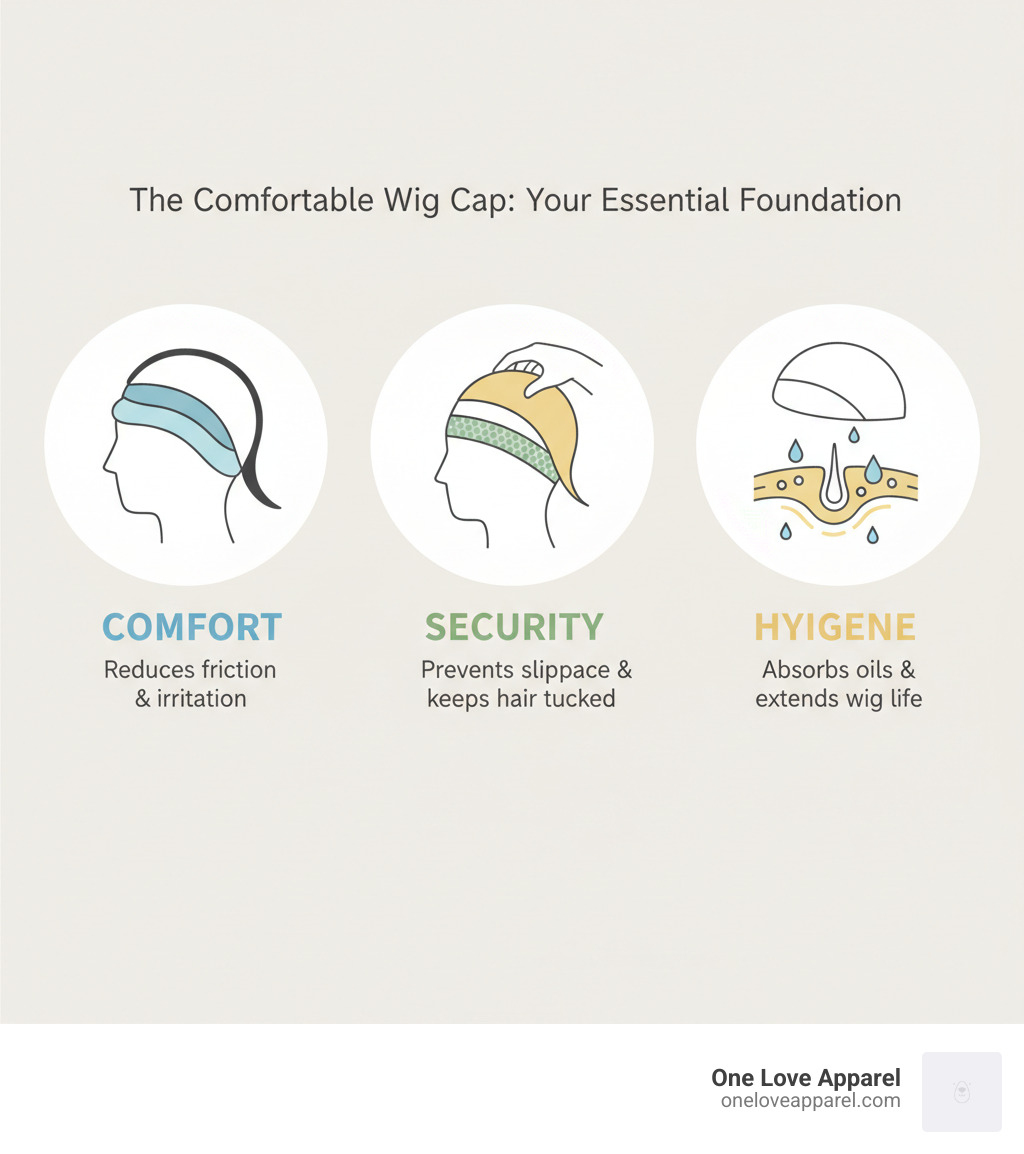
A comfortable wig cap serves as the essential foundation between your scalp and wig, offering three key benefits:
- Improved Comfort - Creates a soft barrier that reduces friction and prevents irritation
- Superior Security - Keeps natural hair tucked away and prevents wig slippage throughout the day
- Better Hygiene - Protects both your scalp and wig by absorbing oils and sweat
Whether you're new to wigs or a seasoned wearer, the right cap can transform your experience from tolerable to truly comfortable.
The global wig market reached $9.2 billion in 2022 and is projected to hit $17.9 billion by 2030. With more people wearing wigs than ever—whether for fashion, convenience, or hair loss—the demand for comfortable, breathable accessories has surged. Materials like bamboo, organic cotton, and mesh now dominate the market because they address what matters most: all-day comfort without compromise.
Here's the reality: not everyone needs a wig cap. Some people skip them entirely and wear their wigs just fine. But for those who want extra security, scalp protection, or struggle with slippage, finding the right cap material and fit makes all the difference.
Think of a wig cap like the foundation garment of wig wearing. Just as you wouldn't build a house on uneven ground, you shouldn't expect your wig to sit smoothly without the proper base—especially if you have natural hair underneath or a sensitive scalp.
I'm David Vail, and through my work in business development and as owner of One Love Apparel, I've learned that comfort starts with the right foundation layer. Understanding what makes a comfortable wig cap work—from material selection to proper fit—helps people feel confident and comfortable all day long.
The Foundation of Comfort: Choosing Your Wig Cap Material
The material of your wig cap matters more than you might think. It's what sits closest to your scalp all day, so choosing the right one can mean the difference between forgetting you're wearing a wig and constantly adjusting it.
Think of it like choosing the right t-shirt fabric. Just as soft, breathable cotton feels better against your skin than a scratchy synthetic, the right wig cap material transforms your entire wearing experience. You want something that breathes, feels gentle, and works with your body instead of against it.
The good news? Today's market offers materials designed for every need—from lightweight mesh that keeps you cool to bamboo fabric that pampers sensitive scalps. Understanding what each material does best helps you find your perfect comfortable wig cap.
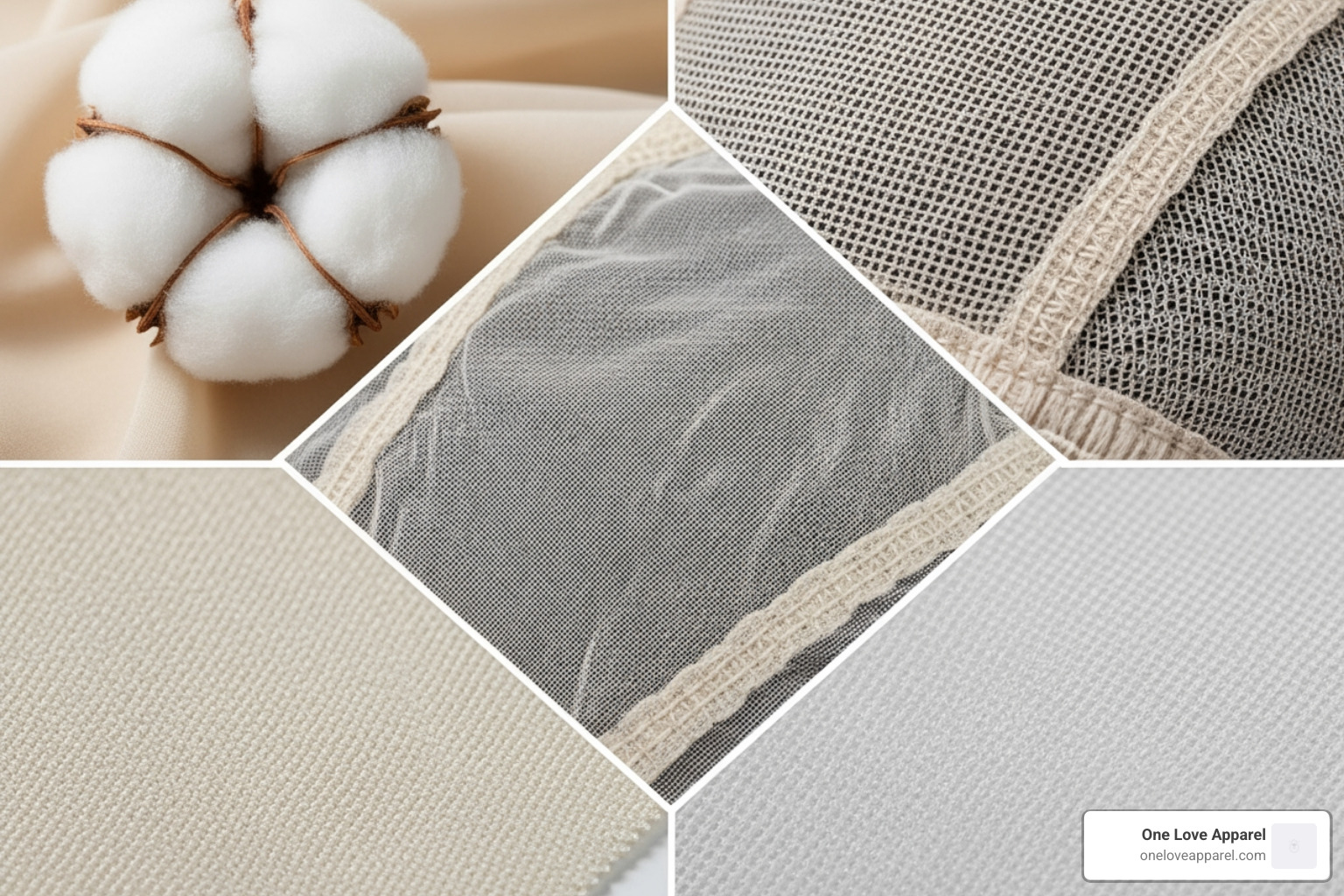
Nylon & Mesh Caps: The Breathable Basics
Nylon and mesh caps are the workhorses of the wig world. They're popular because they're practical, affordable, and they work.
Nylon stocking caps are thin and stretchy—almost invisible once they're on. They create a smooth layer over your natural hair, flattening everything down so your wig sits cleanly. Because they're sheer, they work beautifully under lace front wigs where you need that seamless hairline. No one will spot a bulky cap line through delicate lace.
Mesh caps take breathability to the next level. Their open weave lets air flow freely across your scalp, which keeps you cooler and drier throughout the day. If you tend to get warm easily or live in a hot climate, this ventilation makes a real difference. The mesh also reduces friction between your scalp and the wig's interior, which means less irritation and fewer itchy moments.
Both types excel at tucking away natural hair and keeping everything secure. They prevent stray hairs from sneaking out and help your wig stay put without constant adjusting. They're lightweight, often sold in multi-packs, and economical enough to replace regularly. For many people, these basic caps are all they need for a comfortable wig cap experience.
Cotton & Bamboo Caps: The Soft & Sensitive Solution
When your scalp needs extra gentleness—whether from sensitivity, alopecia, or just personal preference—natural fibers change everything.
Cotton caps feel wonderfully soft and cozy. They provide a thicker, more cushioned barrier than sheer nylon, which can be especially comforting if you have complete hair loss or a scalp that reacts to synthetic materials. Organic cotton breathes naturally and offers a gentle layer of protection. It's particularly nice in cooler weather when that extra softness feels like a warm hug for your head.
Bamboo fabric takes comfort even further. It's incredibly soft—some compare it to silk or cashmere—and it has natural moisture-wicking abilities. That means it pulls sweat away from your skin instead of trapping it, keeping you dry and comfortable all day long. Bamboo is also naturally hypoallergenic and antibacterial, which makes it ideal for vulnerable or healing scalps.
Products like the Deluxe Bamboo Wig Cap are designed specifically to pamper sensitive skin. These natural materials create a protective barrier that feels soothing rather than irritating. If you've struggled with itchiness or redness from other caps, switching to cotton or bamboo often solves the problem immediately. For anyone dealing with hair loss or simply wanting the gentlest option, these natural fibers deliver a truly comfortable wig cap.
Silicone & Grip Caps: The Ultimate in Security
Sometimes comfort isn't just about softness—it's about knowing your wig won't budge no matter what your day throws at you.
Silicone grip caps use strategic placement of silicone strips or dots to create a secure hold without pins, clips, or adhesive. The silicone grips gently onto your scalp (or your natural hair if you have it), creating enough friction to keep everything locked in place. You'll typically find these grips along the hairline, at the nape of your neck, and across the top—the spots where wigs tend to shift.
This anti-slip technology is genuinely liberating. You can lean forward, look down, move through your day with confidence, and your wig stays exactly where you put it. No more bathroom mirror checks every hour. No more subtle readjustments when you think no one's looking.
The benefits of grip-style caps include eliminating slippage during active days, removing the need for pins or glue that can irritate your scalp or damage your wig, reducing friction and itchiness because the silicone creates a smooth interface, saving time since you can put your wig on and go, and working well for everyone—whether you have a full head of hair or none at all.
Products like the No Slip Grip Cap or various wig grip headbands consistently earn high ratings for their staying power. If security is your biggest concern, a silicone-improved comfortable wig cap delivers peace of mind along with comfort.
More Than a Barrier: The Key Benefits of a Comfortable Wig Cap
A comfortable wig cap does so much more than just sit between your scalp and your wig. It's a hardworking layer that quietly improves every aspect of wearing a wig—from keeping it secure to protecting your scalp to making sure your wig looks as natural as possible.
Think of it this way: you wouldn't wear a beautiful outfit without the right undergarments to smooth everything out, right? The same principle applies to wigs. That simple cap underneath is what makes everything work together seamlessly.
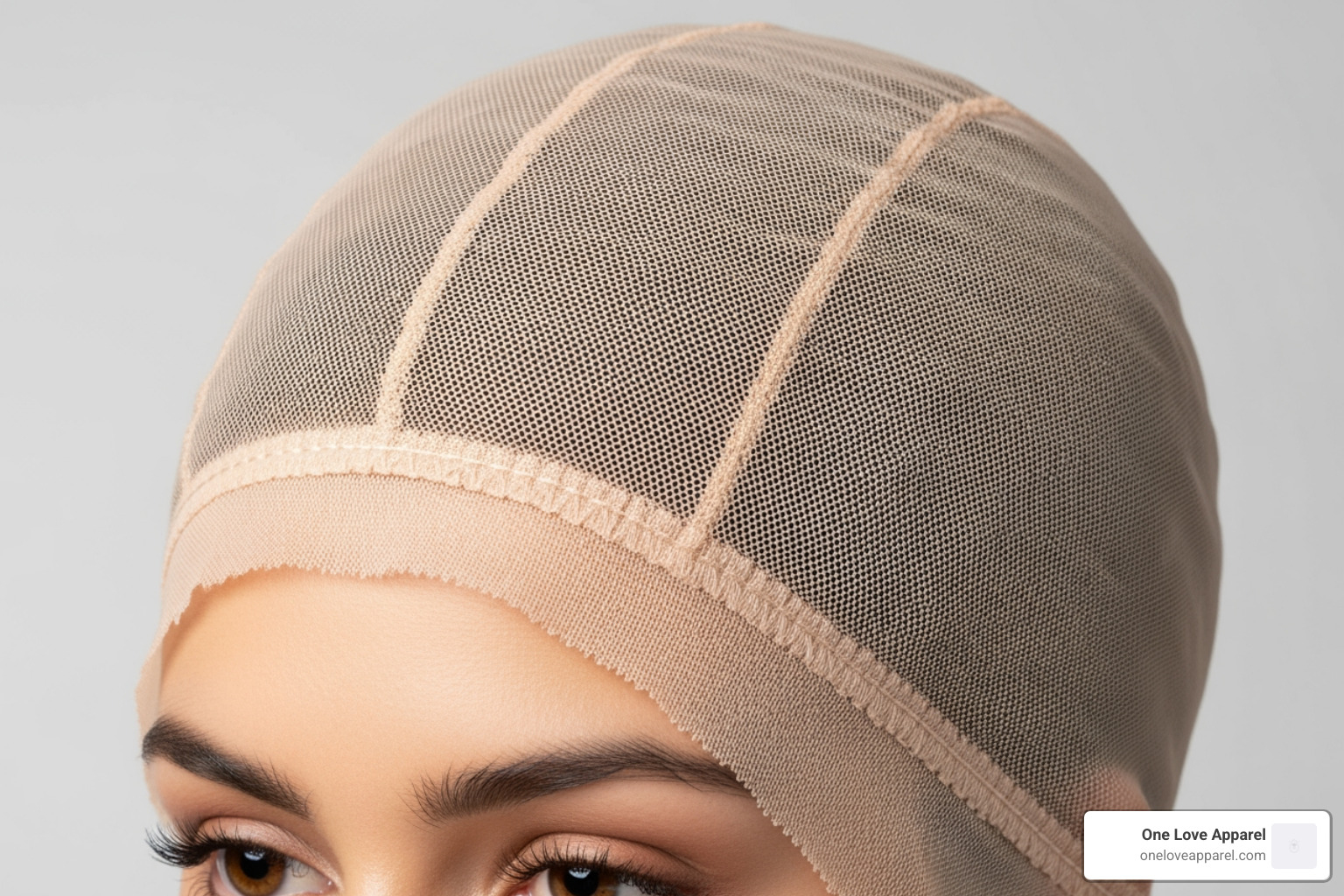
Opening up All-Day Security and Preventing Slippage
Few things shake your confidence quite like feeling your wig shift during an important meeting or while you're out with friends. That little slip sends you into panic mode, wondering if anyone noticed.
This is where a good wig cap becomes your secret weapon. It creates just the right amount of friction between your scalp and the wig's interior, acting like a gentle anchor that keeps everything in place. The cap grips your natural hair (or your scalp if you don't have hair) and gives the wig something to hold onto.
If you have natural hair, the cap tucks every strand away neatly, creating a smooth, even surface. No bumps, no lumps, no random hairs sneaking out. Just a clean foundation that lets your wig sit exactly where it should. This smooth base prevents shifting and eliminates that constant need to adjust or check your wig in every reflective surface you pass.
The result? You can move through your day with genuine confidence. Dance at a wedding. Lean over to help a friend. Turn your head quickly in conversation. Your wig stays put, and you stay focused on what matters.
Protecting Your Scalp and Natural Hair
Your scalp deserves protection, especially if you're wearing a wig every day. Some wig materials can be rough—think stiff lace, scratchy seams, or synthetic fibers that don't breathe well. Direct contact with these materials can lead to irritation, itchiness, or even damage to your hair follicles over time.
A comfortable wig cap creates a protective barrier between your delicate scalp and the wig's construction. This is especially important if you have sensitive skin, alopecia, or any scalp condition. That soft layer reduces friction dramatically and minimizes direct contact with potentially irritating materials.
But protection isn't the only benefit. Your scalp naturally produces oils and sweat throughout the day—it's just what skin does. A wig cap absorbs these oils and moisture before they can transfer into your wig. This keeps your scalp feeling fresher and more comfortable, while also keeping your wig cleaner for much longer.
Less oil buildup means fewer washes, which extends the life of your wig significantly. It also prevents odors from developing and keeps the wig's interior in better condition. That thin cap is working overtime to protect both your scalp and your investment in a quality wig.
Creating a Flawless Foundation for Any Wig Style
The difference between an obviously fake wig and one that looks completely natural often comes down to the foundation. You need a smooth, flat surface for any wig to sit properly, and a wig cap delivers exactly that.
If you have natural hair—whether it's short, long, thick, or fine—it needs to be completely flattened and contained. Without a cap, your bio hair creates bumps and uneven spots that show through the wig. You might see lumps where hair is bunched up, or notice that the wig sits too high in certain areas. These imperfections break the illusion instantly.
A good cap flattens everything out, eliminating any bulkiness or unevenness. This is absolutely critical for lace front wigs, where a smooth, flat base makes the difference between a realistic hairline and one that screams "wig." The cap ensures the wig lays flush against your head, creating a seamless transition that's virtually undetectable.
Even if you don't have natural hair, a cap still improves the wig's appearance by providing consistent texture and grip. It prevents the wig from sitting directly on bare skin, which can sometimes create an unnatural shine or appearance through the wig cap.
The bottom line? A comfortable wig cap creates the perfect canvas for any wig style to look its absolute best. It's the foundation that makes everything else possible.
Finding Your Perfect Fit: Sizing and Alternatives
Finding the right wig cap is a lot like finding your favorite t-shirt—it needs to fit just right to feel truly comfortable. Too tight, and you'll spend your whole day with a nagging headache. Too loose, and it won't do its job of keeping everything secure. We know from experience at One Love Apparel that the perfect fit makes all the difference in how you feel throughout your day.
The good news? Once you understand how sizing works and what alternatives exist, finding your ideal comfortable wig cap becomes surprisingly straightforward.
How to Choose the Right Size for a Comfortable Wig Cap
Wig caps aren't truly one-size-fits-all, despite what some packaging might claim. Just like heads come in different shapes and sizes, wig caps come in petite, average, and large options to accommodate various head circumferences.
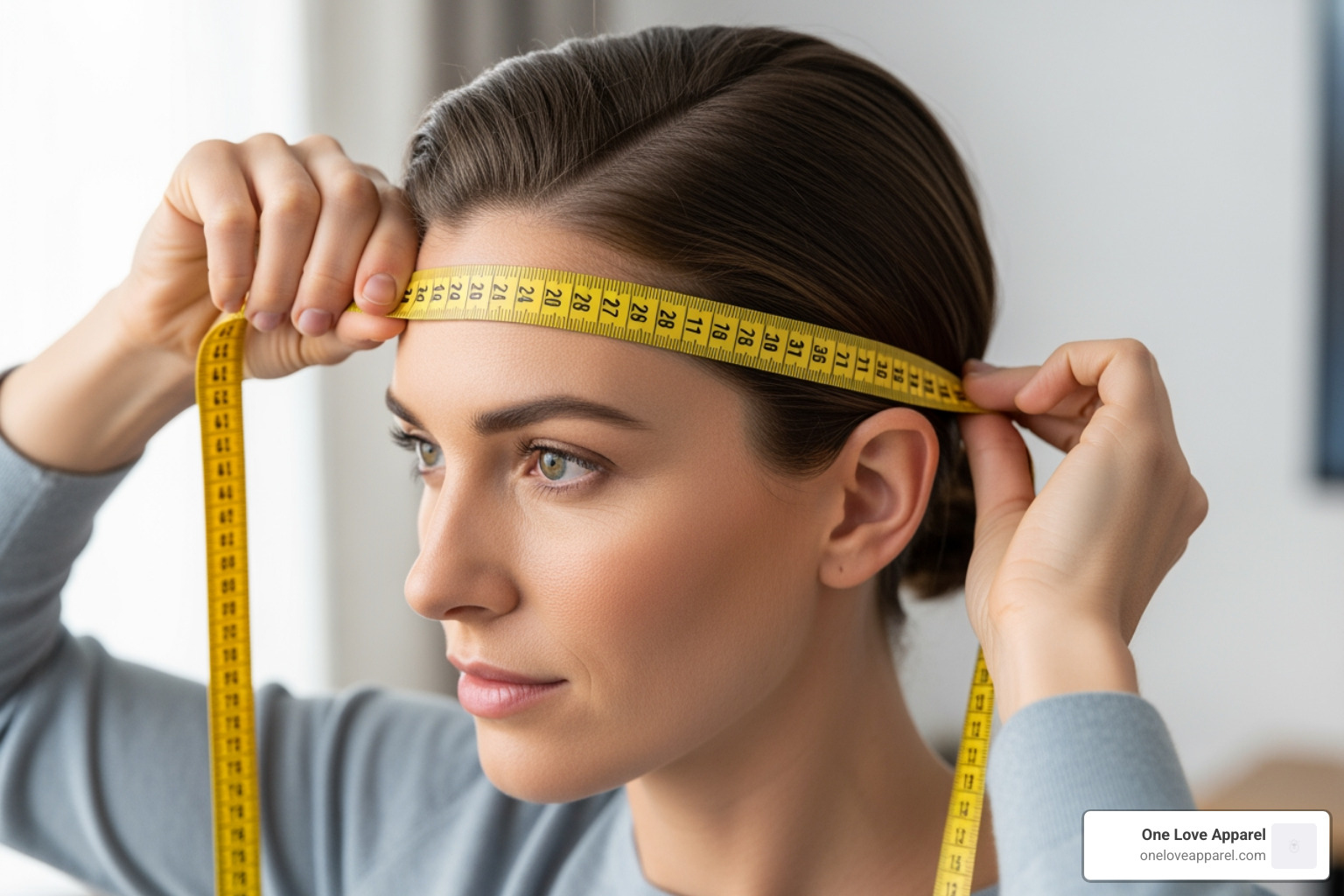
Measuring your head is simple. Grab a soft tape measure and wrap it around your head, starting at your front hairline, passing just above your ears, and continuing around to the nape of your neck. Write down that number in inches and compare it to the sizing chart from your wig cap manufacturer.
Petite caps typically fit head circumferences under 21 inches. Average sizes work for most people, covering the 21 to 22.5 inch range. Large caps are designed for measurements over 22.5 inches.
What you're aiming for is a snug but not tight fit. Think of it like a gentle hug rather than a squeeze. A cap that's too tight can cause pressure headaches that intensify throughout the day, making wig wearing miserable. One that's too loose will slip around, defeating the whole purpose of wearing it in the first place.
Pay attention to the elasticity of the material, too. Some fabrics have more give than others, which affects how forgiving the fit will be. A properly sized comfortable wig cap should feel like it's barely there—present enough to do its job, but never uncomfortable or constricting. When you get the size right, you'll forget you're wearing it at all.
Exploring Alternatives to a Traditional Wig Cap
Traditional wig caps are wonderful, but they're not the only game in town. Personal preference, scalp sensitivity, or even just curiosity might lead you to try something different. We believe in finding what works best for your unique situation, and sometimes that means thinking outside the box.
Wig liners are close cousins to traditional caps, but they're often made from specialized moisture-wicking fabrics. They're particularly popular with people experiencing hair loss or those who live in hot climates. These liners still provide that protective barrier between your scalp and wig while keeping sweat at bay. They're especially helpful if you're active or tend to get warm easily.
Wig grip headbands offer a completely different approach. Instead of covering your entire head, these velvet or silicone bands sit around your hairline like a headband. They create friction that grips both your scalp (or natural hair) and the inside of your wig, preventing slippage without the need for pins or adhesive. If you find full caps too warm or restrictive, especially in summer, a grip headband might be your answer. They're also fantastic for people with sensitive scalps who want security without full coverage.
Some wig wearers choose the no-cap option entirely. This works especially well if you have very short natural hair or no hair at all, and if your wig has a comfortable interior construction. While skipping a cap offers maximum breathability, you do miss out on some of the hygiene benefits and extra security that caps provide.
Here's how these options stack up against each other:
| Feature | Wig Cap (Nylon/Mesh) | Wig Grip Headband | Wig Liner (Cotton/Bamboo) |
|---|---|---|---|
| Primary Benefit | Smooth base, security | Maximum security, no pins | Scalp comfort, hygiene |
| Breathability | Good (mesh) to moderate | Excellent (minimal coverage) | Good (natural fibers) |
| Scalp Protection | Good | Limited (around hairline) | Excellent |
| Hair Containment | Excellent | Limited | Excellent |
| Slippage Prevention | Good | Excellent | Moderate |
| Best For | All wig types, general use | Active wear, sensitive scalp | Sensitive scalp, hair loss |
The truth is, the "best" option is whatever makes you feel most comfortable and confident. Don't be afraid to experiment with different styles until you find your perfect match. Your ideal comfortable wig cap is out there waiting for you.
Frequently Asked Questions about Wig Caps
Navigating wig accessories can feel overwhelming at times. We get it—there are so many options, materials, and opinions out there. That's why we've gathered the most common questions we hear about wig caps and answered them in a way that, hopefully, makes your decision a little easier. Our goal is simple: to help you feel comfortable and confident every single day.
Is it necessary to wear a wig cap with a wig?
Here's the honest truth: it's completely up to you. There's no wig police checking whether you're wearing a cap underneath! Many people wear their wigs without a cap and feel perfectly fine doing so.
That said, we do recommend wearing a comfortable wig cap for most people, and here's why. First, there's the security factor. A cap keeps your natural hair tucked away and creates that smooth surface we talked about earlier, which helps prevent your wig from shifting around. Second, there's hygiene. The cap absorbs sweat and oils from your scalp, which means your wig stays cleaner longer and you don't have to wash it as frequently. Third, there's comfort and protection, especially if you have a sensitive scalp or are experiencing hair loss. The cap provides a soft barrier between your skin and the wig's construction, reducing friction and irritation.
Now, if you find that wearing a wig cap makes you feel too hot or uncomfortable—especially if you have a sensitive scalp—it's perfectly fine to skip it. Some people with very short hair or no hair at all, and wigs with already-comfortable interior constructions, prefer going cap-free. The "right" choice is always the one that makes you feel best. If you're experiencing discomfort with a cap, try going without one and see how it feels. Your comfort matters most.
What is the best type of comfortable wig cap for sensitive skin?
If you have sensitive skin, choosing the right wig cap material can make all the difference between a pleasant day and an itchy, uncomfortable one. We always recommend starting with the gentlest, most natural materials available.
Cotton caps, especially those made from organic cotton, are a wonderful first choice. Cotton is a natural fiber that's exceptionally soft and breathable. It provides a thicker, more substantial layer than mesh or nylon, which can feel really comforting if your scalp is sensitive or if you're experiencing hair loss. Cotton caps are particularly nice in cooler weather because they offer a bit of warmth without feeling suffocating.
Bamboo liners are another fantastic option—and honestly, they're one of our favorites for sensitive skin. Bamboo fabric is incredibly soft, almost silky to the touch. Beyond the softness, bamboo is naturally hypoallergenic and has excellent moisture-wicking properties. This means it pulls sweat away from your skin, keeping you dry and reducing the likelihood of irritation. For anyone dealing with conditions like alopecia or other issues that leave the scalp vulnerable, bamboo provides that gentle, protective barrier you need.
Beyond material, look for seamless designs or caps with very flat seams. Raised or bulky seams can rub against your scalp and cause discomfort, no matter how soft the fabric is. And always prioritize breathability—even a soft material can cause problems if it traps heat and moisture against your skin.
The key is avoiding anything that feels scratchy or synthetic if your skin tends to react. The best comfortable wig cap for sensitive skin will feel like it's barely there—soft, breathable, and protective without any friction or irritation.
How do I keep my wig cap from slipping?
A wig cap that won't stay put can be so frustrating. You shouldn't have to spend your day constantly adjusting and worrying. Fortunately, there are several tried-and-true ways to keep everything exactly where it belongs.
The most important factor is getting the right size. A cap that's too large simply won't stay in place, no matter what else you do. Take the time to measure your head circumference properly and choose a cap that fits snugly—not tight enough to cause headaches, but snug enough to create that gentle friction that keeps it secure.
If you have natural hair, make sure it's properly secured and flattened. Long hair should be braided into flat cornrows or twisted and pinned close to your scalp. The flatter your natural hair, the smoother the base, and the less chance there is for the cap to shift around. Think of it like creating a smooth canvas before painting.
One of the most effective solutions is using a wig grip headband underneath your cap. These velvet or silicone headbands create incredible friction between your scalp (or natural hair) and the wig cap. They're worn like a regular headband around your hairline, and they provide that extra security without needing pins or glue. Many people swear by them, especially those who want a glueless, secure hold.
If you need even more security, you can pin the cap to your natural hair using bobby pins. Place them along your hairline or at the nape of your neck—wherever you need that extra anchor. Just be gentle so you don't damage your own hair. And if you have short, fine hair, creating a bit of texture with gentle backcombing or a light mist of hairspray can give the cap something to grip onto.
By combining these techniques—proper sizing, flat natural hair, and maybe a grip headband or a few strategic pins—you can create a secure foundation that stays put all day. Your comfortable wig cap should work with you, not against you, giving you the confidence to move freely without a second thought.
Conclusion: Accept Comfort in Every Layer
We've walked through wig caps together, and hopefully you now see why these simple accessories can make such a huge difference. A comfortable wig cap isn't just about keeping your wig in place—it's about feeling confident, protecting your scalp, and making your entire wig-wearing experience something you can truly enjoy rather than just tolerate.
The key takeaways are straightforward: material matters, and fit is everything. Whether you gravitate toward the breathable lightness of mesh, the gentle softness of bamboo or cotton, or the steadfast security of silicone grips, there's a cap designed specifically for your needs. Your perfect cap should feel like it's barely there while doing its job flawlessly.
At One Love Apparel, we've always believed that comfort starts with what touches your skin. Just as our t-shirts are crafted from soft, lightweight combed and ring-spun cotton because we know that quality fabric makes all the difference, we understand that the foundation beneath your wig deserves the same thoughtful consideration. The right foundation matters—whether it's a t-shirt that feels like a second skin or a wig cap that lets you forget you're even wearing one.
As the wig market continues to grow, driven by millions of people seeking comfort, style, and confidence, accessories like wig caps have evolved to meet those demands. The options available today—from moisture-wicking bamboo liners to innovative grip technology—reflect a genuine understanding of what wig wearers need and deserve.
So accept the comfort in every layer. Take the time to find the cap that works for your unique situation, your scalp sensitivity, and your lifestyle. When you get it right, you'll know. You'll move through your day without a second thought about your wig, focused instead on everything that truly matters.
For more thoughts on how what we wear can express who we are and spark meaningful connections, take a look at our piece on how apparel can spark conversations about causes that matter.