



The Ultimate Guide to Breathable Cotton Long Sleeve Shirts
Why Lightweight Cotton Long Sleeve T Shirts Belong in Every Wardrobe
Lightweight cotton long sleeve t shirts are one of the most versatile basics you can own — warm enough for a cool morning, breathable enough to wear all day, and simple enough to layer under almost anything.
Here are the best options at a glance:
| Fabric Type | Weight | Best For | Price Range |
|---|---|---|---|
| Pima / Supima Cotton | 150 gsm / ~4.5 oz | Premium softness, layering | $45 – $95 |
| Ring-Spun Cotton | 160 gsm / ~5.0 oz | Everyday comfort, durability | $17 – $54 |
| Organic Cotton | 160 gsm / ~5.4 oz | Eco-conscious wear | $39 – $85 |
| Standard Cotton | ~6.0 oz | Budget basics, bulk packs | $8 – $28 |
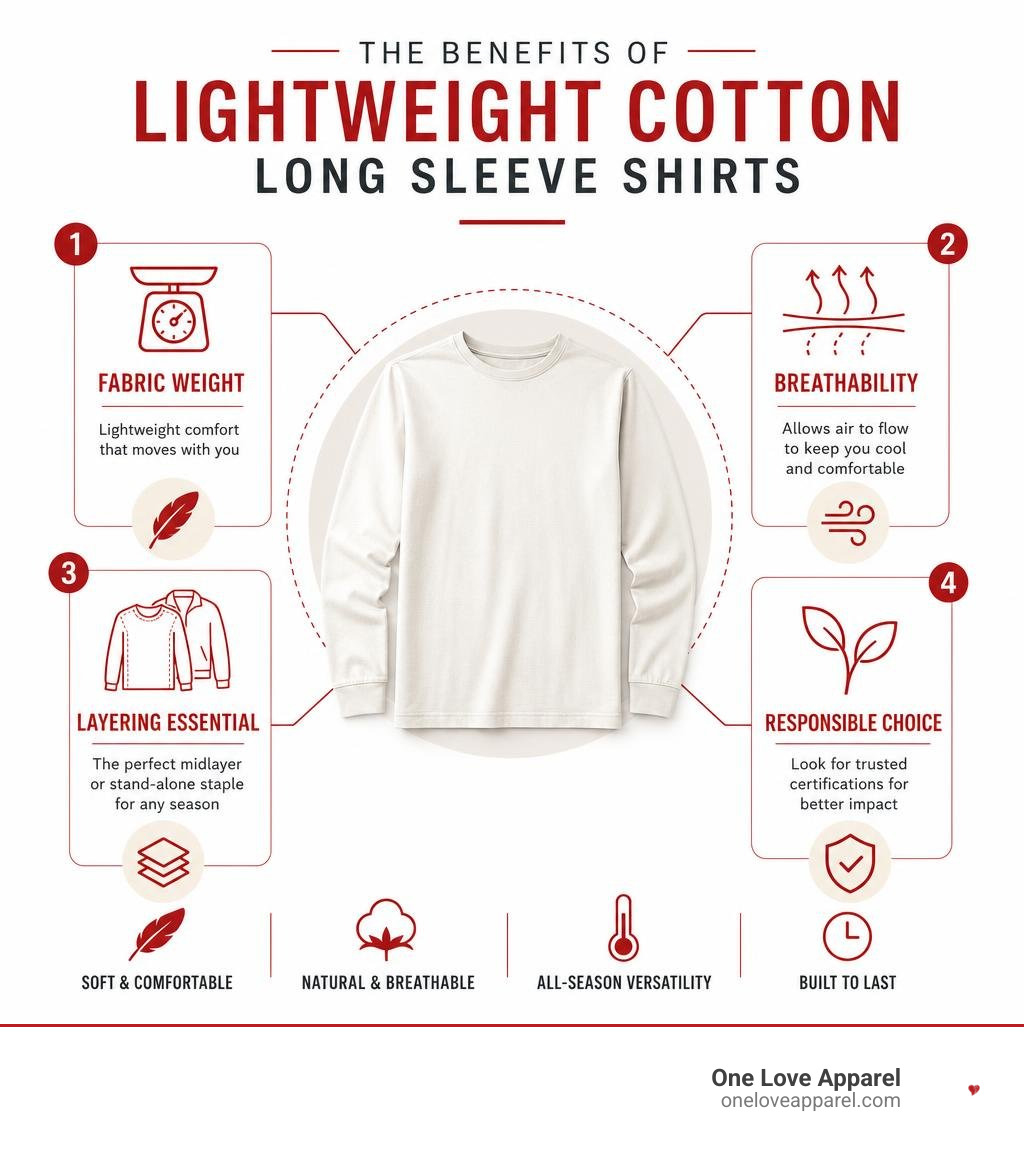
Most people reach for a long sleeve tee when a regular t-shirt feels too casual but a sweater feels too heavy. It fills that gap perfectly — especially in fabrics under 5.4 oz or 160 gsm, which drape lightly and breathe well without clinging or bunching under a jacket.
This guide covers the best lightweight cotton long sleeve options across different fabrics, fits, and price points so you can find the right one for your body and lifestyle.
I'm David Vail, VP of Business Development at Latitude Park and owner of One Love Apparel, where I've spent years working hands-on with apparel production and sourcing — including finding the right lightweight cotton long sleeve t shirts that balance softness, fit, and lasting quality. Let's break down exactly what to look for.
Lightweight cotton long sleeve t shirts further reading:
What Makes Lightweight Cotton Long Sleeve T Shirts Unique?

To the untrained eye, all long sleeve t-shirts look relatively similar. However, the secret to a shirt that you "forget to take off" lies entirely within its structural DNA: the fabric weight, the yarn construction, and the knitting method.
In the apparel industry, fabric weight is measured in two primary ways: ounces per square yard (oz/yd²) or grams per square meter (GSM). Standard or heavyweight long sleeve shirts typically range from 6.0 oz/yd² (about 200+ GSM) and up. In contrast, lightweight cotton long sleeve t shirts generally sit comfortably between 4.5 oz/yd² and 5.4 oz/yd² (roughly 150 to 180 GSM).
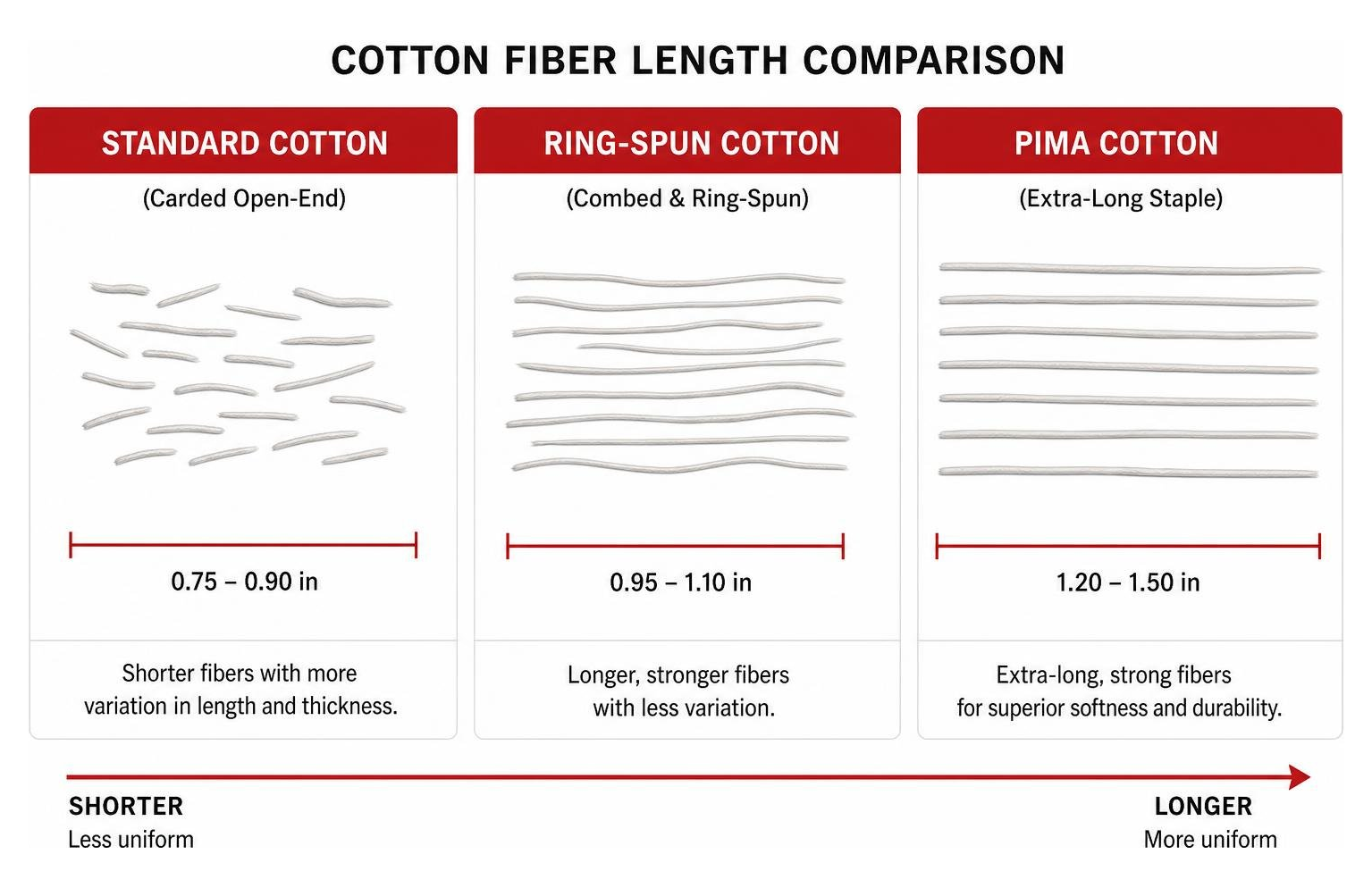
The yarn construction also plays a massive role. Budget-friendly, standard cotton shirts often use carded open-end cotton. This process creates a rougher, thicker yarn with fibers that lie in random directions, resulting in a heavier, less breathable fabric. Lightweight tees, on the other hand, rely on combed and ring-spun cotton. By continuously spinning and twisting the cotton strands, manufacturers create a much finer, smoother, and stronger fiber that allows for a lighter knit without sacrificing durability.
Defining Fabric Weight and Construction for Lightweight Cotton Long Sleeve T Shirts
Most lightweight long sleeves are constructed using a jersey knit. This is a single-knit fabric known for its natural stretch, smooth flat surface on the outside, and textured surface on the inside.
The primary physical benefits of a lightweight jersey knit include:
- Air Permeability: The finer yarns allow air to circulate freely through the fabric, keeping your skin cool and dry.
- Drape: A lighter fabric flows with the natural contours of your body rather than standing stiffly. This creates a highly flattering, relaxed silhouette.
- Absorbency: Pure cotton can naturally absorb up to 27 times its own weight in water, pulling moisture away from your skin during transitional weather.
- Softness: Because the yarns are combed to remove short, prickly fibers, the resulting shirt feels incredibly soft against the skin from day one.
Comparing Lightweight Cotton Long Sleeve T Shirts to Heavyweight Alternatives
While heavyweight options like a 6.0 oz "Ultra Cotton" shirt have their place — particularly for rugged outdoor work or crisp autumn days — they fail when it comes to versatile, year-round layering.
Here is how lightweight cotton long sleeves compare to their heavier counterparts:
- Layering Potential: Try wearing a 6.0 oz heavyweight long sleeve under a slim-fit blazer or a lightweight sweater, and you will quickly find yourself feeling restricted, bulky, and uncomfortably warm. A 4.5 oz lightweight cotton tee slides smoothly under outer layers without bunching at the elbows or shoulders.
- Temperature Regulation: Heavyweight cotton traps body heat, which is great for cold weather but miserable when transitioning indoors to heated rooms. Lightweight cotton acts as a self-regulating thermal layer, keeping you warm outside but remaining highly breathable once you walk indoors.
- Transitional Weather Performance: During "False Spring" or early autumn, the weather can swing by 20 degrees in a single afternoon. A lightweight long sleeve offers the perfect middle ground, providing just enough arm coverage to block a cool breeze without causing you to overheat when the sun comes out.
Premium Fabric Choices: Pima, Supima, and Ring-Spun Cotton
When shopping for lightweight cotton long sleeve t shirts, you will frequently run into terms like "Pima," "Supima," "Ring-Spun," and "Combed." Understanding these terms is the key to finding a shirt that won't lose its shape or pill after three washes.
The Benefits of Pima and Supima Cotton
Pima and Supima cotton represent the absolute pinnacle of luxury in the cotton world. The defining characteristic of Pima cotton is its extra-long staple (ELS) fiber length. While standard cotton fibers average around 0.75 to 0.9 inches, Pima fibers range from 1.2 to 1.5 inches.
Supima is simply a trademarked brand name used to certify that the Pima cotton was grown exclusively in the United States and has met strict quality standards. Supima cotton represents less than 1% of all cotton grown worldwide, making it highly exclusive.
The physical benefits of extra-long staple cotton are clear:
- Extreme Softness: Fewer fiber ends are exposed on the surface of the yarn, resulting in a silky-smooth texture that feels incredibly gentle, making it perfect for sensitive skin.
- Incredible Strength: The longer fibers can be spun into a tighter, stronger yarn. This makes Supima cotton up to 45% stronger than regular cotton, ensuring your lightweight shirt won't easily rip, tear, or develop tiny holes.
- Natural Luster: The smooth surface of the fibers reflects light better, giving the dyed fabric a rich, vibrant color and a subtle natural sheen.
- Pilling Resistance: Pilling occurs when short fibers break and tangle into tiny balls on the fabric surface. Because Pima cotton has fewer short fibers, it is naturally highly resistant to pilling.
For those who want to ensure their luxury cotton is also grown with social and ecological responsibility, look for certified organic Pima options that adhere to strict global standards. You can check the Scientific certification details to learn more about how organic textiles are verified from seed to garment.
Why Ring-Spun and Combed Cotton Offer the Best Value
While Supima cotton is luxurious, it also comes with a premium price tag, often running anywhere from $45 to over $95 per shirt. For everyday wear, combed and ring-spun cotton offers the absolute best balance of softness, durability, and affordability.
The process of making ring-spun cotton involves continuously twisting and thinning the cotton strands to make a very fine, strong rope of cotton fibers. Before spinning, "combed" cotton goes through an extra step where the raw cotton is carded and literally combed with fine brushes to discard short, weak fibers and remove dirt or impurities.
This process yields several key benefits:
- A Clean Printing Surface: If you love custom graphic tees, combed ring-spun cotton provides a perfectly smooth, flat canvas. Standard carded cotton has a fuzzy texture that can cause screen prints to crack or look uneven.
- Everyday Durability: Even at a lightweight 4.5 oz, a combed ring-spun shirt will easily outlast a standard 5.3 oz carded cotton shirt because the spun fibers are tightly locked together.
- Affordable Luxury: You get a shirt that feels nearly as soft as Pima cotton but at a fraction of the cost, making it perfect for buying in convenient multi-packs.
Sizing, Fit, and Styling for Men and Women
Finding the perfect lightweight long sleeve is only half the battle; you also need to nail the fit and style to ensure it flatters your body shape.
How to Measure for the Perfect Fit
Because lightweight cotton is thin and draping, buying the wrong size can quickly lead to a shirt that either clings too tightly to your torso or looks completely shapeless. To avoid the hassle of returns, grab a soft measuring tape and take these four essential measurements:
- Chest: Wrap the tape under your armpits, across the fullest part of your chest, keeping the tape parallel to the floor.
- Sleeve Length: Start from the spine at the base of your neck, measure across the top of your shoulder, down along your slightly bent elbow, and finish at your wrist bone.
- Waist: Measure around your natural waistline, which is the narrowest part of your torso (typically right above your belly button).
- Hips: Stand with your feet together and measure around the fullest part of your hips.
When comparing your measurements to sizing charts, keep the intended silhouette in mind:
- Slim Fit: Designed to hug the body closely. If you plan to use the shirt strictly as an under-layer, a slim fit prevents fabric from bunching under your arms.
- Relaxed/Regular Fit: Offers a comfortable drape that sits slightly off the body. This is the most versatile fit for standalone wear.
- Boxy Cut: Popular in modern streetwear, a boxy fit features a wider torso and a slightly cropped length, offering maximum airflow and a relaxed, casual aesthetic.
- Side Slits: Look for shirts with subtle side slits at the hem. This design feature allows the fabric to sit comfortably over your hips without pulling or clinging when you sit down.
Styling as a Base Layer or Standalone Piece
The beauty of a lightweight cotton long sleeve t-shirt is its ability to transition seamlessly across different dress codes.
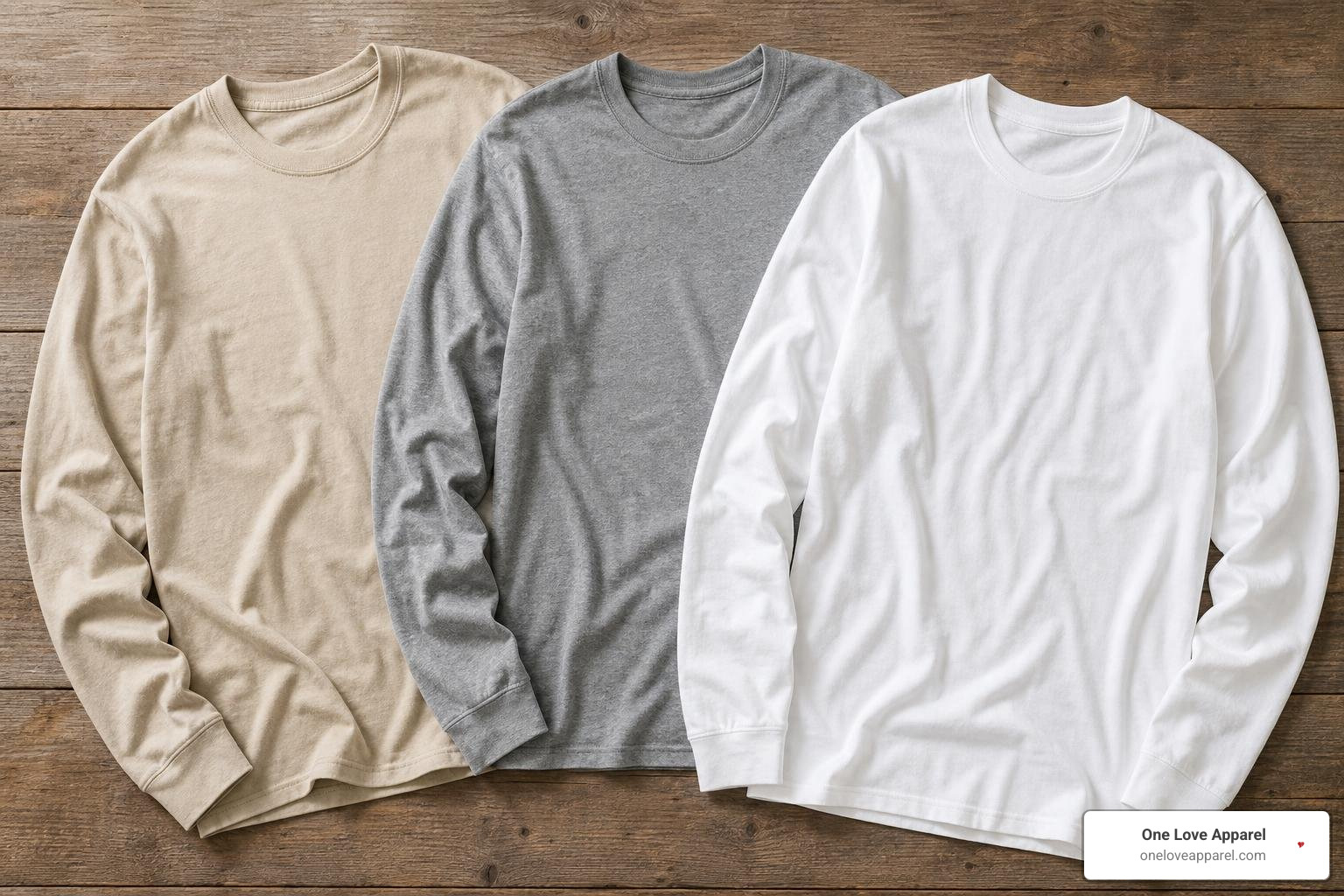
- The Casual Standalone Look: Pair a classic white or heather grey crew neck with vintage-wash denim and clean white sneakers. To make the outfit look styled rather than thrown-together, push the sleeves up to your mid-forearms (this adds structure to your arms) and utilize a simple "half-tuck" at the front belt loop.
- The Semi-Formal Layer: Swap your standard button-down shirt for a premium Pima cotton V-neck long sleeve. Wear it underneath a structured, unstructured wool blazer or a sharp utility jacket. This keeps you looking polished and put-together for dinner dates or smart-casual office environments while keeping you completely comfortable.
- The Cozy Loungewear Aesthetic: Pair an oversized, boxy-fit long sleeve in an earthy tone (like olive green, sand, or fig) with matching fleece joggers or knit pants. It’s a clean, minimal look that is comfortable enough for lounging on the couch but stylish enough for running quick errands.
Sustainability and Care: Keeping Your Shirts Soft and Eco-Friendly
As consumers, we are increasingly conscious of what we put on our bodies. Because lightweight cotton long sleeves are worn directly against the skin, choosing safe, eco-friendly fabrics and caring for them properly is essential.
Eco-Friendly Certifications to Look For
When shopping for cotton apparel, look for these two gold-standard environmental certifications:
- GOTS (Global Organic Textile Standard): This is the world's leading certification for organic fibers. It ensures that the cotton was grown without synthetic pesticides or fertilizers, and verifies that the entire supply chain meets strict environmental and social criteria.
- OEKO-TEX Standard 100: This certification guarantees that every single component of the garment — from the cotton threads to the dyes, buttons, and brand labels — has been rigorously tested against a list of over 1,000 harmful chemicals. You can Learn more about OEKO-TEX safety standards to see how they protect both your skin and the environment.
By choosing certified organic and chemical-free cotton, you are not only supporting healthier soil and water conservation but also ensuring your shirt is naturally hypoallergenic and completely safe for sensitive skin.
Washing and Care Instructions to Prevent Shrinkage
Because lightweight cotton fabrics are finer and more delicate than heavyweight options, they require a bit of extra care in the laundry room to prevent shrinkage and keep them feeling incredibly soft.
Follow this simple care routine:
- Wash Cold: Always machine wash your lightweight cotton shirts in cold water (30°C or 40°C max) on a gentle cycle. Hot water relaxes the natural tension in the cotton fibers, causing them to contract and shrink.
- Skip the Fabric Softener: It might sound counterintuitive, but chemical fabric softeners actually coat the cotton fibers in a thin, waxy layer. This reduces the fabric's natural breathability and moisture-wicking capabilities over time.
- Air Dry Whenever Possible: The high heat and tumbling action of a standard dryer is the number one enemy of lightweight cotton. Instead, lay your shirts flat on a drying rack or hang them up to air dry. This preserves the shape, prevents shrinkage, and stops tiny holes from forming.
- Iron on Low: If your shirt wrinkles, use a low iron setting or a garment steamer. Avoid dry cleaning entirely, as the harsh chemicals can weaken the delicate cotton fibers.
Pro Tip: To entirely bypass the post-wash panic, look for brands that offer pre-washed or pre-shrunk fabrics. These garments are washed during the manufacturing phase, locking in the fit so the size you buy is the size that stays.
Frequently Asked Questions about Lightweight Long Sleeve Tees
How do I prevent my lightweight cotton shirt from shrinking?
To prevent shrinking, always wash your shirt in cold water (30°C) on a gentle cycle and lay it flat to air dry. Avoid tumble drying on high heat at all costs. Additionally, look for brands that use pre-shrunk combed ring-spun cotton, which has already undergone a washing process during manufacturing to stabilize the fibers.
Is Pima cotton better than regular cotton for warm weather?
Yes! Pima cotton features extra-long staple fibers, which allow it to be spun into a much finer, lighter yarn. This results in a highly breathable jersey knit that allows maximum airflow. Pima cotton is also highly absorbent, making it incredibly efficient at absorbing sweat and pulling moisture away from your skin during warm, humid days.
What is the ideal fabric weight for a layering tee?
The ideal fabric weight for a layering tee is between 150 and 160 GSM (roughly 4.5 oz to 5.0 oz). This weight is thin and light enough to sit comfortably under jackets, sweaters, or blazers without bunching up or causing you to overheat, yet opaque enough to be worn completely on its own as a standalone piece.
Conclusion
At One Love Apparel, we believe that your everyday basics should be anything but basic. A high-quality, lightweight long sleeve t-shirt is a true wardrobe workhorse, bridging the gap between seasons and keeping you comfortable no matter where your day takes you.
That is why we design our apparel using only the finest, ultra-soft combed and ring-spun cotton. We prioritize flattering, pre-shrunk fits for both men and women, ensuring that your favorite new tee maintains its perfect shape, drape, and buttery softness wash after wash.
Ready to upgrade your comfort game? Explore our premium collection of ring-spun basics, and check out our in-depth guide on Spinning Comfort: Your Guide to Ring-Spun Cotton Hoodies to learn more about why we are so passionate about the science of soft fabrics.