

Why basic graphic tees are the real MVPs of your closet
The Case for Basic Graphic Tees as Your Wardrobe's Most Valuable Player

Basic graphic tees are the unsung heroes of a well-built wardrobe — simple enough to wear anywhere, expressive enough to say something without a word. Whether you're dressing up a casual Friday or keeping it relaxed on the weekend, a great graphic tee does the heavy lifting.
Here's a quick breakdown of what makes a basic graphic tee work:
| Feature | What to Look For |
|---|---|
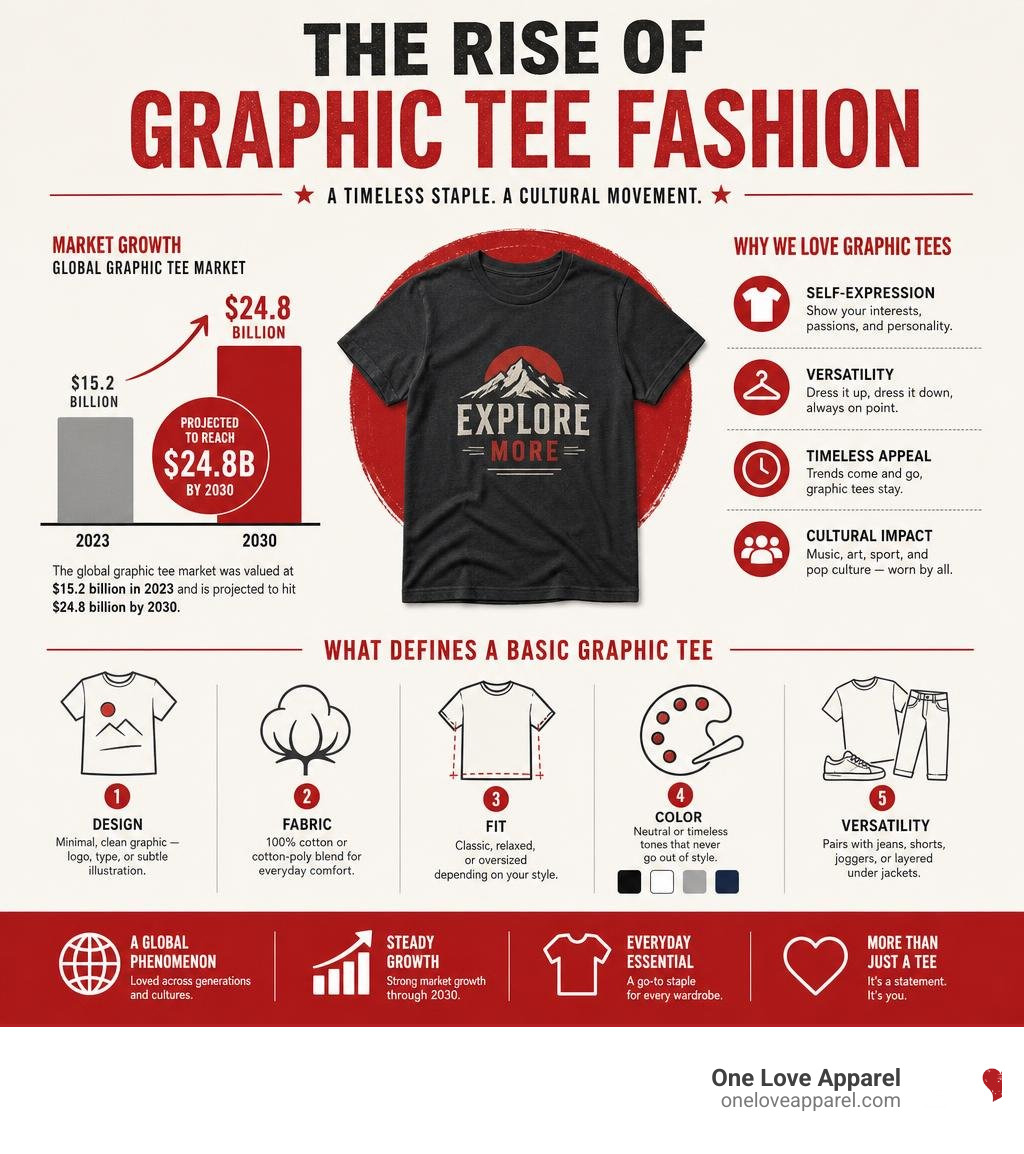
| Design | Minimal, clean graphic — logo, type, or subtle illustration |
| Fabric | 100% cotton or cotton-poly blend for everyday comfort |
| Fit | Classic, relaxed, or oversized depending on your style |
| Color | Neutral or timeless tones (black, white, grey, navy) |
| Versatility | Pairs with jeans, shorts, joggers, or layered under jackets |
The numbers back this up too. The global graphic tee market was valued at $15.2 billion in 2023 and is projected to hit $24.8 billion by 2030. That kind of growth doesn't happen without a product people genuinely love to wear, day after day.
This guide walks you through everything — fabrics, fits, pricing, care, and trends — so you can find the right tee and keep it looking great for years.
I'm David Vail, owner of One Love Apparel and a longtime apparel entrepreneur with hands-on experience building brands around quality, comfort, and style — including everything that goes into crafting basic graphic tees people actually want to wear. Let's get into it.
Basic graphic tees word guide:
What Defines a Minimalist Graphic Tee and Why It Rules Your Closet
To understand why basic graphic tees rule our closets, we first have to draw a line between a "basic" graphic tee and its louder, more chaotic cousins.
A standard graphic tee often screams for attention. It might feature a massive, high-contrast print covering the entire chest, neon color palettes, or complex all-over sublimation prints. While those have their place in streetwear, they are notoriously difficult to style and can easily overwhelm an outfit.
A basic or minimalist graphic tee, on the other hand, relies on understatement. It is defined by clean lines, generous negative space, and a curated color palette. Think subtle branding, clean typography, delicate line-art illustrations, or a small, tasteful chest logo. It doesn't fight for attention; instead, it complements the rest of your outfit.
This design restraint is precisely why it rules your closet. A minimalist tee acts as a neutral canvas. You can slip it under a tailored blazer for a smart-casual office look, pair it with structured denim for a weekend coffee run, or wear it with relaxed joggers for lounging around the house. It bridges the gap between casual ease and intentional styling.
If you are looking to curate your collection with pieces that offer maximum wardrobe mileage, check out our guide on 5 ways to find graphic t-shirts like a pro to learn how to spot high-quality, versatile designs that never go out of style.
Materials and Fabric Weights of High-Quality Basic Graphic Tees
The design of a tee gets you interested, but the fabric is what makes you keep wearing it. When it comes to basic graphic tees, the material and fabric weight dictate how the shirt drapes, how it breathes, and how well it survives the wash cycle.
Cotton is the undisputed king of the t-shirt world, accounting for 72% of all graphic tee products sold globally. However, not all cotton is created equal. Most cheap t-shirts are made from carded open-end cotton, which feels scratchy, heavy, and prone to shrinking.
For a truly premium experience, look for these two fabric types:
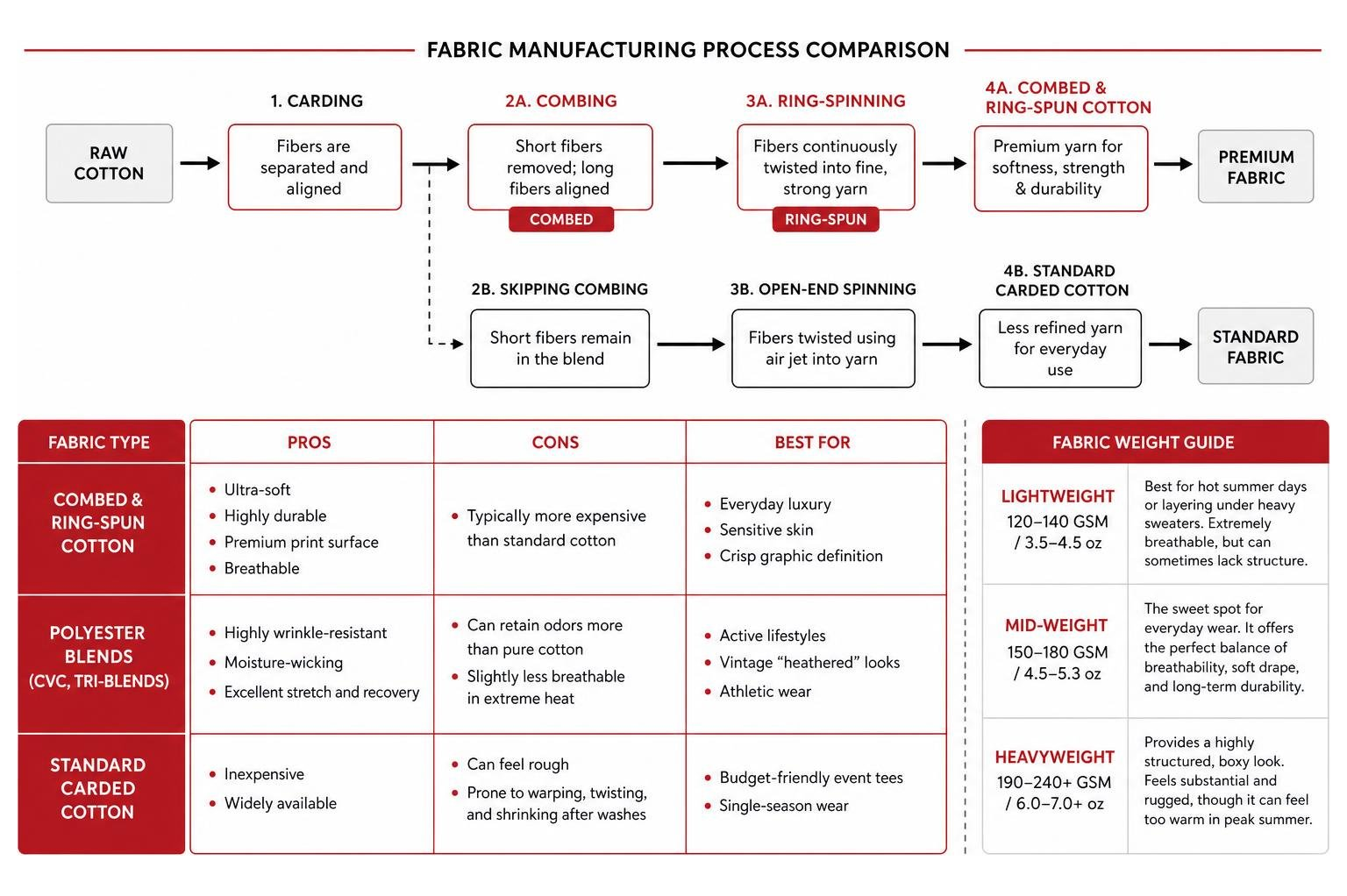
- Combed Cotton: This cotton undergoes an extra refining step where short, stray fibers are combed out, leaving only the longest, strongest, and straightest fibers. The result is an incredibly soft, smooth surface that provides an excellent canvas for graphic prints.
- Ring-Spun Cotton: This process continuously twists and thins the cotton strands, creating very fine, strong, and soft rope-like fibers.
When you combine these processes, you get combed and ring-spun cotton. This is the gold standard we use at One Love Apparel. It creates a lightweight, highly durable, and buttery-soft tee that feels like an old favorite from the very first wear.
Beyond the cotton type, you also need to consider the fabric weight, which is measured in ounces per square yard or GSM (Grams per Square Meter):
- Lightweight (120–140 GSM / 3.5–4.5 oz): Best for hot summer days or layering under heavy sweaters. Extremely breathable, but can sometimes lack structure.
- Mid-weight (150–180 GSM / 4.5–5.3 oz): The sweet spot for everyday wear. It offers the perfect balance of breathability, soft drape, and long-term durability.
- Heavyweight (190–240+ GSM / 6.0–7.0+ oz): Provides a highly structured, boxy look. It feels substantial and rugged, though it can feel too warm in peak summer.
To help you decide which material fits your lifestyle, we've broken down the key differences below:
| Fabric Type | Pros | Cons | Best For |
|---|---|---|---|
| Combed & Ring-Spun Cotton | Ultra-soft, highly durable, premium print surface, breathable | Typically more expensive than standard cotton | Everyday luxury, sensitive skin, crisp graphic definition |
| Polyester Blends (CVC, Tri-Blends) | Highly wrinkle-resistant, moisture-wicking, excellent stretch and recovery | Can retain odors more than pure cotton, slightly less breathable in extreme heat | Active lifestyles, vintage "heathered" looks, athletic wear |
| Standard Carded Cotton | Inexpensive, widely available | Can feel rough, prone to warping, twisting, and shrinking after a few washes | Budget-friendly event tees, single-season wear |
According to reports by Grand View Research, the shift toward premium, sustainable cotton fabrics is accelerating as consumers prioritize longevity and comfort over disposable fashion. Investing in high-quality combed cotton ensures your favorite tees won't lose their shape or softness after a trip through the laundry.
Finding Your Perfect Fit and Style
The fit of your tee can completely transform the vibe of your outfit. A slim, tucked-in tee communicates a polished, retro-classic aesthetic, while an oversized drop-shoulder tee leans heavily into modern streetwear.
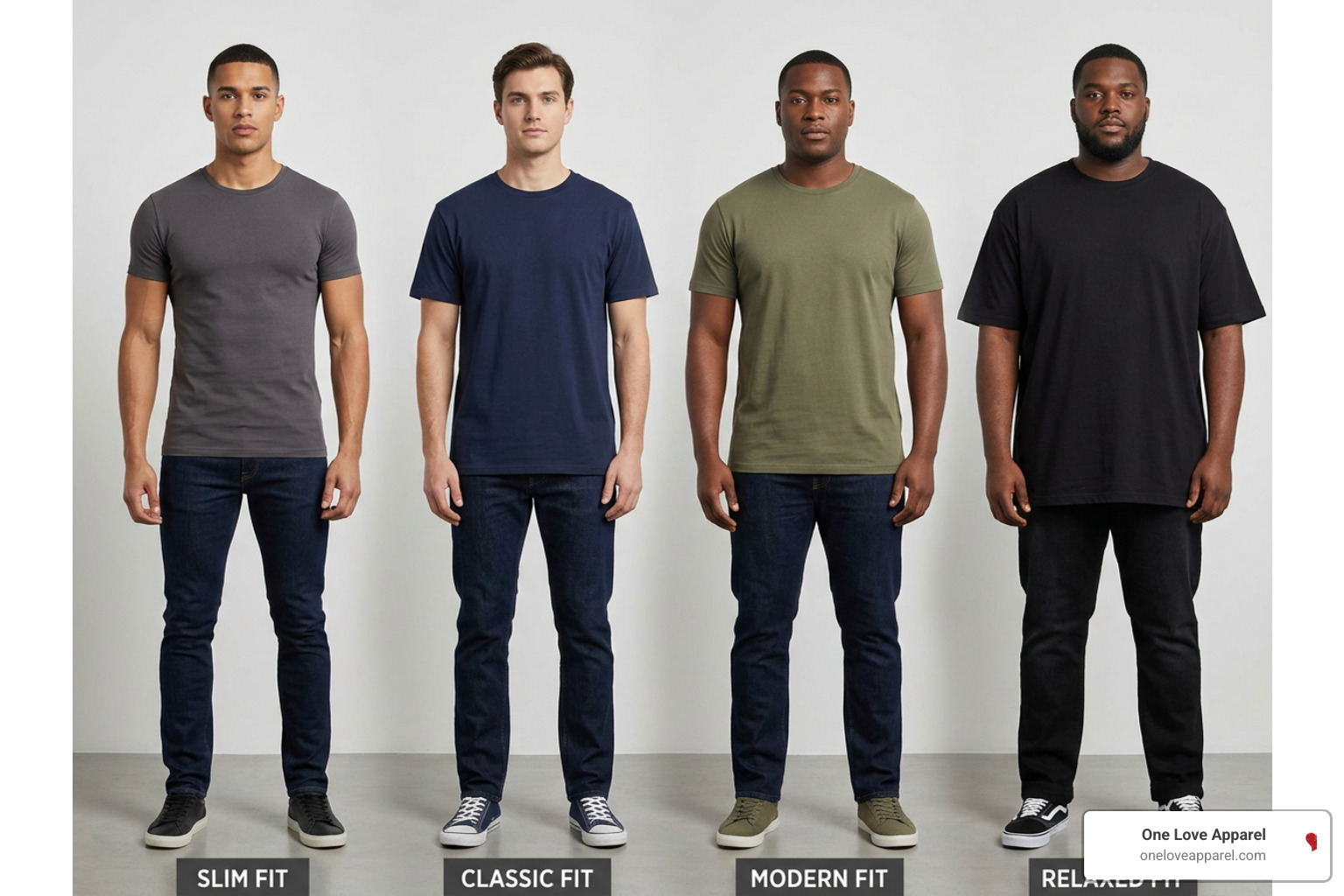
When selecting basic graphic tees, matching the fit style to your body type and personal style is key to building a cohesive look. Let's break down the primary fit styles and how to wear them.
If you love exploring different visual layouts, such as designs that place the art on the reverse side of the shirt for a clean front aesthetic, take a look at our article on how back prints are coming back in style shop the coolest back print t-shirts.
Classic and Boxy Fits for Basic Graphic Tees
The classic fit is the traditional silhouette we all know and love. It sits close to the body with just enough ease to allow comfortable movement without bunching up under a jacket. A true classic fit hits right around the mid-hip, making it incredibly easy to wear untucked or with a neat French tuck.
The boxy fit is a variation of the classic silhouette that has gained massive popularity. It features a wider body and a slightly cropped length that hits right at the belt line. This style creates a structured, architectural look that flatters various body shapes by squaring off the shoulders and chest.
Both classic and boxy fits offer excellent unisex appeal. They provide a clean, balanced frame that highlights the graphic design without draping too loosely or clinging too tightly.
Oversized and Relaxed Basic Graphic Tees
If comfort is your top priority, relaxed and oversized fits are your best friends. A relaxed fit is cut slightly roomier through the chest, waist, and sleeves than a classic tee, offering an effortless, casual drape.
The oversized fit takes this a step further, featuring dropped shoulders, wider sleeves, and a longer hem. This style has taken the fashion world by storm, accounting for 38% of all graphic tee sales in the U.S., making it the single most popular fit style on the market.
To style an oversized graphic tee without looking swallowed by fabric, balance is key:
- Rule of Proportions: Pair a roomy, oversized tee with slimmer, more structured bottoms like straight-leg denim or tailored shorts.
- The Layering Game: Throw a cropped denim jacket or an open flannel over a relaxed tee to break up the silhouette and add depth to your outfit.
- The Tuck: A loose front tuck into high-waisted pants can instantly define your waistline while keeping the relaxed vibe intact.
Quality, Pricing, and Retailer Comparisons
When shopping for basic graphic tees, you will find options ranging from $5 clearance rack items to $100+ designer pieces. Understanding what you are actually paying for can help you make smarter purchasing decisions.
Fast-Fashion Retailers ($10 – $20)
At this price point, you are primarily paying for convenience and trend replication. Fast-fashion tees are almost exclusively made from cheap, carded open-end cotton. They often feel thin, rough, and are highly prone to side-seam twisting (where the side seams warp around to the front of your body after washing). The prints are usually cheap screen prints that crack and peel after just a few washes.
Specialty Brands & Independent Labels ($25 – $45)
This is the "sweet spot" for value, quality, and ethics. Brands in this tier—like us at One Love Apparel—prioritize high-grade combed and ring-spun cotton, side-seam construction, and pre-shrunk treatments. The prints are typically executed using state-of-the-art Direct-to-Garment (DTG) or soft-hand screen printing, which dyes the fabric fibers rather than sitting like a thick layer of plastic on top. You are paying for durability, comfort, and unique, thoughtful design.
Department Stores & Designer Brands ($50 – $100+)
In this luxury tier, a large portion of the price tag goes toward brand prestige, licensing fees, and marketing. While the fabrics are often excellent (such as Supima or organic long-staple cotton), the jump in actual physical quality from a $35 specialty tee to an $80 designer tee is often marginal.
According to market retail trackers like Statista, consumers in 2026 are increasingly shifting away from ultra-cheap fast fashion. Instead, they are investing in mid-tier specialty brands that offer transparent production ethics, sustainable materials, and garments designed to last years rather than weeks.
Timeless Designs, Care, and Modern Trends

While trends come and go, the most successful basic graphic tees rely on timeless design elements. Neutral backdrops—such as off-white, heather grey, washed black, and deep navy—remain the most popular choices because they pair effortlessly with almost any jacket or pants.
In terms of aesthetics, retro and vintage styles continue to dominate. Classic typography, distressed logos, and seasonally inspired outdoor graphics offer a nostalgic, lived-in feel that never goes out of style.
If you love specific eras or athletic-inspired designs, you can explore our deep dives into 2000s graphic tees, check out the timeless appeal of baseball graphic t-shirts, or find out basketball graphic t-shirts where to score the coolest designs.
No matter how great a design is, its lifespan ultimately depends on how you care for it. To keep your graphic tees looking crisp and feeling soft for years, follow these simple laundry rules:
- Turn It Inside Out: This simple step protects the printed graphic from rubbing against other garments, zippers, and the washing machine drum during the cycle.
- Wash Cold: Hot water relaxes the cotton fibers, leading to shrinkage, and can melt or degrade the inks used in the graphic print. Always choose a cold, gentle cycle.
- Use Mild Detergent: Avoid harsh bleaches or fabric softeners, which can break down both the cotton fibers and the print adhesives over time.
- Air Dry Whenever Possible: The high heat of a tumble dryer is the number one enemy of t-shirts. It causes shrinkage and cracks prints. Hang your tees on a drying rack or lay them flat. If you must use a dryer, choose the lowest heat setting (air fluff).
Frequently Asked Questions
What is the difference between a basic graphic tee and a standard graphic tee?
A basic graphic tee features minimalist, clean, and understated designs with a limited color palette, making it highly versatile and easy to layer. A standard graphic tee often features large, bold, and complex artwork that covers most of the shirt, making it the loud centerpiece of an outfit rather than a versatile layering piece.
How do I prevent the print on my graphic tee from cracking?
To prevent cracking, always wash your tee inside out in cold water on a gentle cycle. Avoid using a clothes dryer; instead, hang-dry or lay the shirt flat to dry. Keep hot irons away from the printed design, as direct heat will melt and ruin the graphic.
What is the best fabric weight for an everyday graphic tee?
The best fabric weight for everyday wear is a mid-weight cotton, ranging between 150 to 180 GSM (4.5 to 5.3 oz). This range offers the perfect balance of breathability, soft drape, and long-term durability, making it comfortable for year-round wear.
Conclusion
At the end of the day, basic graphic tees earn their MVP status because they strike the perfect balance between personal expression and effortless utility. They are the shirts you grab when you want to look put-together without overthinking it, and the pieces that keep you comfortable through long days and busy weekends.
At One Love Apparel, we design our tees with this exact philosophy in mind. We use premium combed and ring-spun cotton to create incredibly soft, durable fabrics, cut into flattering, pre-shrunk fits that hold their shape wash after wash. We believe that what you wear should not only look good but also stand for something meaningful.
Ready to find your next daily favorite? Explore our collections and learn more about how we use fashion to connect communities by reading about wearing your heart on your sleeve.